
The New Creature and the Flax Plant
“Who can find a virtuous woman? … She seeketh … flax, and worketh willingly with her hands” (Proverbs 31:11, 13).
Linen is so interesting that it made us pause and ask whether the processing of flax into linen has symbolic implications for the New Creature. When considering the coverings of the tabernacle, the outer covering was of seal or dugong skin, then the ram skin dyed red, next a woven curtain of goat’s hair, and finally the linen curtain — the only covering not made from an animal.
Did the Heavenly Father create the flax plant, a plant that would be a source of food, used as medicine, for lighting lamps, even as a measuring tape and clothing as a type of the church? Is it possible that he desired to show that those he loved, those who would be living a life of consecration, a life of sacrifice, doing all this for the opportunity to be part of the church, the bride, the Christ, were embodied by the flax plant? We will let you decide.
FLAXSEED
There appears to be symbolism in the flaxseed. The seeds are developed over 40 days after pollination in a sack called the boll. They contain a healthy oil, antioxidants, and they are full of fiber. A person can eat flaxseed to boost their health. The seeds are copper in color, and can be ground into powder to make bread or pressed for their oil. Flaxseed oil is good for moisturizing the skin, for preserving wood, or even for lighting lamps, lighting the way for the world. An oil of gladness, a healing balm and replenishing food for all mankind.
The seeds are a copper color, which in the tabernacle represents justified humanity. The seeds represent the fruits of the Spirit developed while in the flesh, for this is the acceptable time. We are in the flesh for 40 days of seed germination — the New Creature’s time of testing and proving while in the flesh on this side of the veil.
The healing oil is symbolic of the kingdom cures. The benefits to the heart make us think of turning the people’s stony hearts to flesh (Ezekiel 36:26). The oil prevents an aging condition called “dry eye.” In the kingdom, every eye shall see him (Revelation 1:7), that is, everyone will have understanding.
Flaxseed has also been known to help prevent some cancers and arthritis, and helps one to maintain hormonal balances. Isaiah 35:6 points to a healthy and strong world on the highway of holiness as they “leap as an hart.”
We are at the end of the age, and can see how wily the adversary is. With all the confusion going on, wouldn’t it be a blessing to wake up in the morning and see a pillar of fire out of the window as a sign that the Lord is watching over us and no one has anything to fear!
For now, we have the precious promises to reflect on, “Casting all your care upon him. For he careth for you” (1 Peter 5:7). “It is your Father’s good pleasure to give you the kingdom” (Luke 12:32). “He knows our weaknesses, that we are dust” (Psalms 103:14). “He who touches you touches the apple of his eye” (Zechariah 2:8). Because we are his children, God has sent His Spirit into our hearts, prompting us to call out, “Abba, Father.” We are no longer servants, but sons, and heirs through Jesus Christ (Galatians 4:6, 7).
FLAX FLOWER
The flax flower has five petals of blue, but towards the interior, some purple, and then finally we see gold at the center. We see the blue suggesting faithfulness, the purple indicating royalty, and finally the gold of crowning life.
In many instances the number five is an indication towards the New Creation. The entrance to the holy of the tabernacle has five pillars. The boards that surround the tabernacle are kept in place by five rods, two on each side and one in the back. Before confronting Goliath, David, went to a brook and took out five stones. There we see running water smoothing out those stones, making them a significant weapon. This suggests that the church will be a weapon used by our Lord Jesus to smite evil and sin.
“For if these things be in you and abound, they make you that ye shall never be barren nor unfruitful in the knowledge of our Lord Jesus Christ” (2 Peter 1:8). “Only as we cultivate the various graces of the spirit — meekness, patience, gentleness, brotherly kindness, love — can we hope to be specially helpful to others in putting on these adornments of character and purities of life, and to get rid of defilements of the world, and the flesh” (R2201:6, R2202:4).
THE TABERNACLE’S LINEN CURTAIN
In making the linen curtains, women skilled in sewing and spinning prepared blue, purple, and scarlet threads and fine linen cloth (Exodus 35:25). Even so, the bride of Christ has been given the pattern of our Lord to follow. We use it to create this beautiful embroidery and to develop the character likeness of our Lord Jesus, the one who brought immortality to light (2 Timothy 1:9, 10).
The bride has to be proven, tested, and made ready. “She shall be brought unto the king in raiment of needlework” (Psalm 45:14, 15). The symbolic pattern is shown in the tabernacle’s linen curtain; “Thou shalt make the tabernacle with ten curtains, fine twined linen of blue and purple and scarlet, with cherubim, the work of the skillful workman shalt thou make them” (Exodus 26:1).
Bro. Russell explains that fine linen is the symbol of righteousness (TS29, 30, 36). Blue represents faithfulness (TS30, Numbers 15:38, 39). Purple is the symbol of royalty (TS34, Mark 14:17). Scarlet is the symbol of the blood of the ransom (TS34, 109, Hebrews 9:22). Then the cherubim symbolize divine love and power (TS125, Hebrews 1:14). These combined symbols form a beautiful, finished product to the glory of the Heavenly Father.
The prophets generally wore woven hairy garments. However, God clothed the priests with linen garments not of flesh but grown from the earth (Leviticus 6:10, 16:4, 32, Exodus 39:27). Archeologists have found linen dating back 4,000 years in nearly perfect condition! Linen improves with age, getting stronger and softer. What better way could the Heavenly Father have shown the clothing of those rewarded with immortality than by using linen!
These aspects of linen suggest why God used it in the consecration of the priesthood. All the clothing was supplied by Moses, who represents our heavenly Father. “No man takes this honor to himself, but he that is called of God, as was Aaron” (Hebrews 5:4). “He that overcometh … shall be clothed in white raiment” (Revelation 3:5).
The use of linen goes back to earlier times. Its use was so widespread, that it cannot be determined where it was invented for use as clothing and medicine. The Pharaohs used linen as burial cloth. While in Egypt, Joseph wore fine linen garments. During the time of Moses, flax was so important to Egypt that the Bible includes its destruction during the plague of hail, along with other essential crops. The Persian Empire used linen for decor and garments (Esther 1:6, 8:15). At the time of the Prophet Ezekiel, fine linen was exported from Egypt and Syria (Ezekiel 27:16). Flax was so significant that the prophets mention its destruction when listing other staples such as wool, bread, and oil (Isaiah 19:19, 42:3, Hosea 2:9, Matthew 12:20 quotes Isaiah 42:3).
GROWING AND PROCESSING FLAX
The flax plant grows to about 3‑4ft. with beautiful blue flowers. Canada grows approximately 60% of the world’s flax crops and a flax field can cover the hills in its beauty, often resembling a lake or water. It brings to mind the kingdom promise that “the spirit and the bride will say, ‘Come’ and let him that heareth say, Come’ and let him that is athirst come, and whosoever will let him take the water of life freely” (Revelation 22:17). Water is a symbol of truth, and the invitation is to accept or partake of the favor of everlasting life through obedience to the truth. There is a time of making it ready for those that would wear this linen as part of the higher Melchizedek priesthood. The order of king and priest with our Lord Jesus, who will bless the earth.
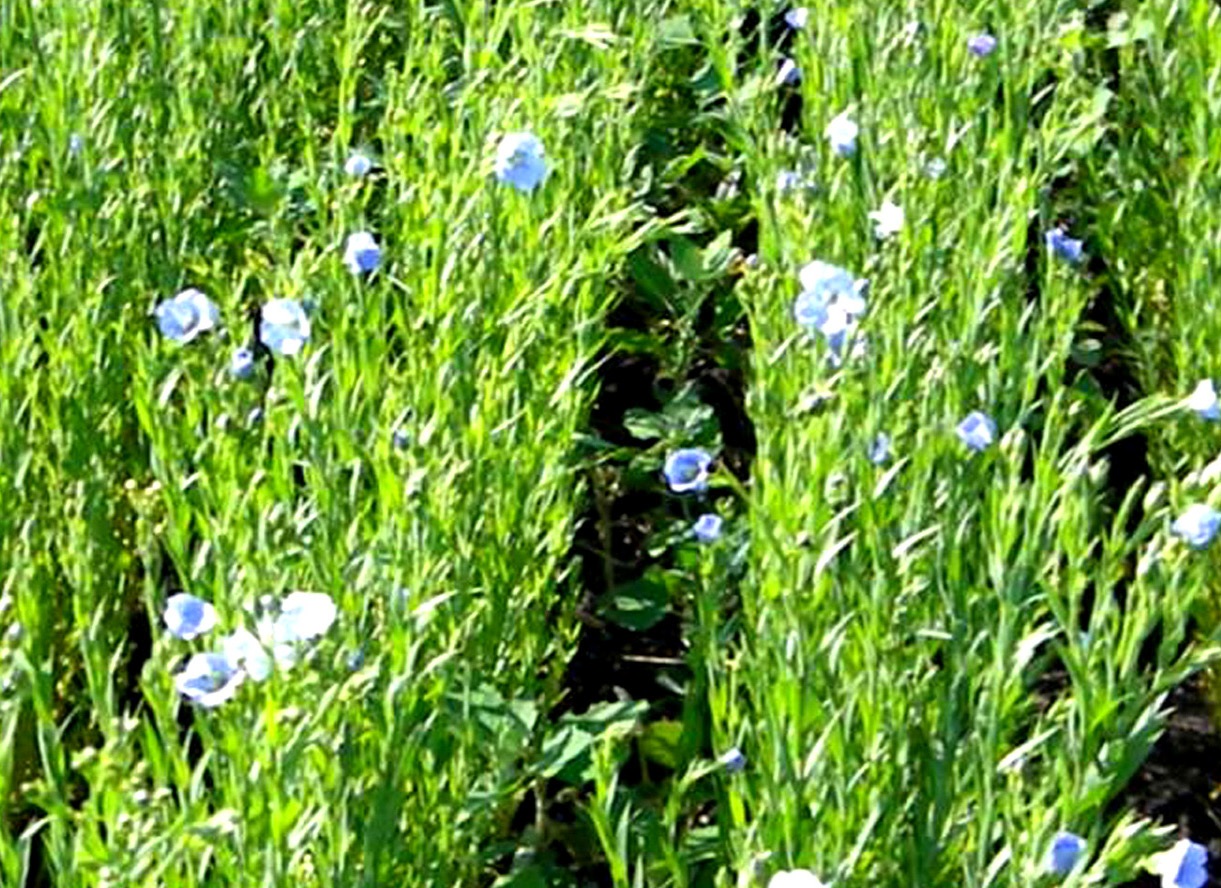
A field of flax
When flax is processed into linen, it goes from that beautiful flowering field through the following stages:
- Harvesting and uprooting the blooming flax
- Drying the flax
- Submerging the flax in moving water
- More drying accompanied by a heckling device to break the outer stalk
- Scutching / combing
- Separating and cleaning the fibers
- Applying heat and polishing the yarn
Flax is unusual in that it needs to be uprooted. The plant must die to be useful. This appears to describe full consecration. “Know ye not, that so many of us as were baptized into Jesus Christ were baptized into his death? Therefore, we are buried with him by baptism into death: that like as Christ was raised up from the dead by the glory of the Father, even so we also should walk in newness of life” (Romans 6:3‑4). We live according to a new standard for we are no longer carnal (1 Corinthians 3:3). “Flesh and blood cannot inherit the kingdom of God. Neither does corruption inherit incorruption” (1 Corinthians 15:50). Until it is uprooted the flax is of little value to the world.

Blue flax flowers suggest faith.
DRYING AND WETTING TO FREE THE FIBERS
The harvested flax has to be dried. When Rahab hid the spies, she was drying flax on her roof. It also served as a nice covering. Yet once flax is dried, the outer stalk must be softened and removed by submerging it in running water. Boards or stones are placed on the flax to keep it from washing away. Microorganisms then go to work causing the outer woody part of the stalk to rot and free the fibers. This is called retting. The microorganisms are freeing up the inside fibers that will become the golden yarn that will be spun into linen.
Water is symbolic of truth (Ephesians 5:26), but water can also represent people. Luke 21:25 describes restless masses as “the sea and waves roaring.” God uses both the truth and her interaction with the world to develop his church, to make the bride ready. The purpose of the cleansing is to help the church become submissive to Christ and for her sanctification. The bride is no longer to live according to the flesh. There is a higher standard now. The bride must be free of worldly influences, recognize the importance of the truth, and of being assured by it.
HECKLING
Despite its previous handling, portions of the rotted outer stalk remain, and must be physically scraped off. To do this an instrument known as a heckling tool is used. Heckling will not break the fibers, but it removes more of the rotting stalk. It is not a very complex instrument, but it is part of the refining process. In this seemingly insignificant tool, there may be spiritual connections to refining the new creation, in this heckling. “There hath no temptation taken you but such as is common to man: but God is faithful, who will not suffer you to be tempted above that ye are able; but will with the temptation also make a way to escape, that ye may be able to bear it” (1 Corinthians 10:13).
SCUTCHING AND COMBING
The final step that separates the remainder of the stalk uses a hard flat‑edged wooden tool in a process called scutching. A bed of nails combs the fibers and the nails that are closer together separate and remove the smaller imperfect fibers. Only the strong, clean fibers remain to be made into fine linen. This may describe the final refining of character that God desires for each member of His flock. He would have them learn to trust him, to exercise faith, obedience, vigilance, and resist evil in every trying experience. We will not be tried beyond what we are able to bear (R5440:4, 962:2). It is not God’s intention that trying experiences should crush the new creature. Resisting the adversary is to make us stronger (R5902:6, 5764:1, 5440:4).
What are some of these daily hecklings and combings that we may experience? There are many combative people that we may deal with in our lives. In the workplace, it may be very difficult dealing with different personalities. There is also a lot of road rage today. I remember there was a brother riding with Bro. Bob Gray and Bro. Bob was aggressively cut‑off in traffic. The brother said, “Did you see that?” But Bro. Bob replied, “Let them have it. It is their world.” I thought that was a wonderful response.
Today, politics can be divisive. We may be drawn into taking sides on the fighting between Palestine and Israel. Regardless of the consequences, we should speak truth regarding God’s plan to use Israel in blessing the world.
These are necessary experiences that soften the fibers of character — the processes of heckling, scutching and combing. We are expected to be those who by “patient continuance and well doing seek for glory, honor and immortality, eternal life” (Romans 2:7).
Paul and Silas had been beaten and in prison. They were starved and poorly treated by the jailor. Yet, Paul and Silas sang hymns, rejoicing in hope. They were patient in tribulation, and were instant in prayer (Romans 12).
Suddenly everything shook and the doors opened. Supposing the prisoners had escaped, the jailer decided to kill himself. Paul and Silas yelled out, “Stop, we are still here.”
What happened next was amazing. The jailer asked what god they worshiped. He took them home, fed them, the whole family heard the message, and the jailor consecrated to God. Br. Russell wrote, “Here is an important part of the great battle of the Christian’s life. He must fight the natural tendencies of the old nature and confidently anticipate the victory in the strength of the great Captain of his Salvation. He must not succumb to the flattering and deceptive influences … faint under … adversity [or] allow the trials of life to sour and harden his disposition, to make him … bitter or unkind. Nor … allow pride … to grow and feed upon the temporal good things which the Lord’s providence has granted him to test his faithfulness as a steward” (R1759:3).
Another lesson is found respecting Stephen. He was totally devoted to the Lord, had a Christlike character, was patient before his accusers, rejoiced in the promises, and was instant in prayer. While they stoned him, Stephen prayed, “Lord Jesus, receive my spirit.” He fell on his knees and cried with a loud voice, “Lord, do not hold this sin against them. Having said this, he fell asleep.”
God may have allowed the last stone to finish his test without more pain. But in that situation, his thoughts were for those being influenced by Satan. He totally trusted God.
Being plucked up, submerged, heckled and scutched is the symbolic process we face. “Though the Lord gave you adversity for food and suffering for drink, he will still be with you to teach you. You will see your teacher with your own eyes. Your own ears will hear him. Right behind you a voice will say, ‘This is the way you should go,’ whether to the right or to the left” (Isaiah 30:20‑22 NLT).
“God is our refuge and strength, always ready to help in times of trouble. So we will not fear when earthquakes come and the mountains crumble into the sea. Let the oceans roar and foam. Let the mountains tremble as the waters surge!” (Psalm 46:1‑3).
When facing adversity, instead of saying, “Why me?” may we say, “Why not me?” This is from the Lord and he arranges our experiences. He personalizes them for each one’s individual development. This is the process represented by the preparation of the flax fibers used to make the fine linen the priests would wear.
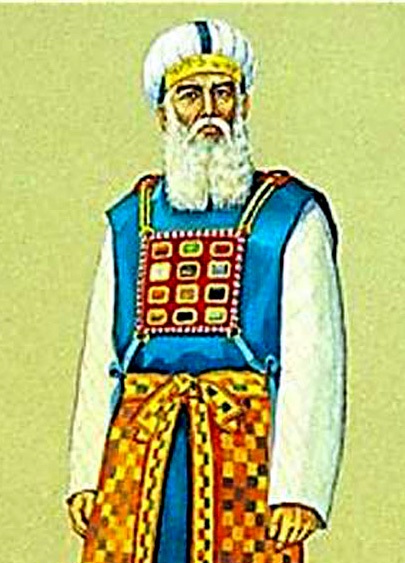
White linen comes from flax.
OUR FIRM FOUNDATION
The flax plant stands tall and straight, it does not bow or bend. Reflecting on this, we see that our firm foundation is Jesus. We stand upon the ransom and restitution of all things, and at the top of the stalk is a beautiful blue flower.
“Draw near with a true heart and full assurance of faith, having our hearts sprinkled from an evil conscience and our bodies washed with pure water” (Hebrews 10:22). “Lay aside every weight and the sin which doth easily beset us. Let us run with patience the race that is set before us, looking to our Lord Jesus, the author and finisher of our faith” (Hebrews 12:1‑2).
We are to do “good to all men, especially to the household of faith” (Galatians 6:10). If we have received the anointing, we are brought into understanding and fellowship with the Lord as joint‑heirs. We have the privilege to fill up the afflictions and sufferings of Christ (Colossians 1:24). We will be like him, at his appearing, sharing his glory, honor, and immortality. This intimate relationship must develop the same closeness with one another, members of the temple of God (1 Corinthians 3:16, 17).
We are to use our different gifts according to the grace of God. If our gift is to speak God’s message, we should use it appropriately, according to our faith. If it is to serve, we should serve with joy for the privilege. If it is to teach, we should teach with joy. If it is to encourage others, we should look for opportunities. Whoever shares with others should do so generously. Whoever has authority should work hard to be an example of godly leadership. Whoever shows kindness, should do so cheerfully (Romans 12:6‑8). There is also the principle of “washing one another’s feet.”
These are some of the privileges we bear to make our calling and election sure. Finally, when we can share the burdens that our fellow runners carry, a great bond is formed that cannot be broken.
SECRET FAULTS AND THE FINISHING PROCESS
The finishing process finally produces the finest spiritual linen that lasts forever, associated with glory, honor, and immortality. And yet, even near the end, challenges appear. “Who can understand his errors? Cleanse thou me from secret faults. Keep back thy servant also from presumptuous sins; let them not have dominion over me: then shall I be upright, and I shall be innocent from the great transgression” (Psalm 19:12‑13).
The master weaver looks for imperfections, to fix them and remove the smallest defects. With the robe of Christ’s righteousness and purification accomplished, no unrighteousness will not be found in the bride. “A bruised reed shall he not break, and the smoking flax shall he not quench. He shall bring forth judgment unto truth” (Isaiah 42:3). Jesus will fan the smoldering faith if we are beaten down. As long as our faith is there and we do not give up, the Lord will fan our faith into a roaring flame even as the fat of the bullock burned fervently.
MARRIAGE OF THE BRIDE
“The marriage of the bride is come, and his wife has made herself ready, and it was given to her that she should array herself in fine linen, bright and pure, for fine linen is the Righteousness Acts of the saints” (Revelation 19:7, 8).
The process, starting with the flaxseed, grows into the uprooted plant. Its harvest begins a process that finally yields strands of high quality linen. These processes form a picture of the New Creature’s development. Developed, Christ-like character will be proven and tested. Each one must be uprooted, dried, processed, inspected, and heated to remove all of the old man’s flesh. Realizing our own powerlessness to do this, we have need of God. He is the support and shield of His children. He is our strong tower. The heavenly Father is with us always.
— Adapted from a discourse by Br. Jerry Wesol