
Migdal Eder (Tower of the Flock)
“And an angel of the Lord suddenly stood before them, and the glory of the Lord shone around them; and they were terribly frightened. But the angel said to them, ‘Do not be afraid; for behold, I bring you good news of great joy which will be for all the people; for today in the city of David there has been born for you a Savior, who is Christ the Lord. This will be a sign for you: you will find a baby wrapped in cloths and lying in a manger.’ And suddenly there appeared with the angel a multitude of the heavenly host praising God and saying, ‘Glory to God in the highest, And on earth peace, good will toward men’” (Luke 2:9‑14).
The shepherds of Bethlehem were privileged to receive the birth announcement of the newborn Messiah. Receiving such monumental news indicates these shepherds must have been noble men. However, it was not simply their good characters that created an invitation to visit the humble birthplace of our Lord. The reason may also have been their specific occupation.
Alfred Edersheim writes the following. “Jewish tradition may here prove illustrative and helpful. That the Messiah was to be born in Bethlehem was a settled conviction. Equally so was the belief that he was to be revealed from Migdal Eder, the ‘tower of the flock.’ This Migdal Eder was not the watchtower of the ordinary flocks which pastured on the barren sheep ground beyond Bethlehem, but lay close to the town, on the road to Jerusalem.
“A passage in the Mishnah leads to the conclusion that the flocks, which pastured there, were destined for Temple sacrifices, and accordingly, that the shepherds, who watched over them, were not ordinary shepherds. These were under the ban of the Rabbis, on account of their necessary isolation from religious ordinances, and their manner of life, which rendered strict legal observance unlikely, if not absolutely impossible. … Of the deep symbolic significance of such a coincidence it is needless to speak” (The Life and Times of Jesus the Messiah, pages 186, 187).
One commentator adds this; “There was a place just outside of Bethlehem city, but still within the region commonly known as Bethlehem, where Passover lambs were kept by specially trained Shepherds. The lambs were born in this ‘tower of the flock’ known as Migdal Eder under the watchful eye of the shepherds who would then inspect and either certify them for use as sacrifices in the temple or designate them to be released for common use. The new lambs would, according to some sources, even be wrapped in special swaddling clothes once certified” (From International Christian Embassy Jerusalem, Dr. Juergen Buehler).
THE CERTIFICATION
The possibility that these were not ordinary shepherds is intriguing. The flocks they cared for were to be used in the temple sacrifices. With the majestic angelic visit these shepherds were directed to an obscure Bethlehem stable in order to inspect another newborn lamb. They came to certify that he would be qualified to someday be offered in sacrifice. This unique lamb would bring universal deliverance as the Messiah, the antitypical Passover lamb.
Edersheim suggested that their occupation caused them to be considered ceremonially unclean and therefore banned by the rabbis. However, despite this, they were still allowed to provide acceptable Passover lambs for sacrifice. There is a compelling message in this seeming contradiction. By selecting them to hear the extraordinary birth announcement God indicated they were not unclean and were deserving of such an honor. How well this illustrates the principle that God chooses the foolish things of the world to shame the wise and the weak things to shame them that are strong (1 Corinthians 1:27‑29). By selecting these “unclean” shepherds, God once again revealed He is not a respecter of persons, but chooses as He sees fit.
FIRST MESSENGERS OF THE GOSPEL
“And when they had seen it, they made known abroad the saying which was told them concerning this child. And all they that heard it wondered at those things which were told them by the shepherds. And the shepherds returned, glorifying and praising God for all the things that they had heard and seen, as it was told unto them” (Luke 2:17,18, 20).
The visit to our Lord’s birthplace must have been a deeply moving experience. They were not turned away by the humble surroundings. In fact, they would have been most comfortable in such an environment. So touched were they by their experience, they energetically spread the good news of the savior’s birth. In their zeal to spread the good tidings they became the first human messengers of the Gospel message.
TOWER OF THE FLOCK
Micah the 4th chapter contains a wonderful prophecy which compares the work of these ancient shepherds to Kingdom work of Jesus and the Church. It is a remarkable chapter that contextually relates to the kingdom.
“And many nations shall come, and say, Come, and let us go up to the mountain of the LORD, and to the house of the God of Jacob; and he will teach us of his ways, and we will walk in his paths: for the law shall go forth of Zion, and the word of the LORD from Jerusalem.
“And he shall judge among many people, and rebuke strong nations afar off; and they shall beat their swords into plowshares, and their spears into pruning hooks: nation shall not lift up a sword against nation, neither shall they learn war any more.
“But they shall sit every man under his vine and under his fig tree; and none shall make them afraid: for the mouth of the LORD of hosts hath spoken it” (Micah 4:2‑4).
“And thou, O tower of the flock (Migdal Eder), the strong hold of the daughter of Zion, unto thee shall it come, even the first dominion; the kingdom shall come to the daughter of Jerusalem” (Micah 4:8).
“Jesus, by his obedience unto death, has become the strong tower, the fortress, the protection, to all of God’s people” (R4796:4). After finishing his work as the Passover lamb our Lord became chief shepherd, first to the church, his “little flock,” and eventually to the world.
“I am the the good shepherd, the good shepherd lays down his life for the sheep I know my own and my own know me and I have other sheep which are not of this fold. I must bring them also, and they shall hear my voice; and they shall become one flock with one shepherd” (John 10:11, 14, 16). The shepherding work of Jesus spans two ages. He shepherds the church during the present Gospel Age and will watch, guide and protect his sheep who are “not of this fold” during the Kingdom. He stands in the Tower of the Flock during both ages as he watches over his sheep.
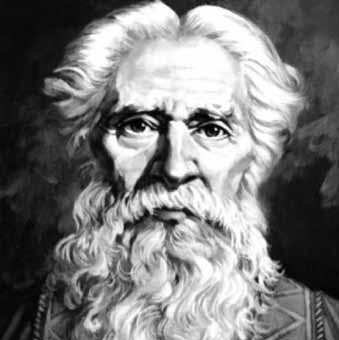 Micah, the Prophet
Micah 4:8 reveals that the honor of being part of his kingdom Tower is extended to the Church. “And thou, O tower of the flock … unto thee shall it come, even the first dominion; the kingdom shall come to the daughter of Jerusalem.” The word “first” (Strong’s 7223) means “in place, time, or rank.” And so, The Christ will assume dominion over earth as its protecting Tower of the Flock, shepherding mankind with wisdom and love.
— Br. Tom Ruggirello