
Selection of a Bride
Rebecca the bride for Isaac, Genesis 24
Our lives are made up of decisions. Some decisions are trivial, others are momentous. The decision to select a bride to marry is a momentous and lifechanging decision. Jehovah selected a bride for his Son. This exceedingly momentous selection involves each of us: “No man can come to me, except the Father that sent me draw him: and I will raise him up in the last day” (John 6:44).
THE TYPE OF ABRAHAM SEEKING A BRIDE FOR ISAAC
A most beautiful type in the scriptures is the selection of Rebecca, the bride for Isaac, which we find in Genesis 24. “No part of the blessed Scripture is more calculated to feed the souls of Christ’s redeemed and chosen people, and to set more plainly before them Christ our hope than Genesis 24, where we have Abraham sending the servant after a bride for Isaac” (R752).
Interestingly, Genesis 24 is the longest chapter in the book of Genesis. It is a chapter rich with typical detail, quite beautiful, and emotionally moving as well. To understand how the various parts of this narrative work together, it will help to outline an overview of the type. Here are the characters and the antitypes they prefigure.
- Abraham = Jehovah God
- Eliezer = the holy Spirit
- Isaac = Jesus
- Rebecca = the Church, the Bride of Christ
- Rebecca’s companions = the Great Company
WELL STRICKEN IN AGE
“Abraham was old, and well stricken in age: and Jehovah had blessed Abraham in all things” (verse 1).
How old was Abraham at this point in his life? Isaac was 40 years old when he married Rebecca. “Isaac was forty years old when he took Rebecca, the daughter of Bethuel the Syrian of Paddanaram, the sister of Laban the Syrian, to be his wife” (Genesis 25:20). Since Abraham was 100 years old when Isaac was born, that would make him 140 years old at this time.
This was three years after Sarah died at 127 years old. Sarah was ten years younger than Abraham. “Shall a child be born unto him that is a hundred years old? And shall Sarah, that is ninety years old, bear?” (Genesis 17:7). Thus, Abraham was 137 years old when Sarah died.
Curiously, Sarah is the only woman in the Hebrew scriptures whose age at her death is given. “The life of Sarah was a hundred and seven and twenty years: these were the years of the life of Sarah” (Genesis 23:1). Is there some significance to this age? We observe that 127 is the sum of ten squared and three cubed. Ten represent completion. Ten squared can represent a full completion. Three is a number of emphasis. Three cubed would be exponential emphasis. Putting it together, we conclude that the 127 year age of Sarah at her death marks the final and full completion of something important.
One last note: Abraham lived to be 175, so he would live another 35 years after Isaac’s marriage, long enough to see the birth of his grandsons, Jacob and Esau, when Isaac was 60 years old. “After that came forth his brother, and his hand had hold on Esau’s heel; and his name was called Jacob: and Isaac was threescore years old when she bare them” (Genesis 25:26).
ABRAHAM’S SERVANT
“Abraham said unto his servant, the elder of his house, that ruled over all that he had, Put, I pray thee, thy hand under my thigh” (verse 2).
Who was this servant that Abraham sent on this important assignment? Most would say that it was Eliezer. We do not have a Bible text which proves it. However, there is almost no question that it was indeed Eliezer. He was the most important individual in Abraham’s house after Abraham himself. “Abram said, O Lord Jehovah, what wilt thou give me, seeing I go childless, and he that shall be possessor of my house is Eliezer of Damascus? And Abram said, Behold, to me thou hast given no seed: and, lo, one born in my house is mine heir” (Genesis 15:2, 3).
Thus this identification is the most reasonable presumption. But the question remains, why is he not named in chapter 24? Possibly the answer is that he represents the holy Spirit, which is itself the unnamed power of Jehovah. The holy Spirit is not a person, as the false doctrine of the Trinity suggests. Thus, the absence of the name perhaps is evidence that it is the nameless power of God.
Another evidence that the servant is Eliezer, and that he represents Jehovah’s holy Spirit, is the meaning of his name. “Eliezer” means “God of help” or “God helps.” Note in the following texts the connection in the meaning of Eliezer with the holy Spirit. “These things I have spoken to you while I am still with you. But the Helper, the holy Spirit, whom the Father will send in my name, he will teach you all things and bring to your remembrance all that I have said to you” (ESV, John 14:25, 26).
This term, “helper,” is from the Greek word parakleetos (G3875). Thayer gives the following definitions.[1] “Summoned, called to one’s side, especially called to one’s aid. (a) One who pleads another’s cause before a judge, a pleader, counsel for defense, legal assistant, an advocate. (b) One who pleads another’s cause with one, an intercessor of Christ in his exaltation at God’s right hand, pleading with God the Father for the pardon of our sins. (c) In the widest sense, a helper, succorer, aider, assistant of the holy Spirit, destined to take the place of Christ with the apostles (after his ascension to the Father), to lead them to a deeper knowledge of the gospel truth, and give them divine strength needed to enable them to undergo trials and persecutions on behalf of the divine kingdom.”
Thayer’s definition touches on several descriptions that apply to Eliezer beautifully and appropriately. Abraham’s servant aided his master by pleading the case for a marriage engagement. He assisted in completing the entire assignment.
Also, note this curiosity. The text calls him Eliezer of Damascus, but also indicates that he was born in Abraham’s house. How is he from Damascus and, at the same time, born in Abraham’s house? There are many suggestions about this, none of which are compelling. One easy answer is that Eliezer was born in Abraham’s house while Abraham was passing through Damascus.
Returning to Genesis 24:2, we encounter one other odd point in this verse. Abraham asked Eliezer to put his hand under his thigh. This is a curious custom, at least as perceived from our time. For us a handshake conveys a promise. The following quote sheds some light on this unusual practice:[2] “In our culture, taking an oath usually involves raising the right hand or placing a hand over the heart or on a Bible. In ancient Hebrew culture, we find something a little different. Genesis 24:9 describes an odd practice that involved Abraham’s servant swearing to obey his master’s command to find a wife for Isaac: ‘So the servant put his hand under the thigh of Abraham his master and swore to him concerning this matter.’ In Genesis 47:29, Jacob made his son Joseph swear to bury him in Canaan, not Egypt. The same ritual was observed: Joseph was required to put his hand under Jacob’s thigh as he makes the promise.”

Abraham, a father of faith
This odd practice had a symbolic purpose. “According to Rabbi Ibn Ezra, the phrase ‘under the thigh’ means literally that. For someone to allow his hand to be sat on was a sign of submission to authority. If this is the symbolism, then Joseph was showing his obedience to his father by placing his hand under Jacob’s thigh.”
NOT A WIFE OF THE CANAANITES
“Swear by Jehovah, the God of heaven and the God of the earth, that thou wilt not take a wife for my son of the daughters of the Canaanites, among whom I dwell: but thou shalt go unto my country, and to my kindred, and take a wife for my son Isaac” (verses 3, 4).
This was a solemn promise that Abraham asked of Eliezer. It was to be sworn in the name of Jehovah, the God of heaven and earth. What was he to swear? That Eliezer would travel to Abraham’s home country and family and from there find a wife for Isaac. Evidently Abraham was too old for such a journey, as scripture says, “stricken in age.” Abraham was somewhat frail even though he would live another 35 years.
But this was very important to Abraham! The wife for his son had to come from his own family. This was, as we shall see, a family of faith. At the divine level, Jehovah’s plan was to select for His son Jesus, those of the same family of faith as Abraham. However, Eliezer’s voiced a concern.
“The servant said unto him, Peradventure the woman will not be willing to follow me unto this land: must I needs bring thy son again unto the land from whence thou camest?” (verse 5).
Eliezer was thinking ahead. Recognizing that the woman would have freedom of choice, he wonders what his master’s direction would be in case she declined the invitation. This is consistent with a house manager who always thinks of alternatives in the event of a problem.
“Abraham said unto him, Beware thou that thou bring not my son thither again. Jehovah, the God of heaven, who took me from my father’s house, and from the land of my nativity, and who spake unto me, and who sware unto me, saying, Unto thy seed will I give this land; he will send his angel before thee, and thou shalt take a wife for my son from thence. And if the woman be not willing to follow thee, then thou shalt be clear from this my oath; only thou shalt not bring my son thither again. And the servant put his hand under the thigh of Abraham his master, and sware to him concerning this matter” (verses 6-9).
Why is Abraham adamant against his son going to Mesopotamia? Twice he says that his son will not return to the family’s homeland. Whatever the reason Abraham had in the type, there seems to be a lesson in the antitype. The bride of Christ is taken from humankind. Jesus, having completed his human sacrifice, in the land of humanity, will never return to that domain again. “Our citizenship is in heaven; whence also we wait for a Saviour, the Lord Jesus Christ: who shall fashion anew the body of our humiliation, that it may be conformed to the body of his glory, according to the working whereby he is able even to subject all things unto himself” (Philippians 3:20, 21).
“The first man is of the earth, earthy: the second man is of heaven. As is the earthy, such are they also that are earthy: and as is the heavenly, such are they also that are heavenly. And as we have borne the image of the earthy, we shall also bear the image of the heavenly” (1 Corinthians 15:47-49). Jesus now bears the heavenly image. He will never again bear an earthly image; and ultimately, neither will his bride. He will never come back to Mesopotamia — earthly humanity.
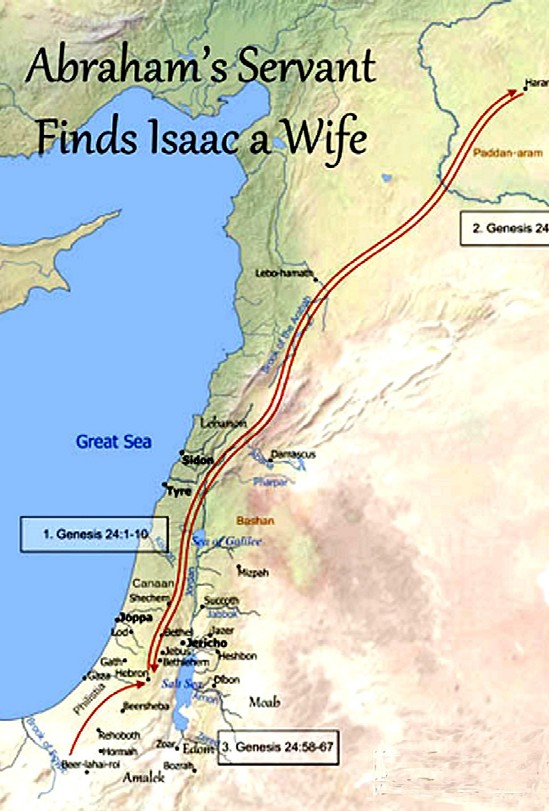
“The servant took ten camels, of the camels of his master, and departed, having all goodly things of his master’s in his hand: and he arose, and went to Mesopotamia, unto the city of Nahor” (verse 10).
Eliezer began the long journey of over 500 miles to Nahor, or the city that Nahor inhabited. The account mentions that he took ten camels. Ten is a general symbol of completeness. Remembering that Eliezer represents the holy Spirit, the ten camels could symbolize God’s Word which conveys God’s gifts, the holy Spirit and divine truths, to the bride. “The camels upon which he came to Rebecca (which also carried the presents) represented The Word of God” (R161). Eliezer did not make the journey alone. He had at least two additional servants traveling with him which will be seen later in the narrative.
SHE THAT THOU HAST APPOINTED
“He made the camels to kneel down without the city by the well of water at the time of evening, the time that women go out to draw water. And he said, O Jehovah, the God of my master Abraham, send me, I pray thee, good speed this day, and show kindness unto my master Abraham. Behold, I am standing by the fountain of water; and the daughters of the men of the city are coming out to draw water: and let it come to pass, that the damsel to whom I shall say, Let down thy pitcher, I pray thee, that I may drink; and she shall say, Drink, and I will give thy camels drink also: let the same be she that thou hast appointed for thy servant Isaac; and thereby shall I know that thou hast showed kindness unto my master” (verses 11-14).
Eliezer arrived at his destination after a long trip. It was now time to recognize the prospective bride. The faith of Eliezer is demonstrated by his prayer to Jehovah for guidance, and composes a test. He will ask for a drink! He proposes that the one he seeks would respond with a drink and offer to give the camels a drink also! This interchange would be the sign of the one selected.
This test reflects Eliezer’s thoughtfulness. The candidate must be a girl who is generous, energetic, and kind. Only such would be willing to serve a stranger. Remembering that this girl is a type of the church shows a necessary indicator of the character of the church. We will see yet more of these character traits.
Jehovah’s providence was immediate.
“Before he had done speaking … Rebecca came out, who was born to Bethuel the son of Milcah, the wife of Nahor, Abraham’s brother, with her pitcher upon her shoulder. And the damsel was very fair to look upon, a virgin … she went down to the fountain, and filled her pitcher, and came up” (verses 15, 16).
The swiftness with which Eliezer’s prayer was answered must have been startling. On matters of importance, God does not delay answering us!
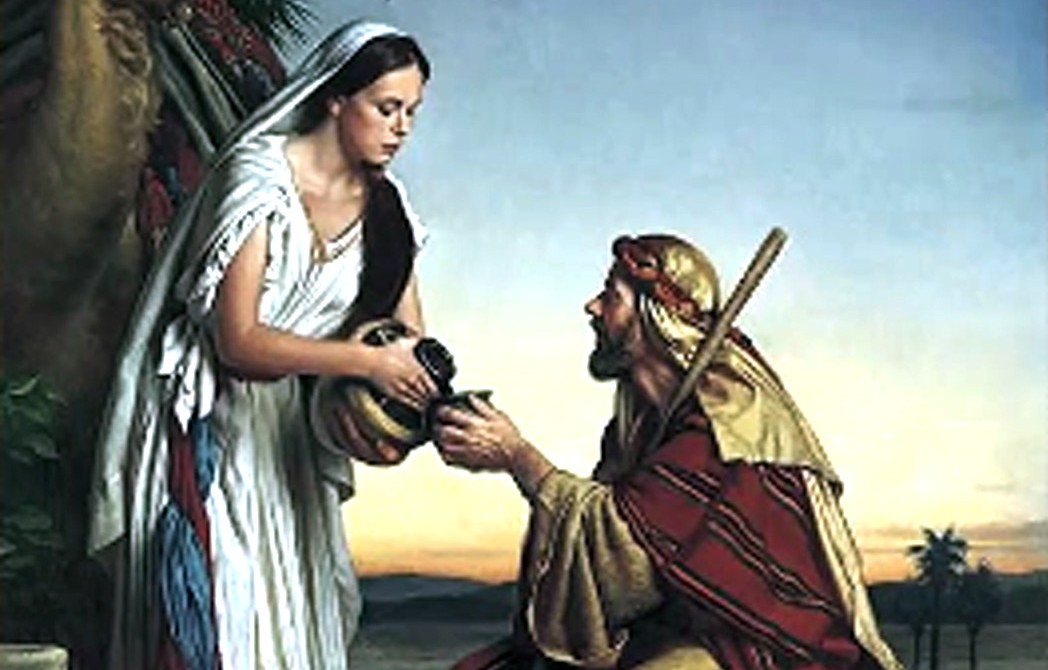
Rebecca, caring for Eliezer
The description of Rebecca says that she “was very fair to look upon.” Rebecca was beautiful! But physical beauty in the type prefigures the loveliness of character of the church. This splendor of character is but a reflection of the character of Jesus. As Isaac loved and appreciated the beauty of Rebecca, so Jesus embraces the character beauty of the church. “So will the king desire thy beauty” (Psalms 45:11).
Of necessity, we must consider how beautiful each of us looks to our Lord. What are the traits of beauty we must manifest? Do we love righteousness and hate iniquity? Do we live a life of full consecration and submission to God?
If we lay down our life daily for the Lord, the truth, and the brethren, then our Lord Jesus, our Bridegroom, will find us incredibly beautiful. Furthermore, the narrative tells us that Rebecca was “a virgin.” She was pure, innocent, untouched. Likewise, the church, the prospective bride of Christ, will in this sense be virgins.
“Behold, the Lamb standing on the mount Zion, and with him a hundred and forty and four thousand, having his name, and the name of his Father, written on their foreheads. And I heard a voice from heaven … as the voice of harpers harping with their harps: and they sing as it were a new song before the throne … no man could learn the song save the hundred and forty and four thousand. … These are they that were not defiled with women; for they are virgins. These are they that follow the Lamb whithersoever he goeth … in their mouth was found no lie: they are without blemish” (Revelation 14:1-5).
DESIRING FURTHER SERVICE
“The servant ran to meet her, and said, Give me to drink, I pray thee, a little water from thy pitcher. And she said, Drink, my lord: and she hasted, and let down her pitcher upon her hand, and gave him drink. And when she had done giving him drink, she said, I will draw for thy camels also, until they have done drinking. And she hasted, and emptied her pitcher into the trough, and ran again unto the well to draw, and drew for all his camels” (verses 17-20).
What an energetic young woman was Rebecca! Eliezer showed his own excitement about what was developing in running down to the fountain to engage her. Rebecca responded by immediately providing a drink. And then desiring further service in watering his camels!
The accounts says “she hasted” twice and then “ran again” in the service of her guest. All of this types the same type of attitude and behavior of the true church. We must be energetic in doing our Father’s work if we are to be a part of the little flock. The church will “haste” to do God’s will. Not physically moving fast, but intense interest in serving one another according to our opportunities.
How much work was it to provide water for 10 camels? A dehydrated camel can drink more than 100 liters (about 29 gallons) of water at one time. So we surmise that Rebecca had to pour 290 gallons on this occasion. That is a lot of work! Her industriousness cannot be overstated.
DIVINE BLESSINGS FOR LABORING IN THE WORD AND SPIRIT
“The man looked stedfastly … to know whether Jehovah had made his journey prosperous or not. And it came to pass, as the camels had done drinking, that the man took a golden ring of half a shekel weight, and two bracelets for her hands of ten shekels weight of gold” (verses 21, 22).
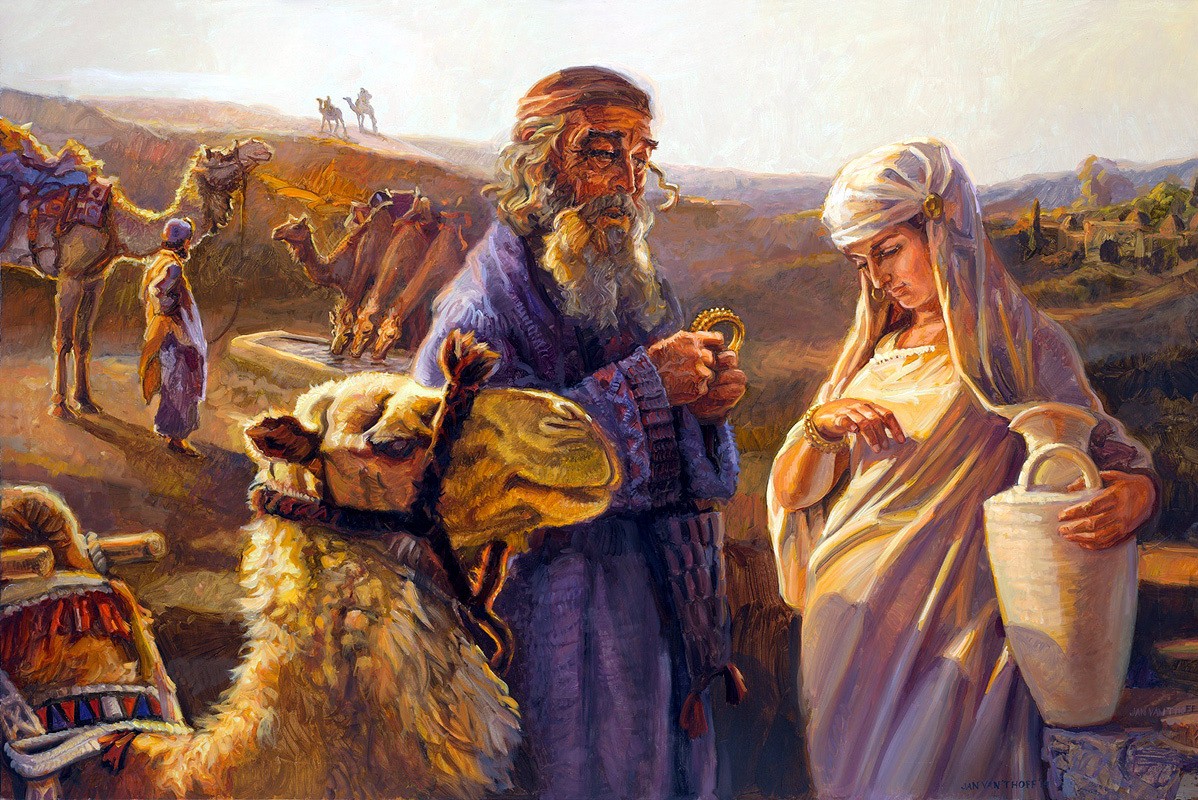
Eliezer, giving Rebecca ornaments of gold
Eliezer watched this activity of Rebecca with keen interest. Circumstances were coming together before him to identify Jehovah’s selection of a bride for Isaac. The ring and bracelets of gold represent divine blessings that come upon those who hearken to the spirit of God and show a willingness and humility.
“As in the type certain gold ornaments were presented to Rebecca from the moment that she entertained the good tidings, so with us: from the moment that we first gave ear to the Father’s invitation or ‘highcalling’ we have been blessed. The ornaments, being of gold, symbolize divine blessings, gold always symbolizing divine things. The golden adornments were first earrings, representing the blessed effect of hearing the call, and secondly bracelets for the hands, representing the blessed effect of the divine call upon all our doings thereafter” (R1386).
This golden ring is presented in several translations as a nose ring, and in others an earring. The Hebrew could have either application. However, Eliezer identifies the kind of ring: “I asked her, and said, Whose daughter art thou? And she said, The daughter of Bethuel, Nahor’s son, whom Milcah bare unto him: and I put the ring upon her nose, and the bracelets upon her hands” (Genesis 24:47).
A golden nose ring reminds us of the sense of smell. This would refer to the fragrance of the bride and of her bridegroom. Of Jesus, our bridegroom, we are prophetically and symbolically told: “All thy garments smell of myrrh, and aloes, and cassia” (Psalms 45:8). The fragrance of our bridegroom is attractive, and we are drawn to him in love.
Only after Rebecca labored hard in providing water for Eliezer and his entourage, did he give her these ornaments of gold. These divine blessings do not come to the antitypical bride until we too have labored in the Word and Spirit. Such labor is rewarded with divine blessings.
Regarding the weight of these ornaments, the one half shekel ring reminds us of the atonement poll tax levied on every Israelite of onehalf shekel of silver (not gold) (Exodus 30:13). The two gold bracelets weighing ten shekels remind us of the two tablets of the ten commandments of the Law (Deuteronomy 4:13).
THE HOUSE OF MY MASTER’S BRETHREN
“Whose daughter art thou? … Is there room in thy father’s house for us to lodge in? And she said unto him, I am the daughter of Bethuel the son of Milcah, whom she bare unto Nahor. … We have both straw and provender enough, and room to lodge in. And the man bowed his head, and worshipped Jehovah. And he said, Blessed be Jehovah, the God of my master Abraham, who hath not forsaken his lovingkindness and his truth toward my master: as for me, Jehovah hath led me in the way to the house of my master’s brethren” (verses 23-27).
Eliezer was overwhelmed with the success of his journey. He encountered exactly the family he was sent to, and it seems clear that this maiden is the one chosen. But will she accept the invitation?
She continued to show kindness by inviting this stranger and his companions to lodge at their home. One might wonder if she should have consulted her father Bethuel before making the offer. But she seems to have had confidence in her executive action. Perhaps knowing her father’s hospitality, she could make the invitation without overstepping her authority.
Here we have one of the clues that Eliezer was accompanied by others. He asked “for us to lodge in.” Having ten camels would require a number of others for guiding and managing the tencamel entourage.
“The damsel ran, and told her mother’s house according to these words” (verse 28).
Here is another reference to her running. Rebecca had energy and enthusiasm! The type shows that those of the little flock, when first informed of the lovely elements of God’s plan and truth, desire immediately to share them with others. They reflect the words of the hymn, they “love to tell the story!”
“Rebecca had a brother, and his name was Laban: and Laban ran out unto the man, unto the fountain. And it came to pass, when he saw the ring, and the bracelets upon his sister’s hands, and when he heard the words of Rebecca his sister, saying, Thus spake the man unto me; that he came unto the man; and, behold, he was standing by the camels at the fountain. And he said, Come in, thou blessed of Jehovah; wherefore standest thou without? for I have prepared the house, and room for the camels. And the man came into the house, and he ungirded the camels; and he gave straw and provender for the camels, and water to wash his feet and the feet of the men that were with him. And there was set food before him to eat: but he said, I will not eat, until I have told mine errand. And he said, Speak on” (verses 29-33).
When Laban saw the golden ornaments, many questions would come to mind. Rebecca was quick to explain all that happened. Laban took it all in and recognized immediately the hand of Jehovah in the circumstances. Without further hesitation he said, “Come in, thou blessed of Jehovah” and hurried him along. “Wherefore standest thou without?”
Eliezer, his camels, and “the men that were with him,” were cared for promptly. In wonderful hospitality, they even set out a meal for them!
But Eliezer, recognizing his priorities, wished to care for the business he came for. He explained the tale of his trek and purpose, and recited all that happened with Rebecca since he arrived. He even told of his concern about the invitation not being accepted. There is total transparency from Eliezer and compelling truth in what he described. As he explained this to the family, Rebecca heard and understood every word of the plan and invitation.
“I am Abraham’s servant. And Jehovah hath blessed my master greatly; and he is become great … Sarah my master’s wife bare a son to my master when she was old: and unto him hath he given all that he hath. And my master made me swear, saying, Thou shalt not take a wife for my son of the daughters of the Canaanites … go unto my father’s house, and to my kindred, and take a wife for my son (verses 34-38).
“I said unto my master, Peradventure the woman will not follow me. And he said unto me, Jehovah, before whom I walk, will send his angel with thee, and prosper thy way … and if they give her not to thee, thou shalt be clear from my oath. And I came this day unto the fountain, and said, O Jehovah … if now thou do prosper my way which I go: behold, I am standing by the fountain of water; and let it come to pass, that the maiden that cometh forth to draw, to whom I shall say, Give me, I pray thee, a little water from thy pitcher to drink; and she shall say to me, Both drink thou, and I will also draw for thy camels: let the same be the woman whom Jehovah hath appointed for my master’s son. And before I had done speaking in my heart, behold, Rebecca came forth with her pitcher on her shoulder; and she went down unto the fountain, and drew: and I said unto her, Let me drink, I pray thee. And she made haste, and let down her pitcher from her shoulder, and said, Drink, and I will give thy camels drink also: so I drank, and she made the camels drink also” (verses 39-46).
“I asked her … Whose daughter art thou? And she said, The daughter of Bethuel, Nahor’s son, whom Milcah bare unto him: and I put the ring upon her nose, and the bracelets upon her hands. And I bowed my head, and worshipped Jehovah, and blessed Jehovah, the God of my master Abraham, who had led me in the right way to take my master’s brother’s daughter for his son. And now if ye will deal kindly and truly with my master, tell me: and if not, tell me; that I may turn to the right hand, or to the left” (verses 47-49).
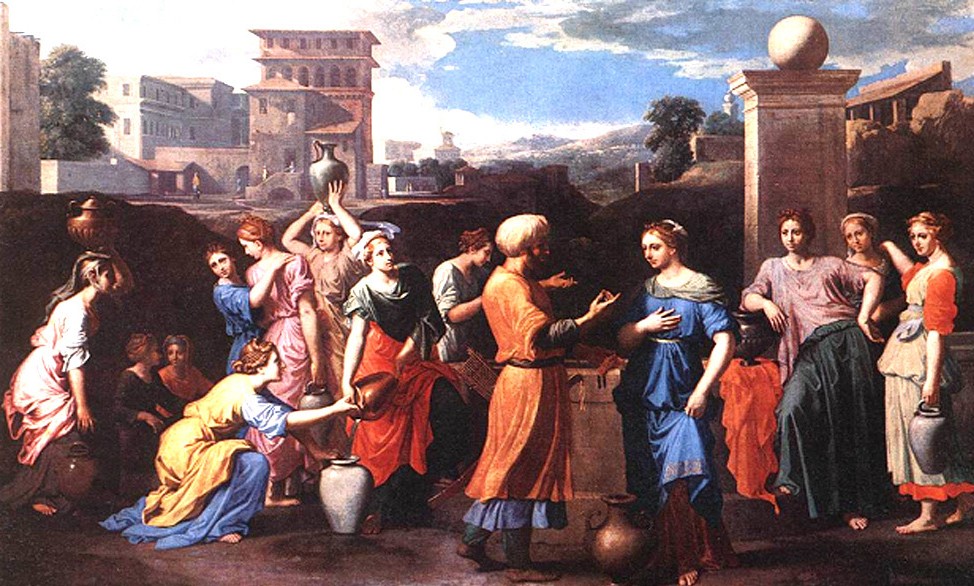
Eliezer was generously supplied.
One might wonder why God’s inspired word repeated what we already read earlier in the narrative. But nothing in scripture is included or excluded for no reason. We are interested in the reaction of the family of Bethuel and Laban. Eliezer knows they are worshippers of Jehovah. Consequently, it is important that he provide them with every detail in order for them to make a momentous decision regarding their beloved daughter.
Though Bethuel is the patriarch, and Rebecca’s father, Laban appears to take the lead in negotiations. Bethuel may have been elderly or in poor health. In ancient Near Eastern cultures, it was common for the eldest active male (Laban) to take over family negotiations if the father was unable. Also, in some Mesopotamian cultures brothers had significant roles negotiating the marriages of their sisters, especially if the father was old or less capable.
“Laban and Bethuel … said, The thing proceedeth from Jehovah: we cannot speak unto thee bad or good. Behold, Rebecca is before thee, take her, and go, and let her be thy master’s son’s wife, as Jehovah hath spoken. … When Abraham’s servant heard their words, he bowed himself down to the earth unto Jehovah” (verses 50-52).
All that Eliezer said sounded good to Laban and Bethuel and they committed Rebecca before she said a thing! Notice the level of faith in Jehovah their God. Rebecca’s family here seem to be a picture of the household of faith from which the spirit-begotten come.
OUR CONSECRATION
“The servant brought forth jewels of silver, and jewels of gold, and raiment, and gave them to Rebecca: he gave also to her brother and to her mother precious things” (verse 53).
The family had accepted the marriage proposal. This illustrates and parallels our consecration, an acceptance of the invitation to become the bride of Christ. The jewels of silver, gold, and raiment symbolize the gifts of the holy Spirit we receive at our spirit-begettal.
“In whom ye also, having heard the word of the truth, the gospel of your salvation, in whom, having also believed, ye were sealed with the holy Spirit of promise, which is an earnest of our inheritance, unto the redemption of God’s own possession, unto the praise of his glory” (Ephesians 1:13, 14). “We have this treasure in earthen vessels, that the exceeding greatness of the power may be of God, and not from ourselves” (2 Corinthians 4:7).
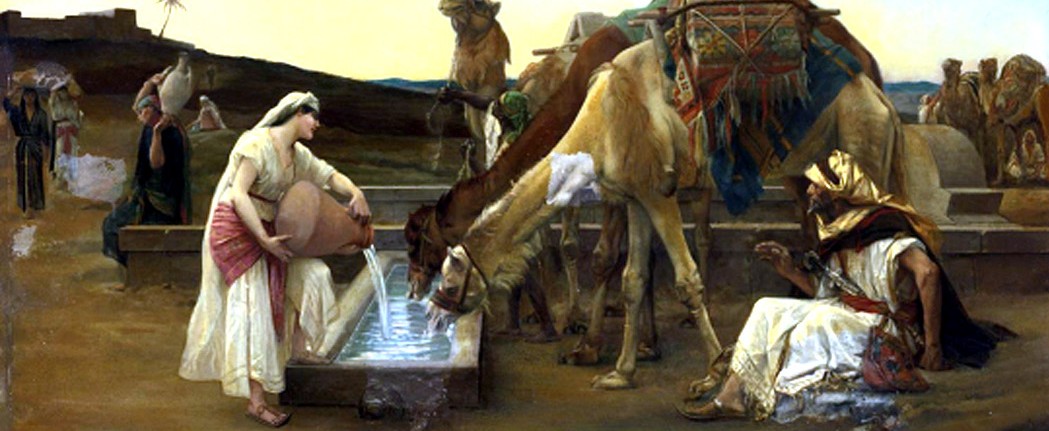
Rebecca provided even for the camels.
Note that Rebecca’s brother and mother got blessings also. The unconsecrated household of faith around us also receive blessings because of their proximity to us.
SEND ME AWAY UNTO MY MASTER
“They did eat and drink, he and the men that were with him, and tarried all night; and they rose up in the morning, and he said, Send me away unto my master” (verse 54).
With the negotiation finished, there was a celebration. Remember, Eliezer arrived late in the day. All of the events we have chronicled took place that afternoon and evening. So, they put a meal together quickly and then had a joyous feast which, apparently, lasted late in the night.
When we first come into the truth and make a consecration, it is a time of great joy. We share it with our brethren with much gratitude. The eating of spiritual food and drinking of the truth is a feast. We are like sponges in this early walk, soaking up every tidbit feature of God’s wonderful will.
But it is only the start of a long and challenging journey. The holy Spirit begins immediately to lead us onward, but there remains a long and arduous journey. Thus, in the type, we see Eliezer is still mindful of his purpose and in the next morning requests the family to let him leave immediately.
“I WILL GO”
“Her brother and her mother said, Let the damsel abide with us a few days, at the least ten; after that she shall go. And he said unto them, Hinder me not, seeing Jehovah hath prospered my way; send me away that I may go to my master. And they said, We will call the damsel, and inquire at her mouth. … And she said, I will go” (verses 55-58).
For the family, this whole event came so fast — in one day! They were not enthused about their beloved Rebecca leaving so quickly. They wished to have a little more time with her before she left, not knowing when or if they would see her again. Interestingly, they ask for 10 days – this number 10 appears several times in this account.
But Eliezer wished to proceed with his commission and deliver Rebecca to Abraham and Isaac without delay. They demurred, but agreed to ask Rebecca, who said “I will go.” With that, she agreed to leave her family immediately.
Consider for a moment what it means to leave everyone you have ever known, cut the ties of family and friends for possibly for the rest of your life. You may never see those who you love again. This is quite a sacrifice to make. “Hearken, O daughter, and consider, and incline thine ear; Forget also thine own people, and thy father’s house” (Psalms 45:10).
We note the omission of Bethuel in the final decision. Here only Laban and Rebecca’s mother are mentioned when discussing the timing of her departure. As suggested earlier, this omission suggests that he may have been alive but not actively involved.
REBECCA AROSE, AND HER DAMSELS
“They sent away Rebecca their sister, and her nurse, and Abraham’s servant, and his men. And they blessed Rebecca, and said unto her, Our sister, be thou the mother of thousands of ten thousands, and let thy seed possess the gate of those that hate them. And Rebecca arose, and her damsels, and they rode upon the camels, and followed the man: and the servant took Rebecca, and went his way” (verses 59-61).
When the family said to Rebecca, “Be thou the mother of thousands of ten thousands,” this suggests that they were aware of the promise given to Abraham, her great uncle. There was communication between Abraham and his family in Haran. “It was told Abraham, saying, Behold, Milcah, she also hath borne children unto thy brother Nahor: Uz his first-born, and Buz his brother, and Kemuel the father of Aram, and Chesed, and Hazo, and Pildash, and Jidlaph, and Bethuel. And Bethuel begat Rebecca: these eight did Milcah bear to Nahor, Abraham’s brother” (Genesis 22:20-23).
Their faith in the promise given to Abraham may explain their willingness to allow Rebecca to go. It was a great sacrifice on their part, but to have their daughter and sister be part of this great Abrahamic promise must have been a great blessing to them.
Here is the entourage for the return journey: (1) Eliezer, (2) The men who came with Eliezer, (3) The original 10 camels, (4) Rebecca, (5) Her nurse, (6) Rebecca’s companions. This is quite an entourage, and they had 500 miles of arduous travel back to Beersheba. Observe that Rebecca’s companions accompanied her. This seems to refer to the Great Company who walk with the little flock, but ultimately are not a part of the bride.
What do you think Rebecca talked about with Eliezer? No doubt, she wanted to know all about her bridegroom! What was he like? What did he look like? Did he have a favorite food? Do you think he will like me?
This trip back to Hebron or Beersheva is typical of our walk in Christ on this side of the veil after our conversion. We have the same questions! The holy Spirit, through God’s Word, answers these questions.
What is he like? “Take my yoke upon you, and learn of me; for I am meek and lowly in heart: and ye shall find rest unto your souls” (Matthew 11:29).
What does he look like? “It is not yet made manifest what we shall be. We know that, if he shall be manifested, we shall be like him; for we shall see him even as he is” (1 John 3:2).
Does he have a favorite food? “Jesus said, My food is to do the pleasure of him who sent me and to make his work complete” (John 4:34).
Do you think he will like me? “A new commandment I give unto you, that ye love one another; even as I have loved you, that ye also love one another” (John 13:34).
THE WELL OF THE VISION OF LIFE
“Isaac came from the way of Beer-lahai-roi; for he dwelt in the land of the South” (verse 62).
Isaac was not at Beer-lahai-roi, but he had come from there and was now, we surmise, at Hebron or Beersheba where Abraham was. Beer Lahai Roi means “the well of him that lives and sees me” or “the well of the vision of life.” Perhaps this is a reference to the abode of God, heaven itself. As Isaac was not at his regular home, this may be a veiled reference to Jesus leaving heaven and returning to earth to receive his bride during his parousia.
“Isaac went out to meditate in the field at the eventide: and he lifted up his eyes, and saw, and, behold, there were camels coming. And Rebecca lifted up her eyes, and when she saw Isaac, she alighted from the camel. And she said unto the servant, What man is this that walketh in the field to meet us? And the servant said, It is my master: and she took her veil, and covered herself. And the servant told Isaac all the things that he had done” (verses 63-66).
Eliezer arrived in Haran in the evening and he returned with Rebecca in the evening. The Hebrew reckoning of a day is evening to evening. So, we surmise that the arrivals were at the end of the day. Perhaps we have an allusion to the call of the church beginning at the end of the Jewish Age and uniting with Jesus at the end of the Gospel Age.
Imagine the excitement of Rebecca when she saw Isaac! “Is that him!?” Yes! And she put on her veil. The donning of the veil reminds us that we must go beyond the veil in order to be wedded to our Bridegroom. Then Eliezer gave a full report to Isaac. His report is not included, but reflecting on his thoroughness previously, we are certain that the “all the things” would be exhaustive! No doubt, Isaac said to Eliezer, “Well done, good and faithful servant!
“Isaac brought her into his mother Sarah’s tent, and took Rebecca, and she became his wife; and he loved her: and Isaac was comforted after his mother’s death” (verse 67).
This is the first instance of marital love mentioned in scripture! Isaac sees what a beautiful woman Rebecca is. But he discovered the beauty of her character, her desire to serve and please. Bringing Rebecca into his mother Sarah’s tent reminds us of the Abrahamic Covenant. It shows the fulfilment of this feature of the Abrahamic Covenant in establishing the “seed” which will bless all families of the earth. “To Abraham were the promises spoken, and to his seed. He saith not, And to seeds, as of many; but as of one, And to thy seed, which is Christ … And if ye are Christ’s, then are ye Abraham’s seed, heirs according to promise” (Galatians 3:16, 29).
THE BRIDE, THE WIFE OF THE LAMB
Note the expression, “Isaac was comforted after his mother’s death.” During the Gospel Age, Jesus, from his home in heaven must have reacted with great sorrow to the persecution and suffering of the church. He endured this for some 2000 years. Watching his body members on earth endure the horrendous experiences which came upon them because of their faithfulness and love, must have been extraordinarily difficult even knowing their purpose and final outworking promised in Revelation:
“I saw the holy city, new Jerusalem, coming down out of heaven from God, made ready as a bride adorned for her husband. … One of the seven angels who had the seven bowls, who were laden with the seven last plagues … spake with me, saying, Come hither, I will show thee the bride, the wife of the Lamb” (Revelation 21:2, 9).
“Let us rejoice and be exceeding glad … for the marriage of the Lamb is come, and his wife hath made herself ready. And it was given unto her that she should array herself in fine linen, bright and pure: for the fine linen is the righteous acts of the saints” (Revelation 19:7, 8).
This beautiful and thrilling picture of Isaac and Rebecca teaches essential lessons to the New Creation.
(1) Bring energy to your consecration! (2) Try to do more in your consecrated service to anyone than is requested. (3) Keep watering the camels! Study and meditate on the word of God. (4) Recognize and appreciate the golden gifts that God has given you.
(5) Keep your mind fixed on Jesus and the vision of being united with him. (6) Do not focus on the trials of the way, but rather the glorious destination. (7) Remember the promise that, if faithful to the end of our human lives, we shall be the “mother” of thousands of millions — all the families of the earth!
When the church is complete and united with their bridegroom, how comforting it shall be for our Lord as narrated in the account of Isaac and Rebecca — the longest and most detailed type about the acquisition of the bride of Christ.
— Br. David Stein
[1] Thayer’s Definition from e-Sword X.
[2] https://www.gotquestions.org/hand-under-thigh.html