
The Builder’s Temple-Tower (Luke 14:25-30)
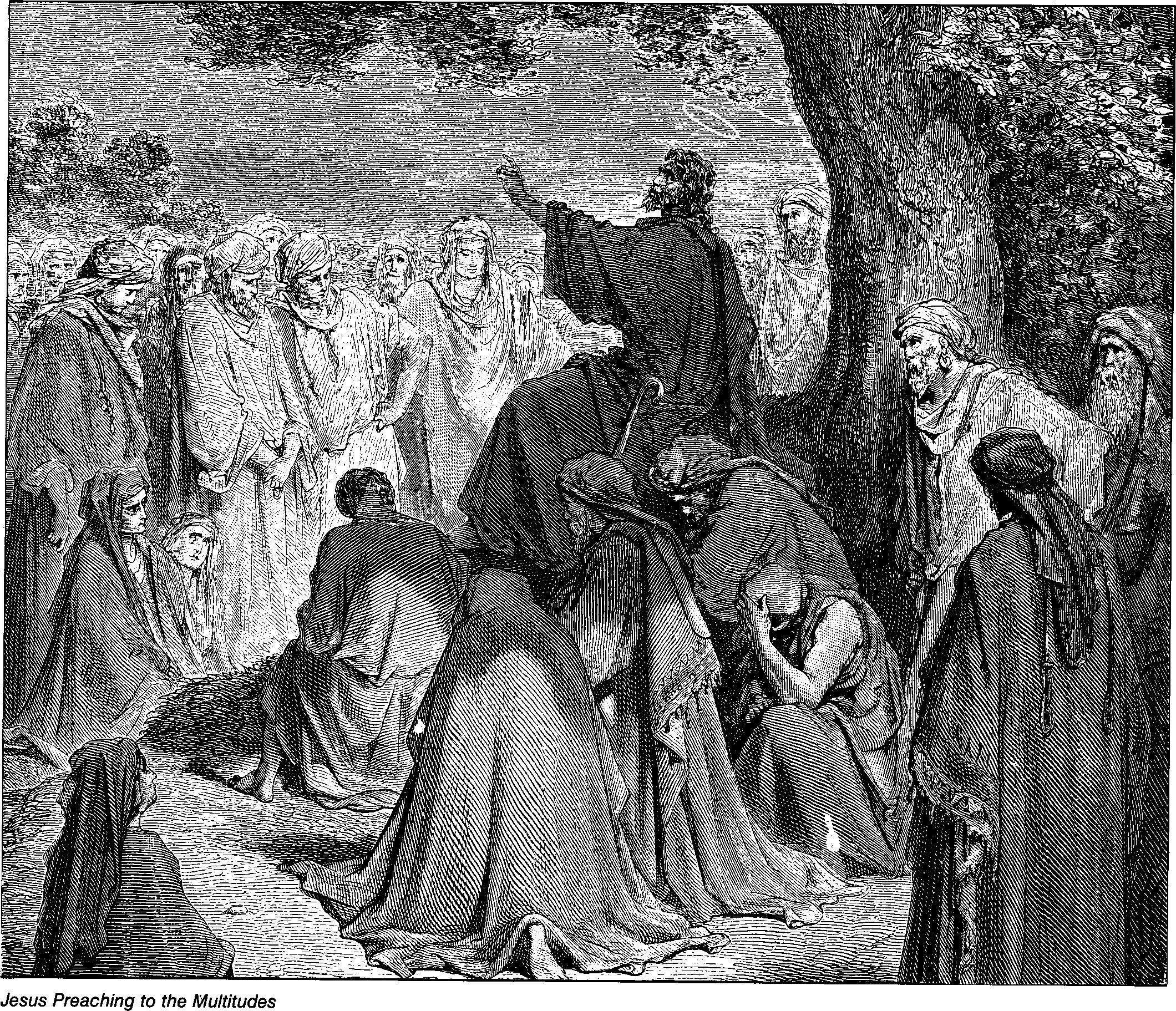
“Now there went great multitudes with him.” Some were friends and followers; more were enemies who sought an occasion to do him injury; most, mere curiosity-seekers or place-hunters. Upon this mixed assembly the Master turns, and in a few words lays down the primary requirements for discipleship. Listen, O easy-going, lukewarm professor of Christianity: full consecration – a daily cross-bearing, even unto death – these things are required for all who would become his disciples, who would learn of him. He must have first place in the hearts of his followers – he will brook no rivals. “If any man come to me, and hate* not his father and mother, and wife, and children, and brethren, and sisters, yea, and his own life also, he cannot be my disciple.”
At this radical and sweeping pronunciamento, the Master no doubt read in the faces of his hearers varying emotions of astonishment, dismay, sorrow and ridicule. Then, for the instruction of the earnest truth-seekers – he cared little for the crowd of the curious and lukewarm – he gave the two short parables of The Builder’s Tower and The King’s Soldier. These illustrations, let us note, are in explanation of his extreme demands upon his followers – his disciples.
In the first we understand he represents himself as planning the building of a vast structure – a tower, or stronghold. Elsewhere he has stated his intention – “I will build my church, and the gates of hell shall not prevail against it” (Matthew 16:18). At the time he speaks he is himself engaged in laying the foundation, by the sacrifice of himself as the ransom price. “For other foundation can no man lay than that is laid, which is Jesus Christ” (1 Corinthians 3:11).
Upon this foundation – the ransom – is to be built the superstructure – variously referred to in Scripture as a tower, a refuge from the Enemy; a temple meeting place for God and men; a city, the New Jerusalem, symbolic of the government or Kingdom of God, to be erected by the Christ, on earth, at his glorious appearing.
Jesus was himself about to complete the foundation when he gave his parable; and through it he tells us that he had counted the cost for completing the building. What did his reckoning show would be required? We reply, naturally, a certain quantity of a peculiar quality of “living stones” – to use a figure supplied by two of the Apostles – Peter and Paul.
“The Lord is gracious to whom coming, as unto a living stone, rejected indeed of men, but with God, elect, precious ye also as living stones are built up a spiritual house. Because it is contained in scripture, Behold I lay in Zion a chief corner stone, elect, precious and he that believeth on him shall not be put to shame” (1 Peter 2:4-6)
“Ye are no more strangers and sojourners but fellow citizens with the saints and of the household of God built upon the foundation of the apostles and prophet4 Christ Jesus himself being the chief corner stone, in whom all the building fitly framed together groweth unto an holy temple in the Lord – in whom ye also are builded together for an habitation of God through the Spirit.” (Ephesians 2:19-22)
But what an extraordinary simile – “living stones!” A reference of course, to the characters of those composing the symbolic structure – hard, unyielding to outside influences as stones, yet as submissive and unresisting as stones to the mason. The more we consider this peculiar and almost paradoxical character-combination, the less surprised are we that it has required nearly nineteen hundred years to obtain the requisite number. Yet how foolish it would be to attempt to build a tower with stones that refused to submit themselves to the mason’s hand! Stones that, placed in position in the daytime, jumped down and ran away at night! The Master declines to build his wonderful living Temple for his Father’s occupancy with any such flimsy and crumbling material. “If any man come to me and hate not” all else, “he cannot be my disciple”
We may not be surprised, then, neither consider unreasonable or unjust, the rigid initial requirements, nor the severe process of preparation and incidental elimination of the unfit, through which the prospective Temple-stones are put.
“God’s hand that saves, though kind, seems rough;
His methods sometimes rude;
Frail, shrinking nature cries ‘Enough!’
Yet proves the Lord is good.
“The temple stones God now prepares
Oft cry, ‘You hurt me sore;’
The Sculptor seeks their perfectness,
And trims them more and more –
“Until, by dint of strokes and blows,
The shapeless mass appears
Symmetric, polished, beautiful
To stand th’ eternal years”
– Horace E. Hollister St. Paul Enterprise, 1914
* The word ‘hate’ ought to be understood in the light of Matthew 10:37 as loving one’s relatives less than the Lord. Jesus Christ should never be placed on the same level as human relatives.