
Twenty-One Days
“The prince of the kingdom of Persia withstood me one and twenty days: but, lo, Michael, one of the chief princes, came to help me; and I remained there with the kings of Persia” (Daniel 10:13).
This text has captivated our interest from our earliest years. Gabriel, one of the highest of God’s angelic host, evidently second only to Michael, was withstood on an errand of the Most High for twenty-one days. Surely God could have overcome this impediment through a metaphorical snap of his fingers, but he allowed His messenger to be delayed for three weeks on his divine errand.
That God allowed the delay suggests a good reason for it. One reason is indicated by the context. The book of Daniel is in two main parts: the first six chapters narrate the experiences of Daniel; the last six record the visions and prophecies given to Daniel. There are four of these. Chapter 7 is about four beasts representing Babylon, Media-Persia, Greece, Rome, and a stout horn representing Papacy which ruled for 1260 years. Chapter 8 speaks of three empires, Media-Persia, Greece, Rome, and the pollution of the Church which would abate after 2300 years. Chapter 9 also begins in the Persian Empire and takes us 490 years through the first advent of Christ.
But the most detailed prophecy is the fourth, which consumes the last three chapters of Daniel. It was the message of this prophecy which was held up for twenty-one days. During this period Daniel was in prayer for some burden on his heart, and was sufficiently motivated to fast while awaiting an answer. “In these days, I Daniel was mourning three full weeks. I ate no pleasant bread, neither came flesh nor wine into my mouth, neither did I anoint myself at all, till three whole weeks were fulfilled.” This brought him to the 24th day of Nisan (Daniel 10:4), so he apparently began his prayer on the third day of the month.
The prophecy which Gabriel brought to Daniel at the end of these days is recorded in chapters 11 and 12. It is detailed, far reaching, sublime, tracing two and a half millennia of human history in advance, reaching to the Kingdom of Christ and the resurrection of the dead. The purgative twenty-one days of waiting were an appropriate preparation for Daniel to receive such a wonderful blessing as this divine vision of God’s program.
When Gabriel arrived he appeared to Daniel in a glory befitting an angelic messenger. He was “clothed in linen … loins girded with fine gold … His body also was like the beryl, and his face as the appearance of lightning, and his eyes as lamps of fire, and his arms and his feet like … polished brass, and the voice … like the voice of a multitude” (Daniel 10:5, 6).
Daniel was awestruck and weakened, but strengthened by Gabriel and further encouraged by his address. “O Daniel, a man greatly beloved, understand the words that I speak unto thee, and stand upright: for unto thee am I now sent” (Daniel 10:11). Daniel stood, trembling, and was told Gabriel had been sent at the first of Daniel’s prayers, but had been withstood in his mission.
Probably the “prince of the kingdom of Persia” who with stood Gabriel was Satan himself. Satan was originally Lucifer, one of two “morning stars” which rejoiced at creation Job 38:7). As Lucifer he was second in glory to Jesus, the Logos. In this case he would have been superior in power to Gabriel and perhaps for this reason able to obstruct Gabriel from his divine errand. There Gabriel remained, “with the kings [rulers] of Persia,” presumably other fallen angels supporting Satan.
MICHAEL
But “Michael, one of the chief princes,” came to Gabriel’s assistance, allowing Gabriel to proceed. It is widely supposed among the brethren that Michael is the name applied to Jesus before he came to earth (Logos being a title, Michael a name). This would explain Michael’s ability to overcome the opposition, since the Logos would have been superior to Lucifer.
This view troubles Trinitarians who think Jesus was not an angel, whereas Michael clearly was an angel. However, their objection fails to consider Hebrews 1:9, which speaks of Jesus anointed “above thy fellows,” referring to the angels, suggesting he was one of them. Also Malachi 3:1 refers to Jesus as the “messenger [angel] of the covenant” whom Jehovah would send to Israel. To be sure, Jesus was of a higher station than the others, for Jesus as the Logos was the agent of Jehovah in the creation of all things, including the angelic hosts (Colossians 1:16). But he was still a servant of God, a messenger of God, an angel of God.
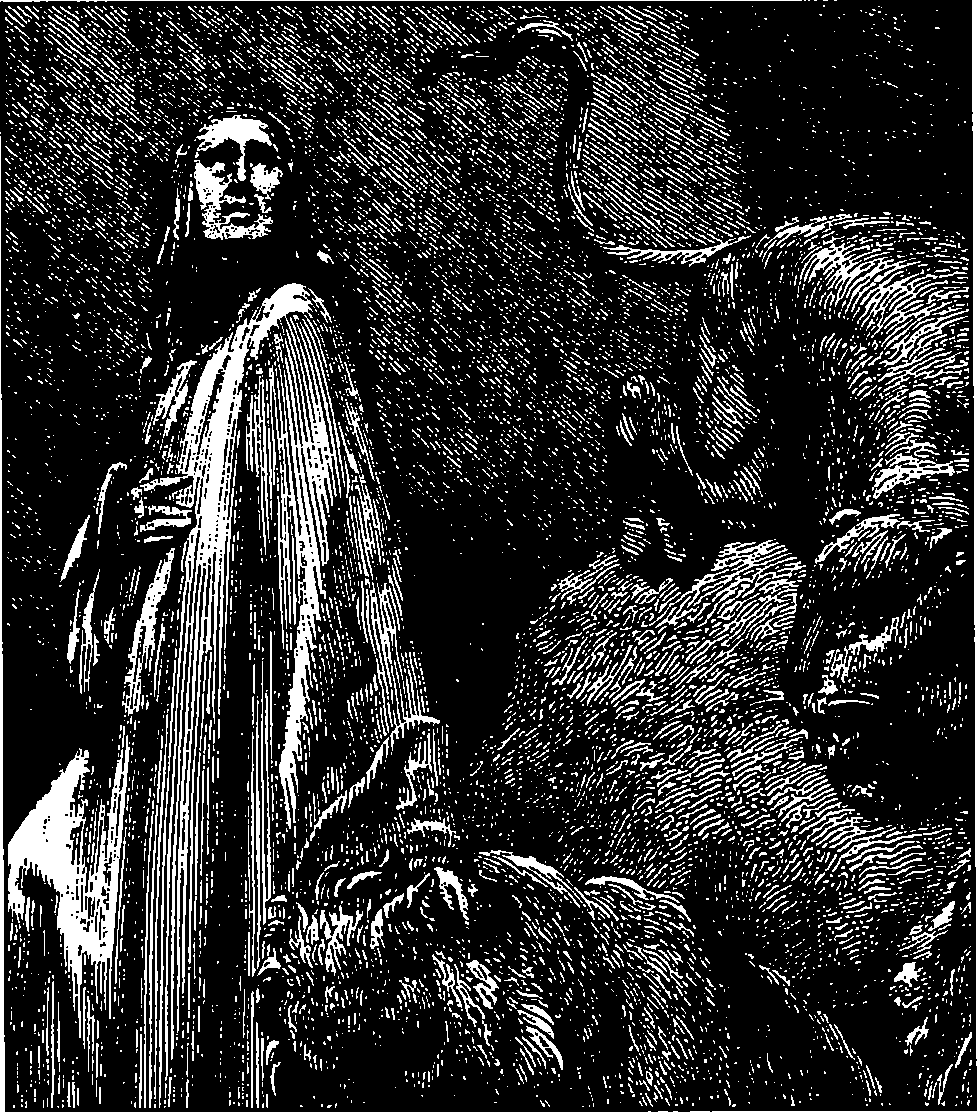
Daniel in the Lion’s Den
On the other hand, the direct connection between Michael and Jesus is not as strong as one might wish. It is not explicitly stated that Michael was Jesus. But there is evidence. When Paul refers to the return of Christ, he specifies that Christ returns with the “voice of the archangel” (1 Thessalonians 4:16). Linking this with Jude’s reference to “Michael the archangel” suggests the “voice” Christ uses at his return is his own, he being Michael.
This is inferential. But there are other supporting testimonies. (1) Hebrews 3:1-3 speaks of Jesus as more worthy of honor than Moses, just as the builder of a house has more honor than the house. The house here is the house of Israel, of which Moses was a part. Paul’s comparison indicates Jesus was the builder of this house – as God’s agent – for “he that built all things is God” (Hebrews 3:4). Yet in the Jewish mind, the patron of Israel was Michael (Daniel 12:1). Paul’s argument here accords with the assumption that Michael and Jesus were the same person.
(2) Daniel 12:1 refers to the time when “Michael shall stand up.” The expression “stand up” is used six times in the prophecy to refer to a king coming to power (Daniel 11:2-4, 7, 20-21). Probably here it also means stand in regal authority, which would apply to Christ. The description in Daniel 12:1, 2 matches well the description of events following the regal authority of Christ at his return, described in the vision of the seventh trumpet (Revelation 11:15-18).
Consistent with this, we observe that the annunciation to Mary that she would be the bearer of the child Jesus was Gabriel, rather than Michael, Jesus, who was to have his life transferred to her womb (Luke 1:26).
The view that Michael is Jesus is not unique to the Bible Student fellowship or those who share its roots. “Hengstenberg maintains at length (both in his Christology and his Commentary on the Apocalypse) that Michael is no other than the Lord Jesus Christ himself.”1
Here are the comments of the Adventist expositor, Uriah Smith. “Who was Michael, who here came to Gabriel’s assistance? The term signifies, ‘He who is like God,’ and the Scriptures clearly show that Christ is the one who bears this name. Jude (verse 9) declares that Michael is the Archangel. This word signifies ‘head or chief, angel,’ and in our text Gabriel calls Him ‘one [or, as the margin reads, ‘the first’] of the chief princes.’ There can be but one archangel, and hence it is manifestly improper to use the word in the plural as some do. The Scriptures never so use it. In 1 Thessalonians 4:16, Paul states that when the Lord appears the second time to raise the dead, the voice of the archangel is heard. Whose voice is heard when the dead are raised? – The voice of the Son of God John 5:28) … In the last verse of Daniel 10, He is called ‘your Prince,’ and in the first of Daniel 12, ‘the great Prince which standeth for the children of thy people,’ expressions which can appropriately be applied to Christ.”2
We will add a final suggestion. In the prophecy of Daniel chapters 10-12, a key text is Daniel 11:31, “arms shall stand on his part, and they shall pollute the sanctuary of strength, and shall take away the daily sacrifice, and they shall place the abomination that maketh desolate.” It is from this event that the 1260, 1290, and 1335 years of Daniel 12 begin (compare Daniel 12:11). This was fulfilled by Papacy, set up in power in 539 AD. Following this through the remainder of chapter 11 brings us to the second advent of Christ in Daniel 12:1.
But on another level, the text also refers to the persecution of the Jews under Antiochus Epiphanes. This thread, followed through chapter 11, leads us to the first advent of Christ in Daniel 12:1, and the spiritual regeneration since then (compare Ephesians 5:14). In both cases the standing up of “Michael” is fulfilled by one of the advents of Christ. In each case the standing up of “Michael” is fulfilled by an advent of Christ.
TWENTY-ONE DAYS
The period of delay is stated expressly. It was twenty one days. By understanding what was passing through the mind and heart of Daniel at this time, we may gain a clearer insight into why it was this period of time in particular.
This episode occurs in the third year of Cyrus. Two years earlier, in his first year, Cyrus had released the Jews to return to Jerusalem and rebuild their temple (Ezra 1:1-4). In the second year the returned exiles laid the foundation for the new temple (Ezra 3:8-13). But then the adversaries of Israel, Samaritans, “weakened the hands of the people of Judah and troubled them in building, and hired counselors against them, to frustrate their purpose, all the days of Cyrus king of Persia, even until the reign of Darius king of Persia” (Ezra 4:1-5).
When the news of these frustrations and the work stop page came to Daniel, it would have grieved him. Probably it was this concern about the temple of prayer that caused him to fast, mourn, and seek Jehovah’s grace in the matter. The temple building “ceased unto the second year of the reign of Darius king of Persia” (Ezra 4:24), and was completed “the third day of the month Adar, which was in the sixth year of the reign of Darius the king” (Ezra 6:15).
Cyrus reigned nine years over the empire, his son Cambyses eight years, his successor Bardiya or Smerdis but a few months, and Darius Hystaspes (the Darius of our concern, not to be confused with Darius the Mede) reigned 36 years. This means from the third year of Cyrus when Daniel prayed, until the end of the sixth year of Darius when the temple was finished, was a span of twenty-one years.
Thus the twenty-one-day delay in reply to Daniel’s prayer was a day-for-a-year representation of twenty-one years which would pass before his concern for the Temple was resolved by its completion. Daniel’s prophecies in particular are renowned for the day-year fulfillment, making this picture especially appropriate to Daniel.
There is a larger picture as well. The temple represents the Church. “Know ye not that ye are the temple of God, and that the Spirit of God dwelleth in you?” (1 Corinthians 3:16). “Ye also, as lively stones, are built up a spiritual house” (1 Peter 2:5). Jesus laid the foundation at the beginning of the age, and the apostles and others assisted in the early work. But then the adversaries set in, and the building slackened. The Reformation picked up the work again, and at last the church will be completed, but the whole takes some part of twenty-one centuries to complete.
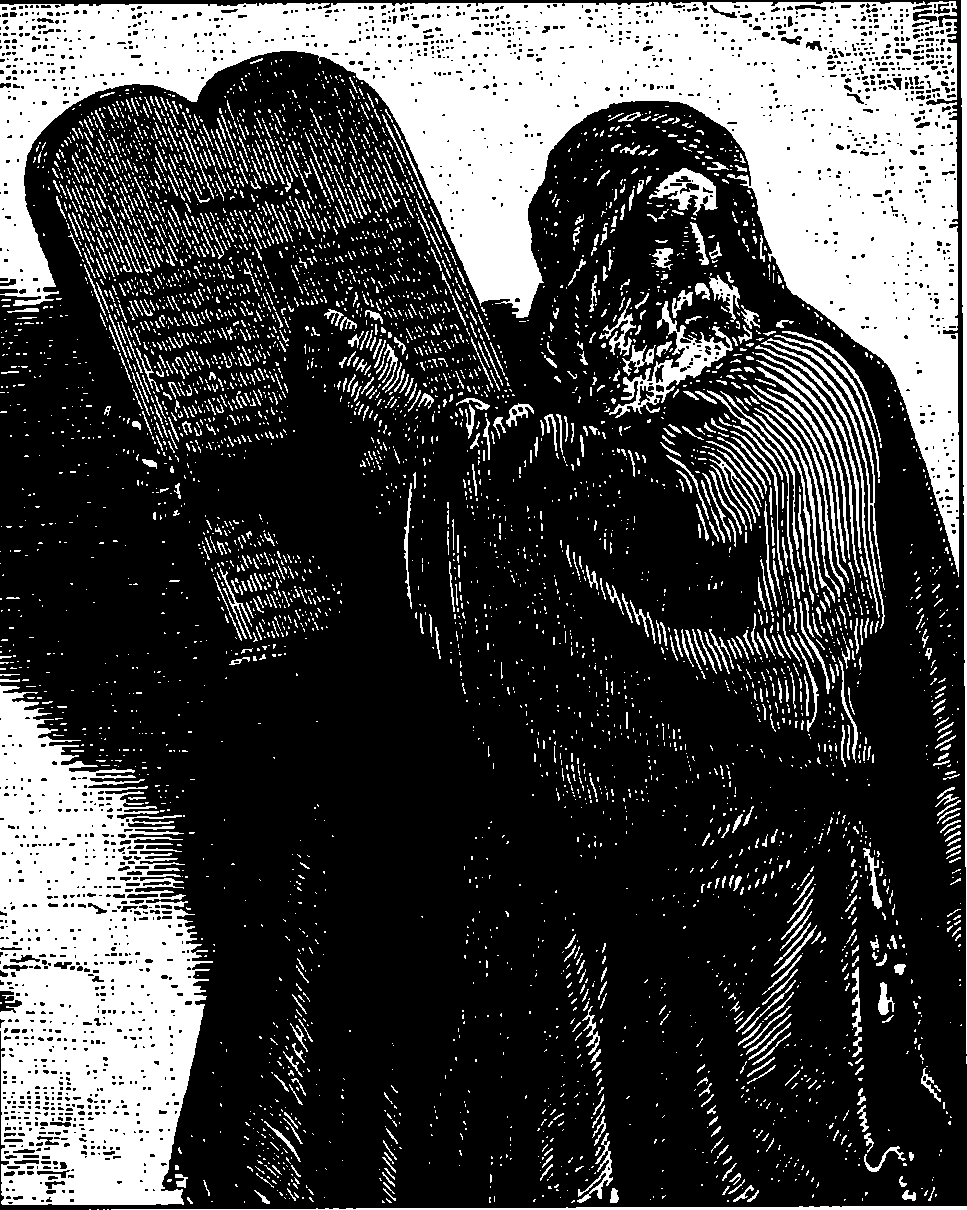
Ezra, who Refurbished the Temple
The enemy in Daniel’s day worked through the Persian authorities, just as the angel Gabriel was withstood by the “prince of Persia.” That prince was Satan, and he is the culprit also in hindering the progress of the spiritual temple for so many centuries.
DAYS THREE AND TWENTY-FOUR
Notice that Ezra says the temple was completed on the third day of the month. When Daniel set himself in prayer and fasting, it was following the third day of the month. It may seem like a weak connection. But when the prophet Haggai exhorted the people to set about resuming their work, it was the 24th day of the month (Haggai 1:15), reminding us of the angel’s answer to Daniel’s prayer on the 24th of the month (Daniel 10:4). Haggai even made a special point to note the very day of his prophecy. “Consider now from this day and upward, from the four and twentieth day” (Haggai 2:18).
The intervening twenty-one days naturally divide into seven periods of three days each. This is appropriate as a picture of the building of the spiritual temple during the Gospel Age, which is divided in Revelation into seven periods of time. Three represents redemption, and the Gospel Age of redemption is thus here represented by 3 x 7.
SEVEN YEARS
The seven stages of the Church are also indicated in the building of the original temple during the reign of Solomon. That temple was begun in the fourth year of Solomon (1 Kings 6:1), and ended in year eleven. “So was he seven years in building it” (1 Kings 6:37, 38).
The next verse tells us of a second construction also. “Solomon was building his own house thirteen years, and he finished all his house” (1 Kings 7:1). Thirteen represents the ransom (the perfect one, Jesus, seven, who took on him our sins, six, the sum producing thirteen). This speaks also of a construction during the Gospel Age, the first age in which the Ransom is applied. But what is the distinction between the temple (the Church) and Solomon’s “own house?”
We suggest they both represent the Church from differ ent standpoints. The temple represents the Church as the place of meeting and blessing and reconciliation between God and man when it functions during the Kingdom. But the Church is more than merely an aid in reconciling the world back to God. It is also a special treasure for Jesus, “Solomon,” peculiarly “his own house” of comfort, honor and glory.
In Jesus’ closing experiences he asked rhetorically, “Thinkest thou that I cannot now pray to my Father, and he shall presently give me more than twelve legions of angels?” (Matthew 26:53). But Jesus did not ask his Father to intervene to spare him from the sufferings to follow. He accepted the will of God without turning back. But the Father, nevertheless, gives Jesus twelve legions of angels, not for his rescue, but to assist him in the rescue of the world of man kind during the Kingdom. Thus Revelation chapter seven depicts the Church as twelve tribes of spiritual Israel – twelve legions, as it were, to support Christ in his work.
The Church is elsewhere symbolized as his body members, his bride, those who “follow the lamb whithersoever he goeth” (Revelation 14:4). What an honor and privilege to be called to this body! To be “his body, the fullness of him that filleth all in all” (Ephesians 1:23). This body of devoted followers of Christ, who share his sufferings, his experiences, his trials, will be a blessed refuge and treasure for the king of glory. ”A seed shall serve him … they shall come, and shall declare his righteousness unto a people that shall be born, that he hath done this” (Psalms 22:30, 31).
Apparently Solomon built the temple and his house sequentially, for the seven years and the thirteen years cumulatively make twenty years, which is the total reported. ”At the end of twenty years …Solomon had built the two houses, the house of the LORD, and the king’s house” (1 Kings 9:10). As the number two and its orders of magnitude represent the work of the Spirit, these twenty years apparently represent the age of the Spirit, the Gospel Age. This is elsewhere represented by 200 John 21:8), and 2000 Joshua 3:4).
Since Solomon began construction in year four of his reign, he ended the seven years of temple building in year eleven, and thus the thirteen more years building his house would have concluded in year 24 – reminding us of the 24th day of the month in which Daniel’s days of waiting were concluded. Thus the two passages, Daniel and 1 Kings, both picturing the Gospel Age construction of the Church, give another clue to relate each to the other.
EZRA AND NEHEMIAH
Seven years, and thirteen years, appear again respecting the temple and Jerusalem in the experiences of Ezra and Nehemiah. Ezra was not among the initial returnees to Israel after the decree of Cyrus for Ezra had not been born when the return from Babylon began. Hence, while the book called “Ezra” does narrate the early return, the journey of Ezra himself was not for some eighty years after the initial return, and long after the temple at Jerusalem had been completed.
The narrative of Ezra’s return is found in Ezra chapter seven. By his time the temple had fallen into some disrepair and he accomplished a refurbishing of the temple and reinvigoration of its services and offerings. What might this represent? Evidently the temple still represents the Church. And as in both other pictures about the temple, the concept of seven stages is shown again in the Ezra narrative. But this time it is not a seven-year period of temple work. In stead it is a service toward the temple in the seventh year of the king, Artaxerxes.
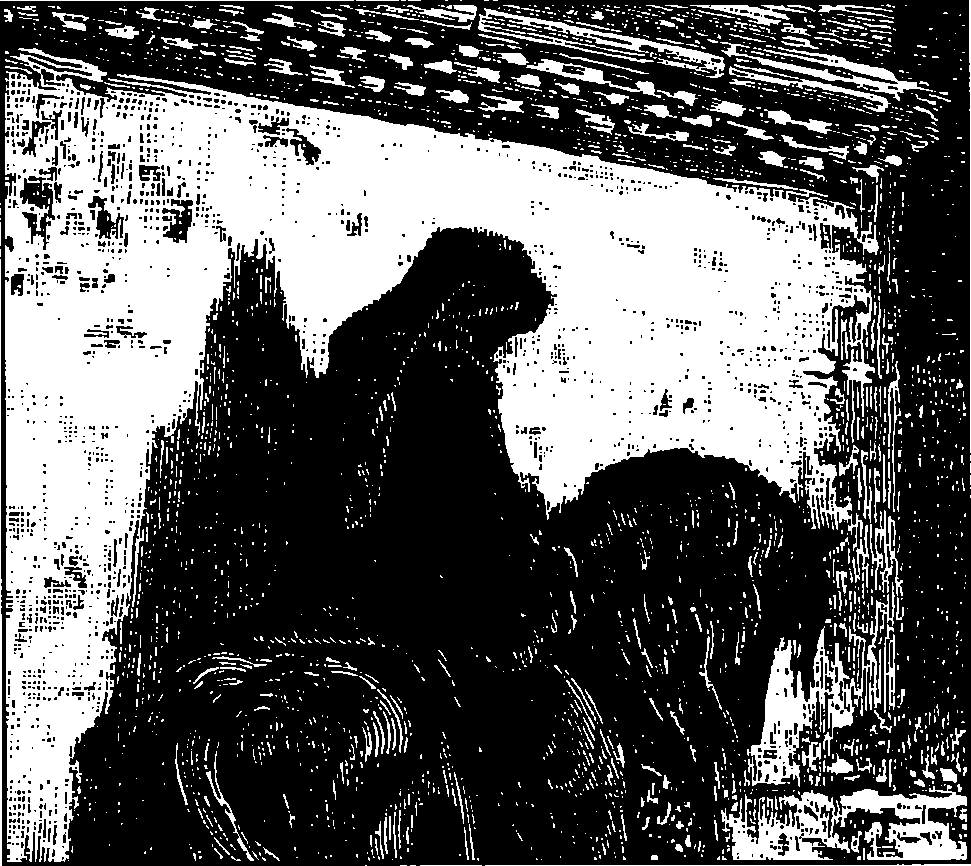
Nehemiah Secretly Assessing the Walls
We suggest King Artaxerxes represents Jesus, whom we recognize as our King during the Gospel Age. His seventh year represents the seventh period of the Gospel Age. This episode tells us about the work for the Church during the seventh stage, the Laodicean stage. Ezra, the servant of God for this work, perhaps represents the Laodicean messenger, Pastor Russell. He did not build the Church, that work had been ongoing for years. But through the abuses of the age it was in need of work, and this came through the resurgent work stimulated by Present Truth during the Harvest.
This refurbishment was not the work of seven years, but of the seventh year (Ezra 7:8).
Ezra came to Jerusalem in the fifth month of the year, an appropriate number since five is a picture of the New Creation. This is suggested (among other things) by the five wise virgins of our Lord’s parable, and the five thousand nourished by Christ’s miraculous feeding of the multitude.
But Ezra did not accomplish all that he wished. He was given a large sum of money and supplies by the King, and evidently did restore the temple. He then proceeded to build again the walls of the city which had laid in ruins apparently since the days of Nebuchadnezzar. Perhaps there had been some intervening work, but it had not gone to completion. Ezra 4:11, 12 explains that among the various accusations of the enemies of Israel through the years was one in the reign of Artaxerxes about “the Jews which came up from thee to us” who “are come unto Jerusalem, building the rebellious and bad city, and have set up the walls thereof, and joined the foundations.” This refers to the work Ezra began.
But Ezra did not complete the work. The enemies gained permission to stop the work and “went up in haste to Jerusalem unto the Jews, and made them to cease by force and power” (Ezra 4:23). Thus the walls continued to languish incomplete until the days of Nehemiah. This brings us thirteen years in the future, to the 20th year of Artaxerxes (Nehemiah 1:1). Already we notice a parallel to the picture in Solomon’s day- a seven-year work, followed by a thirteen-year work. Both works represent developing the Church, but different perspectives are given in each.
So with the temple and walls in the days of Ezra and Nehemiah. The temple represents the Church, as usual. But so do the walls of Jerusalem. Revelation 21:14 says the wall of New Jerusalem is founded on the twelve apostles, and verse 17 says the wall measured 144 cubits. The different viewpoint between the work of Ezra and Nehemiah has to do with the “refurbishment” of the Church on one hand, and the “completion” of the Church on the other.
Pastor Russell did “refurbish” the temple with an understanding of the Divine Plan. And he endeavored to complete the Church, and supposed even in his last days that it would be “perhaps a year or two or three – the full number of the Elect will be completed, and all will have gone beyond the Veil and the door will be shut.”3 But he passed to his reward, and rather than conclude speedily, the work languished for many years.
Nevertheless, it will be complete. The work of Nehemiah seems to represent this work, as Nehemiah completed the building of the walls of Jerusalem speedily when the time came, thirteen years after the work of Ezra. Ezra himself remained the spiritual leader of the Israelites even to the time of Nehemiah (Nehemiah 8:1), probably showing that even though Pastor Russell has passed from the scene, his spiritual leadership in pointing to the “Faith which was once delivered unto the saints” endures Jude 1:3).
The interval of thirteen years between Ezra and Nehemiah probably shows that we are still in the Gospel Age of redemption, in this case in the end or harvest of the age. Nehemiah completed the walls in 52 days, which is 4 x 13. This shows the final climax of this age of redemption as the Church enters beyond the four pillars dividing the holy from the most holy. Thus concludes the work of the first Age of the Spirit, pictured in this 20th year of Artaxerxes – just as Solomon took twenty years to build his temple and his house.
A THIRD BUILDING
There is yet one further building mentioned by Solomon, which takes us into the Kingdom in picture. “He built also the house of the forest of Lebanon” (1 Kings 7:2). A forest is elsewhere a picture of multitudes of peoples and nations (Ezekiel 20:46-49, 31:5). The work of the next age will be to build a house of glory from the world of mankind, as a tribute to the great King Jesus, and a stately inheritance for the world.
The dimensions of this house appear to be an interesting mix of dimensions we see in both the Tabernacle and Noah’s Ark, which is fitting, since both of these represent the redemption available in Christ. That redemption comes to the world in the Kingdom.
The floor plan was 100 cubits by 50 cubits (as the Court of the Tabernacle), and the height was 30 cubits (as Noah’s Ark). There were fifteen pillars in a row, and fifteen is a picture of deliverance. There were three rows of these, three a picture of redemption. There were windows for light “in three ranks,” and the ark had three stories or levels. It had cedar pillars, cedar beams, and cedar flooring, perhaps representing everlasting life which the world will inherit. However, no mention is made of gold or silver, so prominent in the Temple.
By so many varied and intertwined symbols does God assist us with lovely tapestries of symbol and beauty, which augment and intensify our appreciation of His Plan of the Ages.
– David Rice
(1) McClintock and Strong’s Cyclopedia, Volume 6, “Michael,” p. 218.
(2) Smith, Uriah, The Prophecies of Daniel and the Revelation, Review and Herald, Washington, D.C. (1944) p. 229.
(3) Russell, Charles Taze, Studies in the Scriptures, Volume 3, Foreword, pp. i, ii.