
The Letter to Smyrna (Revelation 2:8-10)
THE TITLES OF CHRIST IN REVELATION
In the book of the Revelation, Christ reveals himself to the Church according to their moral condition, and the title which Christ assumes in addressing each church anticipates what is vital and with moral significance to them. For example, in the writing to Pergamos we read, “By the angel of the church in Pergamos write; These things saith he which hath the sharp sword with two edges” (Revelation 2:12). Given such a superscription what may we expect from the Lord Jesus, its speaker, who bears “the sharp sword with two edges?” Can we expect him to utter words of gentle sympathy and consolation? Would such words be in harmony with the attitude and weapon of battle?
From such a superscription we may infer a purpose to smite, to avenge, to “break in pieces the oppressor” (Psalm 72:4). We find that such an inference is justified by the exclamation of the offended Judge, “Repent; or else I will come unto thee quickly, and will fight against them with the sword of my mouth” (Revelation 2:16).
Let us take another example, “By the angel in Thyatira write, These things saith the Son of God, who hath his eyes like unto a flame of fire, and his feet are like fine brass” (Revelation 2:18). Can there be any hesitation in foretelling the moral intent of such a superscription? When the Son of God enters a church with “eyes like unto a flame of fire,” that church may expect examination, scrutiny, trials, penetration that cannot be resisted. Again, the epistle shows that the aspect and the purpose are in perfect harmony, “I am he which searcheth the rains and hearts: and I will give unto every one of you according to your works” (Revelation 2:23).
“By the angel of the Church in Philadelphia write, These things saith he that is holy, he that is true, he that hath the key of David, he that openeth and no man shutteth, and shutteth and no man openeth” (Revelation 3:7). Is such a superscription at all enigmatical? He who lays his hand upon the doors of the universe, and bears upon his shoulder the key of David, is surely about to commission his saints to arise and grasp some opportunity that is fraught with eternal blessing, to enter upon a course of service which will involve and sanctify the highest interests of his dear ones. Is this anticipation warranted at all? Let the letter answer, “Behold, I have set before thee an open door, and no man can shut it” (Revelation 3:8).
TENDERNESS TO SMYRNA
“By the angel of the church in Smyrna write, These things saith the first and the last, which was dead and is alive” (Revelation 2:8). The introduction paves the way for a gush of tenderness; such a reference to the most pathetic facts of his earthly history must anticipate a stream of infinite pity and tenderness, and that such anticipation is realized will be seen as we proceed. The church in Smyrna was a suffering church. It sat in the dust, and its lamentations were turned into mockery by a malicious and triumphant foe.
Its history was one of toil and tribulation, and the prophetic throbs of the coming time foretold suffering, imprisonment, and death. The church assumed a mourner’s attitude and gathered sackcloth round its trembling frame; and to such a church how could the Savior come, but in the tenderest aspect of his holy and blessed nature?
When we say to his people, we mean to each saint individually and to the Church collectively (Revelation 1:4, 7-17, see also R4870 par. 3-5, R5718 par. 1, R3569 par. 1,2). In this, we believe we have an explanation of the diversified and changing mission of the Church throughout the Gospel Age. To one man, or to one Church, Christ presents himself bearing “the sharp sword with two edges;” to another, with eyes blazing with penetrating light; to another, as holding the key of opportunity; and to another, as grasping infinitude, and girt with the pledges of ascension. It is possible to have all these, and many more, visions of the selfsame Savior. Our apprehensions of his identity are regulated by our moral conditions, so that every man has only to declare the attitude and tone of his own soul.
With this before us as a general principle, it will not be difficult to show how such a superscription would animate and sustain the Church in Smyrna. As our Savior is the First and the Last, he must be the only direct creation of the Father; and, as the Logos, all things were created through him. Any other view would be in conflict with the Scriptures (Revelation 3:14, Colossians 1:15, 1 Corinthians 8:6, John 1:1-3, Diaglott, R5992).
“THE FIRST”
Who can fathom the immensity of these words and realize the number of ages we must re-traverse before we can behold the time not only when the Logos was created, but when God was alone. When can we behold the first gleam in an infinite universe which encircles God as a radiant glory of un-waning light. This expression takes us back over immeasurable gulfs into which the centuries have sunk; we wing our way beyond the dust of every empire; pass every galaxy, constellation, star and planet that glows in mysterious silence in the domes of creation; we penetrate far beyond the sound of the song of the oldest seraphim; and we enter the solemn pavilion of the unpeopled infinitude. Here no voices sing, no footfall resounds, no heart throbs. We stand trembling at our own presumptuousness in the palace of the solitary God in a silence so great that it terrifies; we are there, before the Logos was brought into being, before he has made all the galaxies, constellations, stars, and planets in the infinite voids; all this, and infinitely more, we must realize in order to attain the dimmest apprehension of these words. If we look back, beyond the birth of time, or the worship of angels, or the fabrication of the ages, Behold! He stands as the Father’s agent in all things.
Yet, he stands a slain Lamb receiving in anticipation the adoration of a grateful universe. And if we look forward, we behold him in the far-off horizon, King of kings, Lord of Lords, crowned with unnumbered crowns, the heir of all things. As our Savior was dead and is alive again, so those who are now enduring the fellowship of his sufferings shall know the power of his resurrection. The cycle is suffering, death, and resurrection. All who follow Christ pass this discipline. The story of the resurrection is far from fully told.
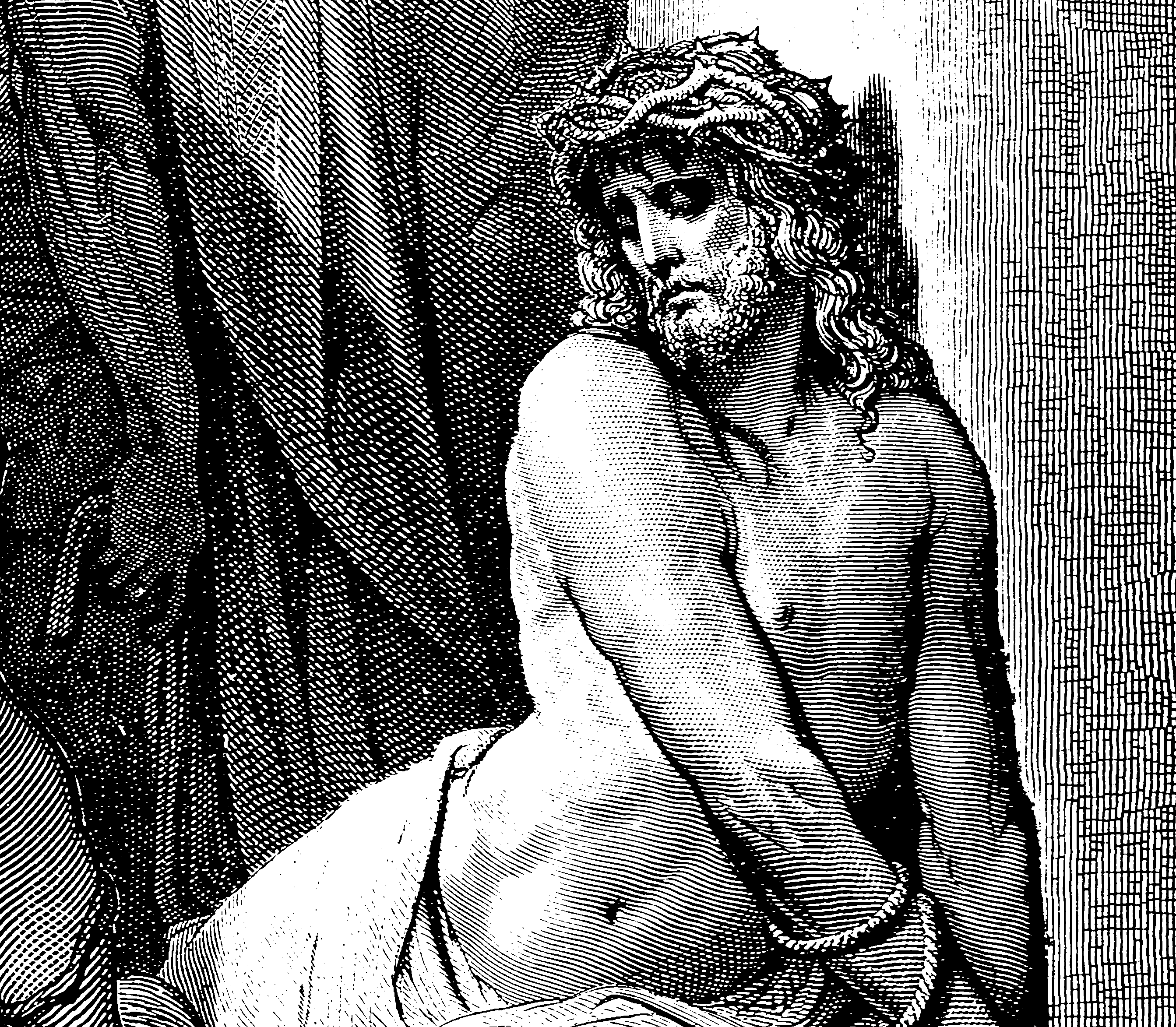
He who died, and lived again.
The angel sitting at the head of the grave might have told us more, but he did not (John 20:12, 13, Luke 24:1-6, Mark 16:1-7, Matthew 28:1-7).
“I WAS DEAD”
The councils of eternity are epitomized in this declaration. The problem over which the ages bent in perplexity, the questions at which they looked again and again in the wonder of a great agony, and which they bequeathed to posterity is, in reality, solved by this fact, by this hope. All the love which glows in the infinite heart is expressed in words so simple, “I was dead.” But now am Alive again.
Let us inquire, “Around what centering truth does the Church assemble?” Do we hasten to reply, “the Cross?” “Yes,” but not there only. It is the Cross first, but after- wards the grave! “If Christ be not risen (from the dead), then is our preaching vain, and your faith is also vain” (1 Corinthians 15:14). In the center of the Church is an empty tomb, and to a doubting world the Church can ever answer, “Come, see the place where the Lord lay” (Matthew 28:6). And after seeing it, what then? Not many will hear, many will scoff, but in due time, when the Spirit and the Bride say, “Come … and him that is athirst come, And whosoever will, let him take the water of life freely” (Revelation 22:17).
From that sacred smitten rock a living stream will break forth, and as the countless multitudes of earth drink, they will exclaim, “Lo, this is our God; we have waited for him, and he will save us: this is the LORD; we have waited for him, we will be glad and rejoice in his salvation” (Isaiah 25:9). “For with joy shall they draw water out of the (144,000) wells of salvation” (Isaiah 12:3). Need more be said to establish the harmony between the method of revelation and the moral condition of the Church in Smyrna? Could suffering have been approached with greater tenderness? Never was grief asked to look through her weary and swollen eyes at an image so beautiful and inspiring as this; and all the saints of God who are called to the discipline of pain may gaze on the same aspect. When you are in sadness, O Child of God; Go, see the place where the Lord lay. When all your aspirations darken into clouds, and hang heavily around you; Go, see the place where the Lord lay. When your questionings and wonderings and yearnings beat back upon the soul whence they issued, and finding no rest on earth – for this is not our home; Go, see the place where the Lord lay!
“I KNOW”
Christ assures his people that he is infinitely acquainted with every feature of their history; “I know thy works and tribulation and poverty” (Revelation 2:9).
Hence, the Pastor writes “Some of the most sublime pictures of Christian endurance that the world has ever seen were enacted during the Smyrna period of the church” (R5992). Indeed, the very word “Smyrna” is taken from the word “myrrh,” meaning bitter. Can you conceive the thrilling joy with which these words would be heard by the suffering saints of Smyrna?
It is something to know that every wound, every pang, and every sorrow we endure for Christ is perfectly known to him, who carried our sorrows and bare our sickness. Howsoever deep in which your tears are showered, the eye of Jesus is full upon you in every crisis of woe; and when, in bitterness of imagined solitude, you exclaim like Job, “Oh, that I knew where I might find him!” (Job 23:3), Christ reveals himself through the darkness of your grief and says, with his own infinite gentleness, “I know … I know …”
Is not that enough?
Jesus sees our sufferings, is present in the cloud of our sorrow, needs not to be told what the New Creature has undergone. All that we suffer for him should serve three purposes.
First, it should embolden us to seek his help. He is within whisper reach of all his saints (1 Corinthians 8:6). The soul’s necessities may be too urgent to set forth in words. Have we ever seen a little child lift its tiny finger and point to an object which it desired to possess? Has not that outstretched finger been prayer enough to avail with the loving father and mother? Yes. And there have been experiences in the life of every saint in which he could but point, or yearn, or glance, or groan, without uttering a word. In such hours the heavens have often dropped upon him the most golden blessings and have been his most cherished memories.
Second, it should inspire us with invincible courage. As the presence of a valorous leader stimulates an army, so should the assured guardianship of the Son of God inspire every soldier of the Cross. The shadow of Christ falls upon us, and that shadow in stronger than a thousand shields. “Lo, I am with you always, even to the end of the age” (Matthew 28:20). Does your courage fail? Look unto the Son of God whose eye is evermore upon you. He knows your frame; he remembers that you are dust (Psalms 103:14, 1 Corinthians 8:6). He gives power to the faint, and to them that have no might he increases strength. “He fainteth not, neither is weary” (Isaiah 40:28-29, 1 Corinthians 8:6). We say, then, that his presence and the “exceeding great and precious promises” (2 Peter 1:4) should inspire each saint individually, and the Church collectively, with invincible courage.
Third, It should clothe us with the profoundest humility. Recognizing that we can do anything at all for Jesus is a fact which should extinguish all fleshly pride. That the Father should permit the Church to fill up the afflictions as part of the sin offering and that Jesus should permit the Church to receive a single blow which was intended for his own heart, is a circumstance which should not only awaken the most rapturous joy, but should overwhelm us with the profoundest sense of our own unworthiness to sustain so transcendent a dignity.
The Father might have deprived the Church this privilege of suffering; but it has pleased him, in the infinite fullness of his wisdom and love, to permit us to be wounded for the sake of his beloved Son. The apostles appreciated their high calling in this manner of doing and suffering: when their cheek was smitten, their honor insulted, and their name cast out as an abomination, we there find humility and joy holding sweet fellowship, for “they departed from the presence of the council, rejoicing that they were counted worthy to suffer for his name” (Acts 5:41). Throughout the history of true saints we find such rejoicing; “Rejoice and be exceedingly glad: for great is your reward in heaven: for so persecuted they the prophets which were before you” (Matthew 5:12). For, “We glory in tribulation … knowing that tribulation worketh patience; and patience experience; and experience hope: and hope maketh not ashamed” (Romans 5:3-5). For as the voice of one of the Lord’s choicest saints testifies, “I take pleasure in infirmities, in reproaches, in necessities, in persecutions, in distresses for Christ’s sake: for when I am weak, then I am strong” (2 Corinthians 12:10).
Such is the sweet assurance of Christ, and such the resulting experience of suffering saints. Are you suffering? To thee Jesus says, “I know.”
TRUE WEALTH
Christ reveals to his suffering saints that in fact they hold imperishable wealth: “I know thy works, and tribulation, and poverty, (but thou art rich) and I know the blasphemy of them which say they are Jews, and are not, but are the synagogue of Satan” (Revelation 2:9). Can there any doubt as to the most precious expression in such a verse?
It is found in the phrase in parenthesis: “but thou art rich.” It flashes upon one so unexpectedly. It is like a garden in the wilderness, a song of hope mingling with the night winds of despair. Slowly we pass over the dismal words, “Thy works, and tribulation, and poverty …” and with startling suddenness we overpass the separating parenthesis – and then- the impact is felt. Without this phrase we have cold, shivering, desolate “poverty;” and inside, “an inheritance in- corruptible, undefiled, and that fadeth not away!” (1 Peter 1:4). Think of it, only a parenthesis between “poverty” and “rich.” Is it not so even in reality?
Happy is the Church into whose history this parenthesis has been interjected by the Son of God. If we, as an ecclesia, were to ask how to ascertain whether we are “rich,” what in fact do we mean by “rich?” To a starving man a crust of bread would be riches, indeed. To a business tycoon $1,000,000,000 dollars would be true riches. But what are true riches for the Church?
Is our faith strong? Do we know what we believe? Why we believe it? In whom we have believed, so that our faith should not stand in the wisdom of men, but in the power of God? (1 Corinthians 2:5). Is our faith real? If we truly have faith in our heavenly Father and the Lord Jesus, we should have no fear, no anxiety, no difficulty.
Next, what is our faith doing? The joyous Christian does not live in his circumstances. He lives above them. He lives in faith (Acts 26:1-32). We have it in our power to rejoice the hearts of our heavenly Father and the Lord Jesus. How pleased they always are with faith! (Matthew 8:5-13, Hebrews 11).
In 2 Corinthians 5:10 we read, “For we must all appear before the judgment seat of Christ” (Volume 6, page 418, par. 3). Are we bearing witness to the truth upon every suitable opportunity? Are we seeking first the kingdom of God and his righteousness? (R5917, R5219). Are we studying to show ourselves approved unto God? (2 Timothy 2:15, R4838, R5511-12). Are we laboring in the word and doctrine? (1 Timothy 5:17). What about our labors of love in ministering to the brethren? Faith in Christ must always be proved by love for the brethren (R5818-19, Hebrews 10:32-36, l Corinthians 13:1-3, Colossians 1:4, 1 John 3:14). Are we laborers together with God? (R5302, Philippians 2:12, 13). Are we building with what scripture calls “gold, silver, and precious stones,” or with “wood, hay, and stubble?” (1 Corinthians 3:10-15, R5408, Studies in the Scriptures, Volume 1, pages 320-1, R5407, Revelation 14:14-17).
Are our spiritual children prospering? Are they being properly disciplined and encouraged? Are they growing in grace and knowledge? (2 Peter 3:18, Colossians 2:3). Are they putting on the whole armor of God? (Ephesians 6:10-18).
Surely, every holy, faithful, laborious, humble ecclesia may claim this divine promise, “but thou art rich.”
THOSE THAT SAY THEY ARE JEWS
“And I know the blasphemy of those that say they are Jews, and are not” (Revelation 2: 9). This warning is not addressed to literal Jews (Harvest Gleanings, page 97). The true Israelites are engrafted into the root of promise, and take the place of the natural Israelites. And to this agree the words of the Apostle Paul, “They are not all Israel which are of Israel” (Romans 9:6, 7). And again, “He is not a Jew which is a Jew outwardly, neither is that circumcision which is outward in the flesh: but he is a Jew which is one inwardly, and circumcision is that of the heart” (Romans 2:28, 29, R2442-3).
These that say they are Jews are false Christians claiming the promises, “are the synagogue of Satan.” These have become “slaves of sin” through the weakness of heredity (Romans 5:12, 21, 6:16-23, 7:14, 8:20, 21). In this condition they have been blinded by the god (ruler) of this present evil world who puts evil before their minds as good and darkness for light. (2 Corinthians 4:4, Ephesians 6:12, Isaiah 5:20). “Satan has general control; first of the masses through ignorance; and secondly, of the more intelligent through pride, selfishness, etc.” (Volume 5, page 189, par. 1).
CHRIST’S COMFORT
Christ comforts his suffering ones by disarming their fears saying, “Fear none of those things which thou shalt suffer: behold, the Devil shall cast some of you into prison, that ye may be tried; and ye shall have tribulation ten days” (Rev- elation 2:10). Pagan Rome, here symbolized as the Devil, has been the most devilish of all earthly governments, when viewed in the light of its bloody persecutions and here the Lord informed his faithful servants of this period that theirs would be a time of great persecution (R5992). The ten symbolic days (years) refer to the last and most severe persecution under the Roman Emperors – that of the reign of Diocletian, AD 303-313. Those who have read the history of this period can understand the depths of these words, “that ye may be tried.” (James 1:2, 3, 1 Peter 1:6, 7). One commentator noted that “the human imagination was, indeed, almost exhausted in inventing a variety of tortures.” 1
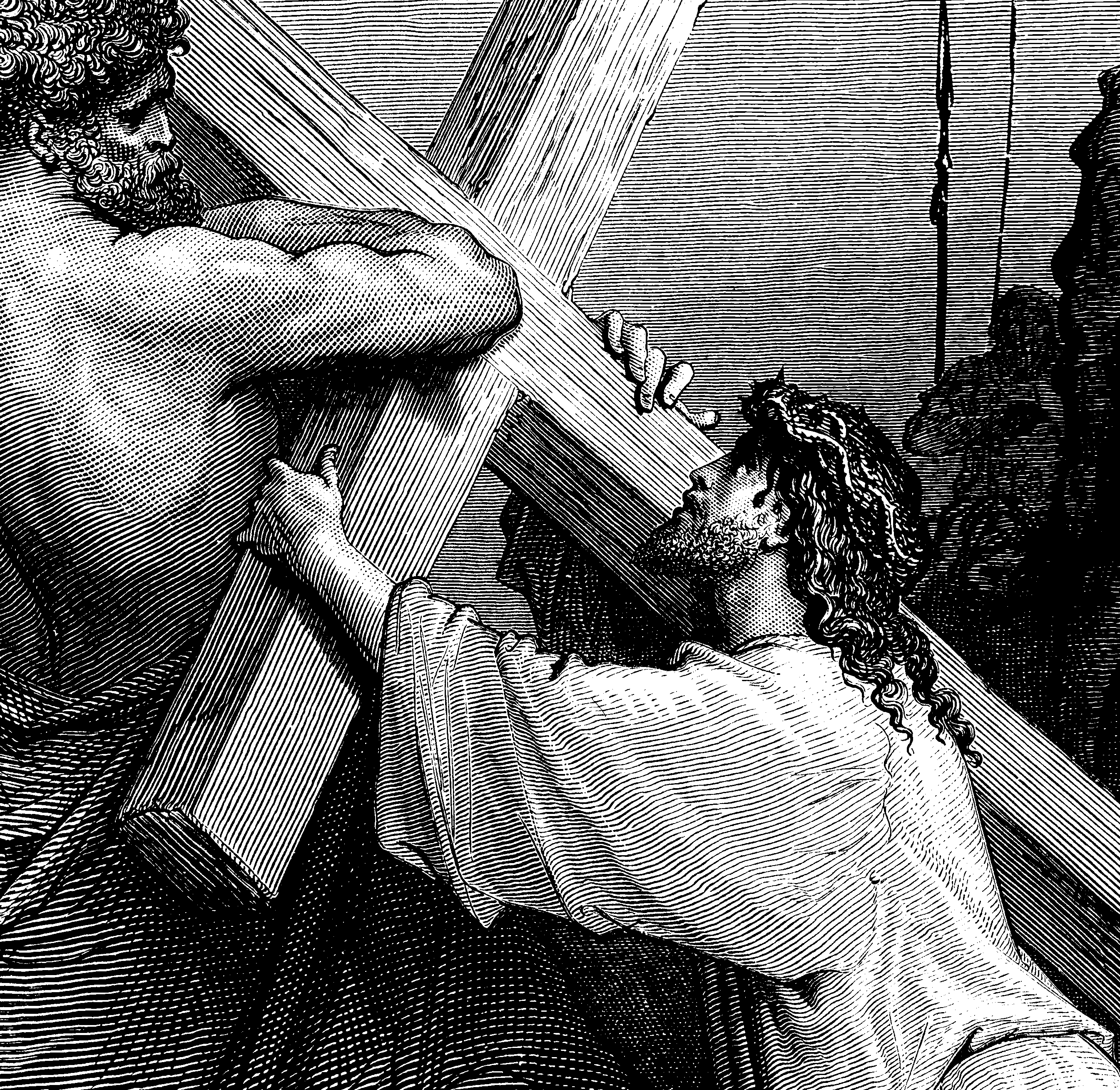
He who suffered for us knows our trials.
The general principle here is that there is a limit to the suffering of the Church. Persecution is an affair of “ten days.” Diocletian is the tyrant of a vanishing hour. Today he raves in madness, but tomorrow his last yell has forever expired. In 2 Corinthians 4:17 Paul exhorts, “Our light affliction, which is but for a moment …” Here the Apostle triumphantly contrasts the brevity of suffering with the duration of glory. Hear him!
In prospect of suffering, Christ says to his people, “Fear not.” But why this counsel? It is because he knows the full interpretation of suffering. Suffering is an education, grief is discipline. The suffering referred to is external. The house is smitten, but the tenant is infinitely beyond the sphere of flood, or flame, or steel. The Master said, “I have overcome the world” (John 16:33).
Are you in Gethsemane? Do the winds howl drearily around you? Is it a sevenfold darkness that shuts out the light of the stars? The Master says, “I know … I know full well the meaning of your great suffering; I felt the nails tear through my flesh … I remember the excruciating agony as I hung on the cross … I know the intense suffering when my beloved heavenly Father forsook me that I might bear the full penalty for all sinners … I know … I know … and therefore I can sympathize with the children of grief …” For Christ soothes and nerves his suffering saints by the promise of infinite compensation: “Be thou faithful unto death, and I will give thee a crown of life” (Revelation 2:10).
Look at the words “and” – “Thou” – “I.” We see the suffering saint and the promising Savior! “Be thou faithful and I give,” as it is personal suffering, so also shall it be personal reward, for he is faithful that promised.
The saints are not to lie forever under the cruel imputation of unworthiness. As in the case of a man who has been wantonly defamed and injured, is it enough that his peers pronounce him merely, “not guilty?” Is no account to be taken of the wrongs he has endured? Are his wounds to be unmodified except by the healing of tardy time? No! “not guilty” is to be translated into “innocent” – “well done thou good and faithful servant.” Well-attested faithfulness is to be succeeded by compensation; it is to be adorned with a crown. It is so, only in an infinitely higher degree in the spiritual life – the Divine Nature! The Lord Jesus Christ will not only deliver his saints from the sphere of suffering; he will also introduce them into the eternal sphere of rest and joy beyond the veil. There is a “recompense of reward” (Hebrews 10:35), and the joyous brightness of an “inheritance incorruptible” (2 Peter 1:4), and the crown radiant with immortal glory.
And when life’s last gasp shall expire, when your course is finished, we shall stand as the beloved Bride in the infinite and majestic presence of our heavenly Father and the Lord Jesus, our Bridegroom. “Be thou faithful unto death, and I will give thee a crown of life” (R5913-14).
– Bro. David Skein
(1) From McClintock and Strong’s Cyclopedia of Biblical Theological and Ecclesiastical Literature, Vol. VII, pp. 966-967, “The human imagination was, indeed, almost exhausted in inventing a variety of tortures. It began in Nicomedia, and became universal. Some were impaled alive; some had their limbs broken and were left to expire. Some were roasted by slow fires; some suspended by their feet with their heads downward, and, a fire being placed under them, were suffocated by the smoke. Some had melted lead poured down their throats; the flesh of some was torn off with fingers and toes. Houses filled with Christians were set on fire. Numbers of Christians were tied together and thrown into the sea.”