
The Highway of Holiness
“And the ransomed of the LORD shall return, and come with singing unto Zion, and everlasting joy shall be upon their heads; they shall obtain gladness and joy, and sorrow and sighing shall flee away” (Isaiah 35:10).
Isaiah 35:1-10 contains a richness of promises for mankind in the Kingdom. All the promises of our Heavenly Father are sure, and here we are assured, that “the ransomed of the LORD shall return.” Isaiah 35:5 says that, “Then the eyes of the blind shall be opened, and the ears of the deaf shall be unstopped.” We might think how thrilling this is for the literal lifting of the curse of physical blindness and deafness, but more is implied.
We await as well the lifting of the curse of spiritual blindness and deafness on mankind. For when this blindness is lifted, the ransom for “the sin of the world” (John 1:29) will be clearly seen by mankind for the first time. This phrase, “the ransomed of the Lord” must refer to all who will accept Christ as their redeemer; as the corresponding price for father Adam. Clarke’s Commentary notes that the word “ransomed” that Isaiah used (H.6299) means “to redeem by paying a price.” This is a clear statement of the ransom. The perfect human life of our Lord was the corresponding price for the perfect human life of Adam. Those ransomed are the billions of mankind raised to life from the grave.
Because God cares, He did not abandon the world of mankind in a hopeless condition. He did not allow death to be the final condition of innocent, suffering millions. He provided a “ransom,” the basis of the only true hope for a world in despair. “I will ransom them from the power of the grave; I will redeem them from death. O death, I will be thy plagues; O grave, I will be thy destruction” (Hosea 13:14). The Apostle Paul cites this certain promise in 1 Corinthians 15:54, 55: “Death is swallowed up in victory. O death, where is thy sting? O grave, where is thy victory?” The curse of death that Adam brought upon all is offset through the ransom price paid for all by Christ in laying down his life for mankind.
1 Timothy 2:3-6 reads, “This is good and acceptable in the sight of God our Savior; who will have all men to be saved, and to come unto the knowledge of the truth. For there is one God, and one mediator between God and men, himself having been a man, Christ Jesus; the one having given himself a ransom for all, to be testified in due time” (RVIC 2002 translation).
Verse 3 is a reminder that the entire plan of salvation has God as its author, and that He foresaw both the fall of man and his recovery from sin before the foundation of the world (Revelation 13:8). Not only those in their graves, but those living through the transition into the Mediatorial kingdom will return. They will live in the kingdom, and if they live in harmony with the arrangements they will enjoy a full anastasis (G.386) or resurrection.
WHO ARE THE RANSOMED?
There is an apparent contradiction in verse 10, for these “ransomed” were never originally in Zion. This text cannot be referring to the “church of the firstborn” (Hebrews 12:23), for they are not on this Highway of Holiness, although they are intimately associated with it. This is a “highway,” it is not the “narrow way” (Matthew 7:14). This Highway is for the “weak” (Isaiah 35:3), it is for the “feeble” (Isaiah 35:5), and it is even for the “foolish” (Isaiah 35:8). In spite of all these failings they will not remain “unclean.”
So this must refer to a calling in the Kingdom that we might term a “consecration to righteousness.” We would like to think that the pouring out of the holy Spirit on all flesh would eliminate these problems of weakness, enfeeblement, and foolishness. But in reality that is not the case. How can we say this? Because the New Creation has the first-fruits of the Spirit even now, and they have had to work with all these problems.
The use of the word “return” becomes clearer when we recognize that sin and alienation from God are an unnatural state. Because we are born in sin and shapen in iniquity, sin feels natural enough to fallen man. But this is where we need to have a spiritual perspective. Harmony and At-one-ment with God is the natural state of the universe. It is the state that our first parents enjoyed in Eden before we were plunged into sin, depravity, and destruction.
This return of the ransomed comes by the greatest “Highway” construction project that the world has ever seen. The grand highway of holiness. The return from the lost and perishing condition is to Zion, the Holy City where our heavenly father eagerly awaits them. They come with songs and everlasting joy upon their heads. It is this portion that God has elected to give to the human race. And what a glorious portion!
Our Lord’s shed blood bought all the creation as well. “The earnest expectation of the creation waiteth for the manifestation of the sons of God” (Romans 8:19-23). The earth was “made to be inhabited,” the Edenic paradise shall be restored. Surely, this is part of the return.
The restless desire for something new that now prevails is not a natural but an abnormal condition, due to our imperfection and our present unsatisfactory surroundings. It is not Godlike restlessly to crave something new. Most things are old to God and He rejoices most in those things which are old and perfect. So it will be with man when restored to the image of God. Perfect man will not know or appreciate fully, and hence will not prefer, the glory of spiritual being, because he is of a different nature — just as fishes and birds, for the same reason, prefer and enjoy each their own nature and element most. Man will be so absorbed and enraptured with the glory that surrounds him on the human plane that he will have no aspiration to, nor preference for, another nature or other conditions than those possessed.
RETURN WITH SINGING
“The desert shall blossom as the rose.” Both the plant and animal creation will be restored to their proper balance. Nature with all its pleasing variety will call to man from every direction to seek and know the glory and power and love of God. Both mind and heart will rejoice in Him.
Yes, this will be a blessed return for the ransomed, but they will return with singing as well.

A Highway of Holiness
Though this is a “highway,” travel on this road will still take effort. At the same time there will be cheer and encouragement along the route. As the goal of Zion (the spiritual administration of the kingdom) is reached, there will be singing and shouts of praise. The Hebrew word here for “songs” (H.7440) actually suggests that the voices will be a little shrill. But the ransomed will come to Zion with joy that naturally spills over into song.
Praises shall be sung to Jehovah both as God and King. Zion originally was the city or stronghold of the Jebusites and occupied the southern portion of the western ridge of what we now call Jerusalem. Zion commanded the highest, most inaccessible, and most easily fortified ground. When it was conquered by David, Zion became his fortified abode or citadel. His palace was built here, and through successive reigns and dynasties, down to the Christian era, Zion continued to be a royal residence and a political center of the land. The musical form used in praise in Zion must have been of surpassing beauty. Possibly, some special voice training was involved.
Even the enemies of Judah recognized the exceptional beauty of the Psalms when sung. They added to the grief of the Babylonian exiles as they came to the rivers of Babylon and the extensive canal system fed by the Euphrates. These Jewish captives were asked to “sing the glad songs of Zion” (Psalm 137:3), recognizing the inherent beauty of these songs. These ransomed on the Highway of Holiness will be singing the glad songs of Zion in the earthly phase of antitypical Zion, the earthly phase of the kingdom. In the next age as well as this age, there is a sanctifying effect in congregational singing.
SONGS OF THE HIGHWAY
Here are some of the songs they will be singing:
- No more aggression: “They shall not hurt nor destroy in all my holy mountain” (Isaiah 11:9).
- No more evil: “No lion shall be there, nor any ravenous beast.” “There shall in no wise enter into it anything that defileth, neither whatsoever worketh abomination, or … a lie” (Isaiah 35:9, Revelation 21:27).
- No more dying: “Death where is thy sting, grave where is thy victory.” “There shall be no more death” (1 Corinthians 15:55, Revelation 21:4).
- No more works of Satan: “For this purpose the Son of God was manifested, that he might destroy the works of the devil” (1 John 3:8).
- No more homelessness or starvation: “They shall build houses and inhabit them; they shall plant vineyards and eat their fruit. They shall not build and another inhabit. They shall not plant and another eat” (Isaiah 65:21-23).
- No more sickness: “And no inhabitant will say I am sick.” “Then the eyes of the blind shall be opened, and the ears of the deaf shall be unstopped. Then shall the lame man leap as an hart, and the tongue of the dumb sing” (Isaiah 33:24, 35:5).
- No more wars: “They shall beat their swords into plowshares and their spears into pruning hooks. Nation shall not lift up sword against nation neither shall they learn war anymore” (Micah 4:3).
- No more sadness: “good tidings of great joy, which shall be to all people.” “They shall obtain joy and gladness, and sorrow and sighing shall flee away” (Luke 2:10, Isaiah 35:10).
- No more fear: “The wolf also shall dwell with the lamb, and the leopard shall lie down with the kid; and the calf and the young lion and the fatling together; and a little child shall lead them” (Isaiah 11:6).
- No more enemies: “For he must reign, till he hath put all enemies under his feet. The last enemy that shall be destroyed is death” (1 Corinthians 15:25-26).
- We love those who once were our enemies: “But I say unto you, Love your enemies, bless them that curse you, do good to them that hate you, and pray for them which despitefully use you, and persecute you” (Matthew 5:44).
There will be many songs. One of the greatest will be: No more ignorance of the Lord: “And they shall teach no more every man his neighbour, and every man his brother, saying, Know the LORD: for they shall all know me, from the least of them unto the greatest of them, saith the LORD: for I will forgive their iniquity, and I will remember their sin no more. I know and trust the Lord” (Jeremiah 31:34).
EVERLASTING JOY UPON THEIR HEADS
We are told that they will have “everlasting joy upon their heads.” Normally we think of joy in the heart. But this is a different sort of joy. This joy is built upon a foundation of understanding. This joy is in the head as well as in the heart. It is a joy that blends with song and with gratitude to God for all His leadings. Many times this is associated with the “oil of gladness” (Isaiah 61:3).
The church of the firstborn has this inheritance now, for ennobling thoughts are transforming. For this reason, Paul writes, “Whatsoever things are pure, lovely, and of good report … think on these things” (Philippians 4:8).
We are to love and cultivate that which is pure to such an extent that that which is impure will become painful to us, distressing, and we will desire to drop it from memory, and this will only be accomplished by continually thinking upon those things that are pure, and avoiding the giving of thought to the things that are impure. We are to recognize true loveliness, and to esteem it. When we would think on the purest of things we must of necessity lift our mental vision to as high a point as possible, and, as nearly as we may be able, discern the loveliness of the perfect character of our God and of our Lord Jesus Christ, and proportionately the loveliness manifested in one or another of the followers of Jesus, who walk closely in his footsteps (March 4 Manna).
PRACTICE GRATITUDE
In full support of Paul’s words there is a fascinating study by Dr. Daniel Amen, a fellow of the American Psychological Association, who researches the scans of working brains to see which portions of the brain are active during different thought processes. He writes (Daniel G. Amen, Change Your Brain, Change Your Body, Three Rivers Press; 2010, page 285).
“Practice gratitude. If you want your brain to work better, be grateful for the good things in your life. Psychologist Noelle Nelson and I did a study on gratitude and appreciation. She was working on a book called The Power of Appreciation and had her brain scanned twice. The first time she was scanned after thirty minutes of meditating on all the things she was thankful for in her life. After the appreciation meditation her brain looked very healthy.
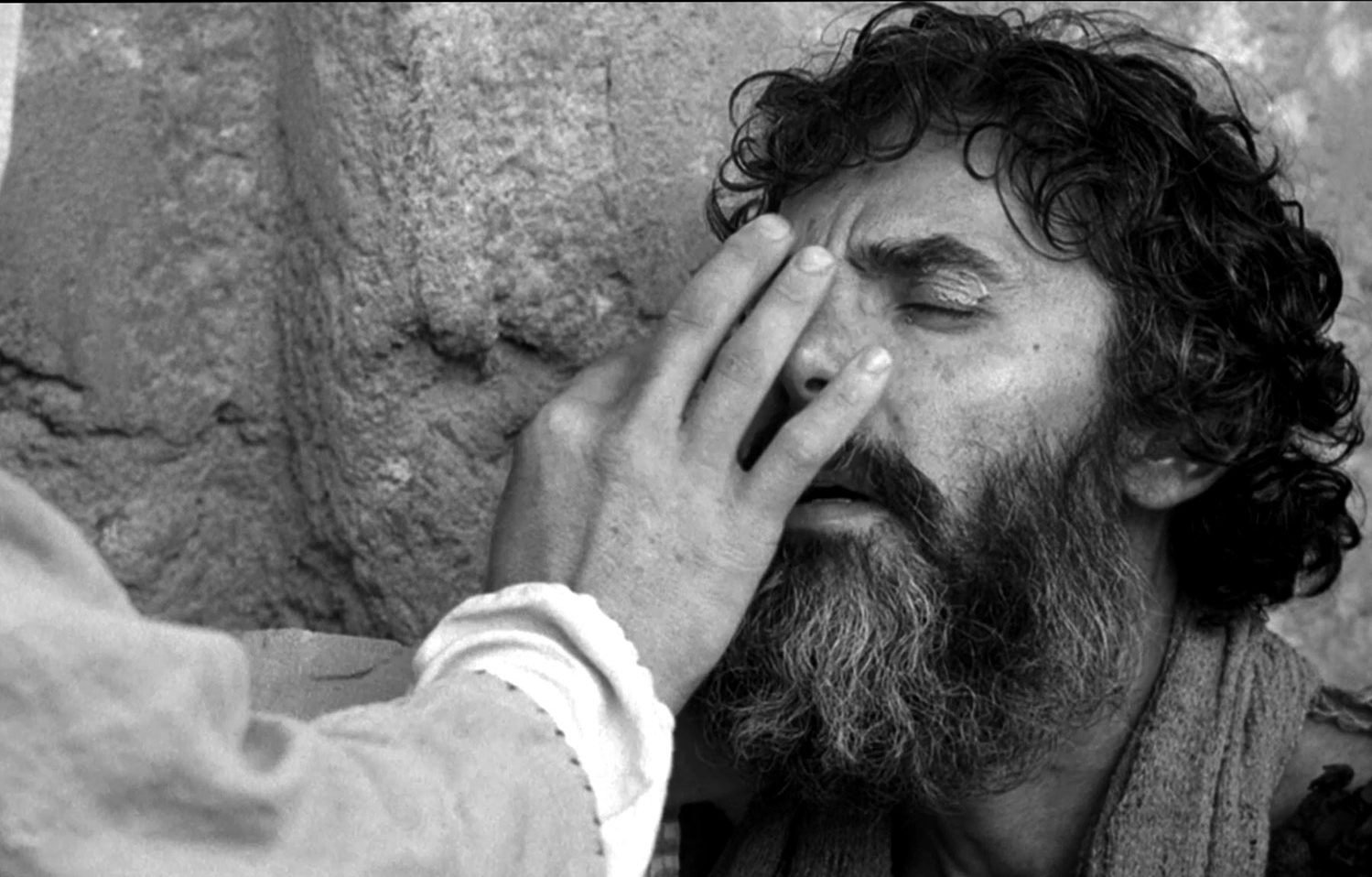
The blind will see, the lame will walk, the dumb will sing, the dead will be raised.
“Then she was scanned several days later after focusing on the major fears in her life…. I scanned her brain after she mulled on these thoughts. Her frightened brain looked very different from her healthy gratitude brain and showed seriously decreased activity in two parts of her brain. Her cerebellum had completely shut down.
The cerebellum, also called the little brain, is involved in physical coordination, such as walking or playing sports. New research also suggests that the cerebellum is involved in processing speed, like clock speed on a computer, and in thought coordination, or how quickly we can integrate new information. When the cerebellum is low in activity, people tend to be clumsier and less likely to think their ways out of problems. They think and process information more slowly and get confused more easily.
“The other area of her brain affected was the temporal lobes, especially the one on the left. The temporal lobes are involved with mood, memory, and temper control. Problems in this part of the brain are associated with some forms of depression, but also dark thoughts, violence, and memory problems.
In Noelle’s scans, when she practiced gratitude her temporal lobe looked healthy. When she frightened herself with negative thinking, her temporal lobes became much less active. Negative thought patterns change the brain in a negative way. Practicing gratitude literally helps you have a brain to be grateful for.”
Dr. Amen goes on to suggest a practical exercise: “Write down five things you are grateful for every day.
… The act of writing helps to solidify them in your brain …when depressed patients did this exercise every day, they actually needed less antidepressant medication. Other researchers have also found that people who express gratitude on a regular basis are healthier, more optimistic, make more progress toward their goals, have a greater sense of well-being, and are more helpful to others. Doctors who regularly practice gratitude are actually better at making the correct diagnoses on their patients.”
Let us modify this good advice for those who are in Christ. This is something we can do in our prayers as well as in our meditation. Let us think on five things each day to thank God for in our prayers. By counting our blessings and naming them one-by-one, we will be surprised at what the Lord has done and we will indeed have healthier minds.
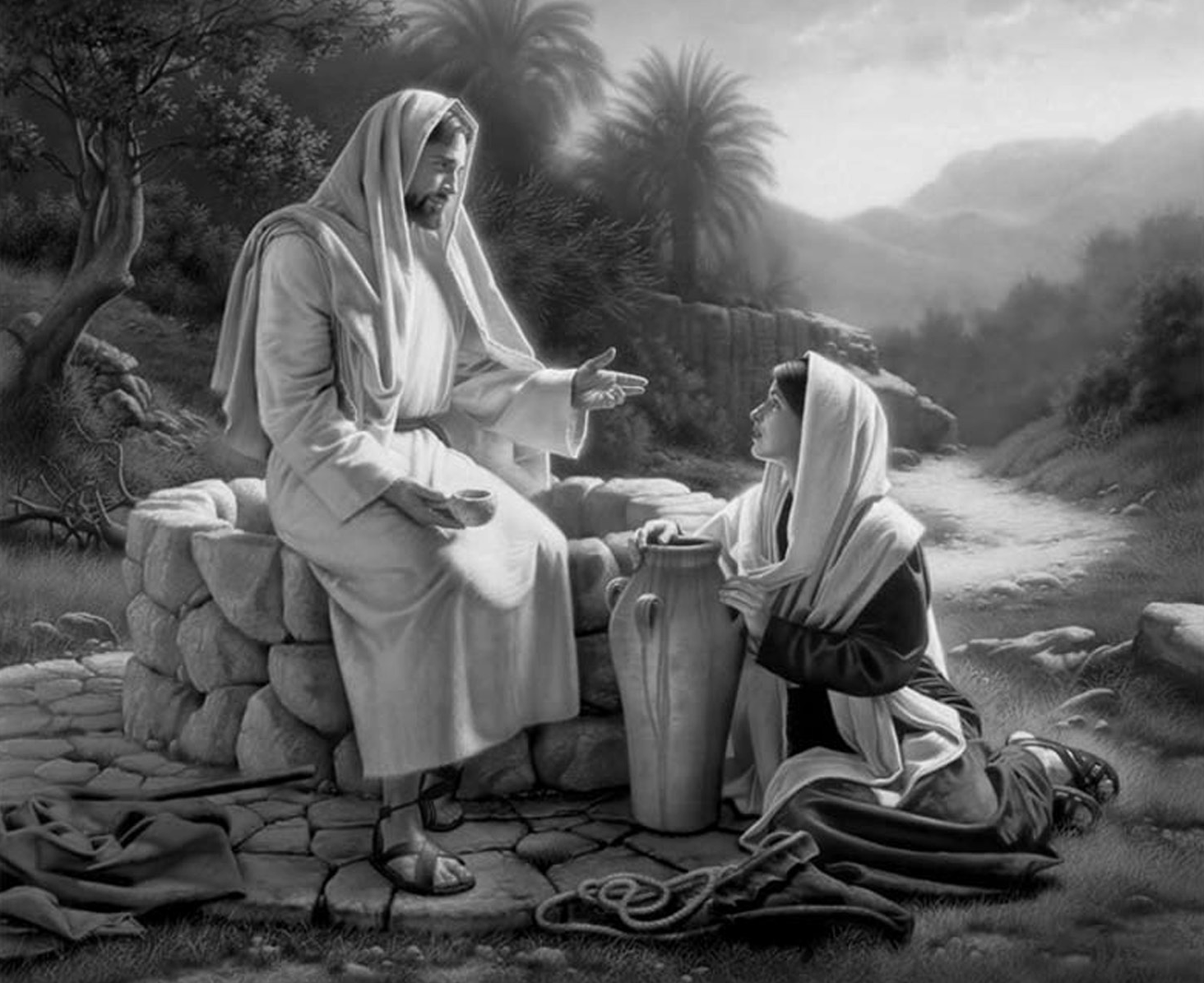
Jesus and the woman at the well (copyright Simon Dewey, courtesy Altus Fine Art).
WELLS OF SALVATION
Isaiah 35:10 closes by saying, “they shall obtain joy and gladness.” This will be a full measure of joy. It will be both joy and gladness. A parallel text from Isaiah says, “In that day thou shalt say, O LORD I will praise thee: though thou wast angry with me, thine anger is turned away, and thou comfortedst me” (Isaiah 12:1).
“In that day” speaks to the same time when there is the “return” of mankind in the kingdom, as we found in our theme text of Isaiah 35:10. While there are beautiful lessons for the church, the application in general seems to be for the world of mankind: “Behold, God is my salvation; I will trust, and not be afraid: for the LORD JEHOVAH is my strength and my song; he also is become my salvation” (Isaiah 12:1,2).
This salvation will acknowledge that our sufficiency comes from God. In the place of mankind’s current weakness there will be strength and song. The “arm of the Lord,” our Lord Jesus and his bride, is how Jehovah will exercise this strength:
“Therefore with joy shall ye draw water out of the wells of salvation” (Isaiah 12:3). These wells of salvation are a reference to the church and Ancient Worthies. Jehovah is the source of salvation, but it is through the agency of the body of Christ — the church — and their visible helpers — the Ancient Worthies — that the blessings flow. There seems to be a link to the promise in John 7:38, for these wells shall contain living water. Likely these are placed along the highway at convenient points, much like today’s rest areas on our Interstate highway system. There will be no long journeys to infrequent oases in the desert:
“In that day shall ye say, Praise the LORD, call upon his name, declare his doings among the people, make mention that his name is exalted” (Isaiah 12:4). In the kingdom, all the peoples of mankind will be eager not for the distressing news of our day, but for the news of his “doings.”
“Sing unto the LORD; for he hath done excellent things: this is known in all the earth” (Isaiah 12:5). Only in the kingdom, may it be said, “this is known in all the earth.”
“Cry out and shout, thou inhabitant of Zion: for great is the Holy One of Israel in the midst of thee” (Isaiah 12:6). Our Heavenly Father who planned for all of this experience with sin from before the foundation of the world is to see both his earthly and heavenly creatures inhabit Zion in perfect at-one-ment. The joyful cries and shouts are what we expect in response.
THANKFULNESS AS OUR PRESENT INHERITANCE
Joy and gladness may be our present inheritance. There are certainly reasons enough for morbid thoughts that rob us of joy and gladness. We could certainly dwell only on those things that remind us of our fallen state whenever we would like to rob ourselves of joy and gladness. There is a fallen tendency to see the worst in all circumstances, but even at this present time we may choose to send sorrow and sighing fleeing by developing gratefulness. Gratefulness can be practiced, cultivated, learned.
With our waking thoughts and prayers, as our eyes greet the morning, we may remind ourselves that we have eyes to see, while millions of our human brothers and sisters are blind in their literal sight — and billions in their spiritual sight. When we then open our eyes with this thought, chances are that we will be more grateful for the gift of sight and more alert to the needs of those who lack that gift. Before turning off the light in the evening we may jot down one thing for which we never before have given grateful thanksgiving. One of the Lord’s dear ones has done this for years, and testifies that the supply still seems inexhaustible.
Gratefulness brings life to joy. Once we stop “taking for granted,” there is no end to the surprises and delight we may find. A grateful attitude is a creative one, and a giving one, because, in the final analysis, opportunity is the gift within the gift of every moment — the opportunity to see and hear and smell and touch and taste with pleasure. Everything is a gift. Grateful living is a celebration of these gifts. There is no more joyful bond than the one that gratefulness celebrates, the bond between our Heavenly Father, the giver, and we, the thanksgivers. As St. Paul assured his beloved brethren in Corinth: “Thanks be to God for His unspeakable gift!” (2 Corinthians 9:15)
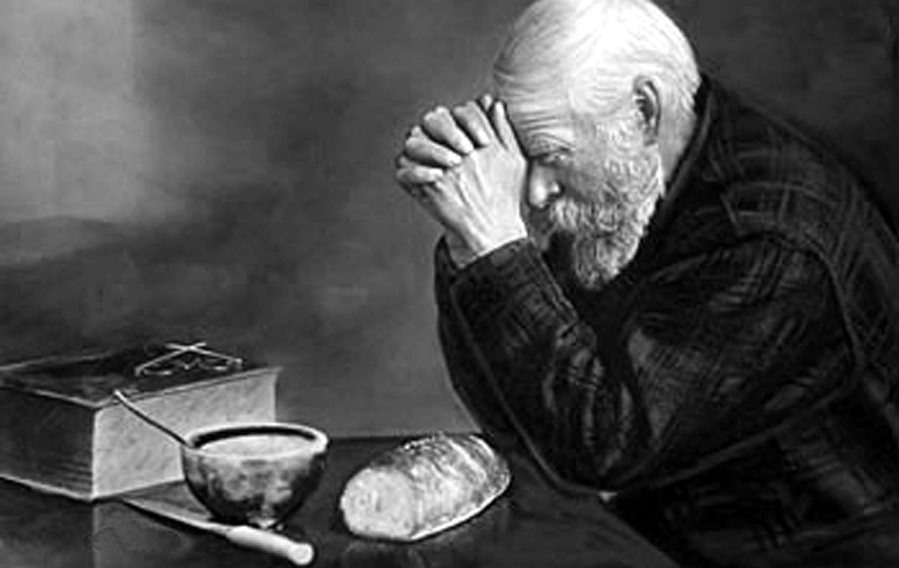
In everything, give thanks.
THE ULTIMATE JOY AND GLADNESS
But what of the far-distant future when the human race is fully at one with God, evil has vanished without a trace, and death is a thing of the past? asks Bro. A. O. Hudson in his treatise, “God of All Space.” The Bible goes little further than the close of the Millennium, with which is associated the disappearance of evil and the entry of reconciled man into everlasting life.
Jesus alluded to that time in Matthew 25:34. “Come ye blessed of my Father; inherit the kingdom prepared for you from the foundation of the world.” This, says Paul, is when Christ, at the close of his Millennial work with mankind, “shall have delivered up the kingdom to God, the Father, that God may be all in all” (1 Corinthians 15:24-28).
Of the state of humanity after that moment there is barely a hint, only that “the dwelling of God is with men …and there shall be no more death … for behold, I make all things new” (Revelation 21:3-5). “Behold, I create new heavens and a new earth; and the former things shall not be remembered, nor come into mind” (Isaiah 65:17). “In the coming ages,” says Paul, God will “show the immeasurable riches of his grace” (Ephesians 2:7).
It will take an eternity to know our Heavenly Father but the unassailable principle which the Bible enunciates with clear and definite voice is that life goes on. Life is endless. Of the ultimate joy and gladness, Pastor Russell has so beautifully written those words at the closing of The Divine Plan of the Ages (pages 191-194):
“Close your eyes for a moment to the scenes of misery and woe, degradation and sorrow that yet prevail on account of sin, and picture before your mental vision the glory of the perfect earth. Not a stain of sin mars the harmony and peace of a perfect society; not a bitter thought, not an unkind look or word; love, welling up from every heart, meets a kindred response in every other heart, and benevolence marks every act. There sickness shall be no more; not an ache nor a pain, nor any evidence of decay — not even the fear of such things. Think of all the pictures of comparative health and beauty of human form and feature that you have ever seen, and know that perfect humanity will be of still surpassing loveliness. The inward purity and mental and moral perfection will stamp and glorify every radiant countenance. Such will earth’s society be; and weeping bereaved ones will have their tears all wiped away, when thus they realize the resurrection work complete (Revelation 21:4).”
— Br. Richard Doctor