
The Third Epistle of John
“The elder unto the well beloved Gaius, whom I love in the truth” (3 John 1).
This third epistle of John was written to a private individual as opposed to a church. It was probable that the family kept the epistle private until the death of Gaius. Only after that did it likely come to light as a product of the Apostle John.
It is first mentioned in the middle of the third century. The church at the time was extremely cautious about new writings purporting to be Apostolic. The concern was justified when we consider the astonishing number of apocryphal gospels, acts of apostles, and epistles, which were offered to the Church in the early stages of Christianity.
At least seventy-five gospels were offered to, and rejected by, the Church. Additional offerings included Acts of Peter and Acts of Paul, Third Epistle to the Corinthians, Epistle to the Laodiceans, Book of Enoch, etc. Some of these survive to the present day but are considered forgeries because of the sentiment, the style, and the doctrines they contain.
So strong was the suspicion of forgery the brethren of the third century had that the books of Second Peter, the second and third epistles of John, Jude, and even Revelation, were omitted when the Peshito Syriac version was made. These books have not been accepted into that version to the present day. That version is still in use in the Syrian Churches. The later Syriac version, made in 508 AD, corrected and included these as well as all the other canonical books of the New Testament.
It is good to note that all three of John’s epistles were received by a significant number of early church writers and were included in most of the ancient manuscripts of the New Testament. Thus they were known and quoted at a very early period and have been received as genuine by the most respectable Greek and Latin church authorities.
The exact time in which this epistle was written is uncertain. However, it is generally supposed to have been written at Ephesus between 80 and 90 AD.
The epistle was addressed to a brother named Gaius of whom nothing more is mentioned in scripture. It is clear, however, that he was a man beloved of John.
VERSE-BY-VERSE CONSIDERATION
3 John 1 — “The elder unto the well beloved Gaius, whom I love in the truth.”
The term “elder” may have been an affectionate title given to John in his old age. It appears that he liked it, using it here to a personal friend. He described “Gaius” as “well-beloved” and adds, whom I “love” in the truth. This double use of the word love includes two variations of agape, one noun form and one verb form. Agape is the strongest of three biblical Greek words translated love.
WHO IS GAIUS?
Three persons of this name are elsewhere mentioned in the New Testament.
(1) Gaius, whom Paul in Romans 16:23 calls “his host,” and whom he says in 1 Corinthians 1:15 that he baptized, residing at Corinth (compare Romans 16:23).
(2) Gaius of Macedonia, one of Paul’s companions in travel, who was arrested by an excited mob at Ephesus, Acts 19:29.
(3) Gaius of Derbe, who went with Paul and Timothy into Asia, Acts 20:4.
Whether any of these individuals is referred to by John, cannot be determined with certainty.
It is clear that John had a great affection for Gaius as a personal friend. But note that his love was based on the truth, or perhaps was simply a true, authentic love. The lesson for us is that our love for fellow New Creatures is a very high form of love based on the truth. That is not to say it is devoid of emotion, simply that it is not based on emotion, but on the principles of God and a common bond in the truth.
3 John 2 — “Beloved, I wish (pray) above all things that thou mayest prosper and be in health, even as thy soul prospereth.”
It is tempting to apply this to the health of our body. But if we understand consecration, we know that it is the health of the New Creature that we should diligently care about. However, that priority does not mean that we give no consideration to the health of the body.
Romans 12:3 — “For I say, through the grace given unto me, to every man that is among you, not to think of himself more highly than he ought to think; but to think soberly, according as God hath dealt to every man the measure of faith.”
Proverbs 14:30 — A sound heart is the life of the flesh: but envy the rottenness of the bones (AV). “A heart at peace gives life to the body, but envy rots the bones” (NIV). “It’s healthy to be content, but envy can eat you up” (Contemporary English Version).
3 John 3 — “For I rejoiced greatly, when the brethren came and testified of the truth that is in thee, even as thou walkest in the truth.”
John was thrilled to hear how the truth was energizing and motivating this dear brother Gaius. It meant that he was growing more and more in the image of Christ. As we see one another growing in love, compassion, mercy, humility, piety, and all godly traits, we too ought to rejoice greatly. This is especially true when the growth is coming in the midst of great trial. The New Creature grows at the expense of the flesh.
3 John 4 — “I have no greater joy than to hear that my children walk in truth.”
This is the second time John used the expression “walk in truth.” The strong implication here is that of an active life concerning the truth. This suggests not simply a believing frame of mind, but a conviction that influences and guides every decision of life.
Someone once asked, “Are you in the truth or is the truth in you?” This emphasizes the importance of character growth rather than physical location. Notice also how thoroughly Jesus identified himself with the truth: “Jesus saith unto him, I am the way, the truth, and the life: no man cometh unto the Father, but by me” (John 14:6).
We must similarly identify with the truth if we are to become copies of God’s dear Son. We need to check ourselves frequently to see if we are consumed by the truth. It is that level of zeal that will mark the overcoming little flock.
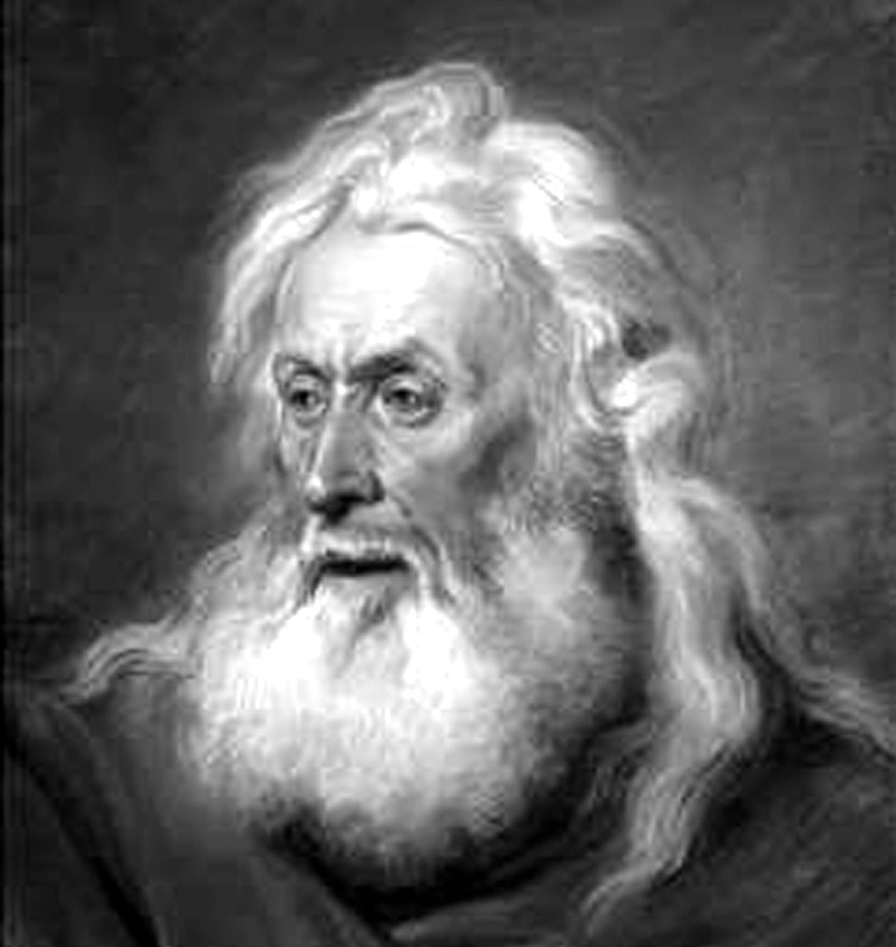
The Aged Apostle John
3 John 5 — “Beloved, thou doest faithfully whatsoever thou doest to the brethren, and to strangers.”
What does John mean by “doest faithfully?” The answer can be as simple as showing love for others. God sets the greatest example by serving all of his creation. He is the Grand Creator and provides for all of his creation. And this is done out of love. “For God so loved the world” (John 3:16).
Gaius evidently was a wonderfully hospitable man desirous of serving the needs of others. When we show similar attitudes of mind, we become more like God. It again suggests that the essence of consecration is being in the service of others, knowing that it is not only God’s will, but it is what He also does! John indicates that our service is to be extended to all. This includes brethren and those of the world as we have opportunity. Paul wrote of the same principle in Galatians 6:10, “Therefore, then, as we have opportunity, may we work the good to all, and especially unto those of the household of the faith.”
3 John 6 — “Which have borne witness of thy charity before the church: whom if thou bring forward on their journey after a godly sort, thou shalt do well.”
The word “charity” here is once again agape! How the apostle loved this word and what it means! Brethren had returned to John with this glowing report of the love and hospitality of Gaius.
The phrase, “whom bringing forward, or having brought forward” refers to aid rendered to brethren in their journeys. This was done either by personally accompanying them, by furnishing them the means for their journey, or by extending hospitality and entertaining them. It appears from the epistle that the “brethren and strangers” of verse 5 actually had been with him after they had been rejected by the church through the influence of Diotrephes, whom we will meet in a moment. These may have previously received the hospitality of Gaius, and that they had returned and related to John the honorable testimony to his hospitality
“After a godly sort” — as becomes those who worship the God of truth.
3 John 7 — “Because that for his name’s sake they went forth, taking nothing of the Gentiles.”
The thought here is a little vague, but we surmise that these brethren, in the service of preaching the gospel of truth, were prudent in not taking anything from the Gentiles for their work. Rather, they depended on the assistance of the local church. This circumspection avoided any reproach to come upon the Gospel.
This was the practice of the Apostle Paul as well — to preach the word without charge and work to pay his own way. However, he did accept the charity of the brethren while not asking for it.
3 John 8 — “We therefore ought to receive such, that we might be fellow helpers to the truth.”
John here endorses this idea that we should be charitable towards others, especially those laboring in the work of the Gospel. Not all of us have the same opportunities in spreading the truth. But we all can contribute toward the effort. This is not limited to the giving of monetary contributions. Something available to everyone is the opportunity to pray for those who are more heavily involved in specific ministries. God counts us a “follow-helper” when we contribute in any way.
3 John 9 — “I wrote unto the church: but Diotrephes, who loveth to have the preeminence among them, receiveth us not.”
Note John’s faithfulness to the church in his writing to them with apostolic counsel. Not only had he worked and taught among the brethren for decades, but in his old age took the time to write to them as well with exhortations for their faith.
Next we have a record of a specific individual elder in the church who had succumbed to a prideful spirit. We might say that here is a case of the spirit of Babylon in the early church.
The single word rendered “who loveth to have the pre-eminence,” philoproteuon, occurs nowhere else in the New Testament. It means simply, “who loves to be first.” We can immediately see the destructive influence of pride. It is divisive!
“A false witness who doth breathe out lies — And one sending forth contentions between brethren” (Proverbs 6:19). “And I call upon you, brethren, to mark those who the divisions and the stumbling-blocks, contrary to the teaching that ye did learn, are causing, and turn ye away from them” (Romans 16:17).
3 John 10 — “Wherefore, if I come, I will remember his deeds which he doeth, prating against us with malicious words: and not content therewith, neither doth he himself receive the brethren, and forbiddeth them that would, and casteth them out of the church.”
The apostle is expressing some anger at this situation. It is hard to conceive of any individual who could be so opposed to the dear Apostle John and do the thing Diotrephes did in the church. But this is just what the poison of pride does. We see a similar spirit in the Scribes and Pharisees and what they did to Jesus. Again pride of position moved men to commit evil deeds. We must guard ourselves against this terrible characteristic and extinguish even its small initial symptoms.
John was evidently still capable of travel, which is one reason why scholars place the timing of this epistle between 80 and 90 AD. The Apostle intended to set things right if he was able to travel and confront Diotrophes publicly, as he wanted. We do not have any record indicating that John ever got there.
3 John 11 — “Beloved, follow not that which is evil, but that which is good. He that doeth good is of God: but he that doeth evil hath not seen God.”
This is wonderful counsel! We are to recognize good wherever it is and endorse it. It is a mark of those who worship God and should certainly be a deeply ingrained character trait in the little flock. “Withhold not good from them to whom it is due, When it is in the power of thy hand to do it” (Proverbs 3:27, American Standard Version).
John also comments on the opposite trait and notes that the doing of evil constitutes blindness with respect to God. It also might explain how the prideful do not seem to be able to see what they are.
3 John 12 — “Demetrius hath good report of all men, and of the truth itself: yea, and we also bear record; and ye know that our record is true.”

Youthful John
Here we have a contrast to Diotrephes with another brother named Demetrius. How appropriate for the apostle to recognize his good report. Our service in the truth and for the truth will be recognized by the measure of blessing we are to others. Demetrius was clearly this kind of brother. Of course, the highest commendation we can receive would be from the Lord himself. We should each long to hear the words, “Well done, good and faithful servant.”
3 John 13 — “I had many things to write, but I will not with ink and pen write unto thee:”
One can sense John’s constraint as he writes. He had such passion and loving affection for Gaius and the brethren. He laments that all cannot be expressed in writing.
3 John 14 — “But I trust I shall shortly see thee, and we shall speak face to face. Peace be to thee. Our friends salute thee. Greet the friends by name.”
John intended this brief letter to be just a teaser to his coming to Gaius for personal and intimate fellowship in the truth. How well we know the pleasure and blessing of being with those of like precious faith is.
We have in this brief letter another wonderful glimpse into the character and personality of the Apostle John. Though short, it has several wonderful lessons for us and through it we are encouraged for the daily challenges in our own Christian walk. So we conclude, as did John, with the words “Peace be to thee!”
— Br. David Stein