
Tyre and Sidon, Unrestrained Capitalism (Continued from previous issue)
PROTESTANT WORK ETHIC
But today, why is there such a difference between Western Christendom looking to Rome and Eastern Christendom looking to Constantinople?
There are a multitude of reasons to be sure. But what opened the door to commerce in Western Christendom was the challenge for Papacy that came with the unbridled neopaganism of the Renaissance and then the counterbalancing nearly fatal crisis of the Protestant Reformation. Europe struggled in a desperate clash of civilizations.
From that eve of All Saints Day, October 31, 1517, when Martin Luther nailed up the 95 theses on the door of Wittenberg church, through the Peace of Westphalia that set the modern map of Europe in 1648, civil war raged through Christendom. Civilization changed course, and it was no longer un-Christian to engage in commerce.
Where religious freedom, freedom of thought, and freedom from want permits thoughtful reflection to flourish, there commerce also flourishes. Writing on this subject, Pastor Russell observes (Volume Four, page 72):
“Through the influences of the Word of God, direct and indirect, the Christian nations have made great advancements in civilization and material prosperity in every line, so that in wealth, comfort, intellectual development, education, civil government, in science, art, manufacture, commerce and every branch of human industry …”
Indeed, the growth of commerce from the Protestant countries is such a clear phenomenon of history that there is a name attached to it: The Protestant Ethic.12 This claim is annoying to Catholics even today.13
COMMERCE AND NATIONALISM
At least one historian has said that the high-water mark for western civilization is a date of great import to the Lord’s people, because of the link of commerce and nationalism. Oxford historian Arnold Toynbee, author of the celebrated 12-volume Study of History, observes the following regarding industrialism and nationalism14 (emphasis added):
“… Conditions of our Western Society have already become profoundly different from those which were in the ascendancy during the century ending about AD 1875 … Down to about 1875, the two dominant institutions of industrialism and nationalism were working together to build up the Great Powers. After 1875 they began to work in opposite directions – industrialism increasing the scale of its operations beyond the compass of the greatest of the Great Powers and feeling its way towards a world-wide range, while nationalism, percolating downwards, began to implant a separate consciousness in peoples of so small a caliber that they were incapable not only of forming Great Powers but even of forming minor states possessed of full political, economic, and cultural independence.”
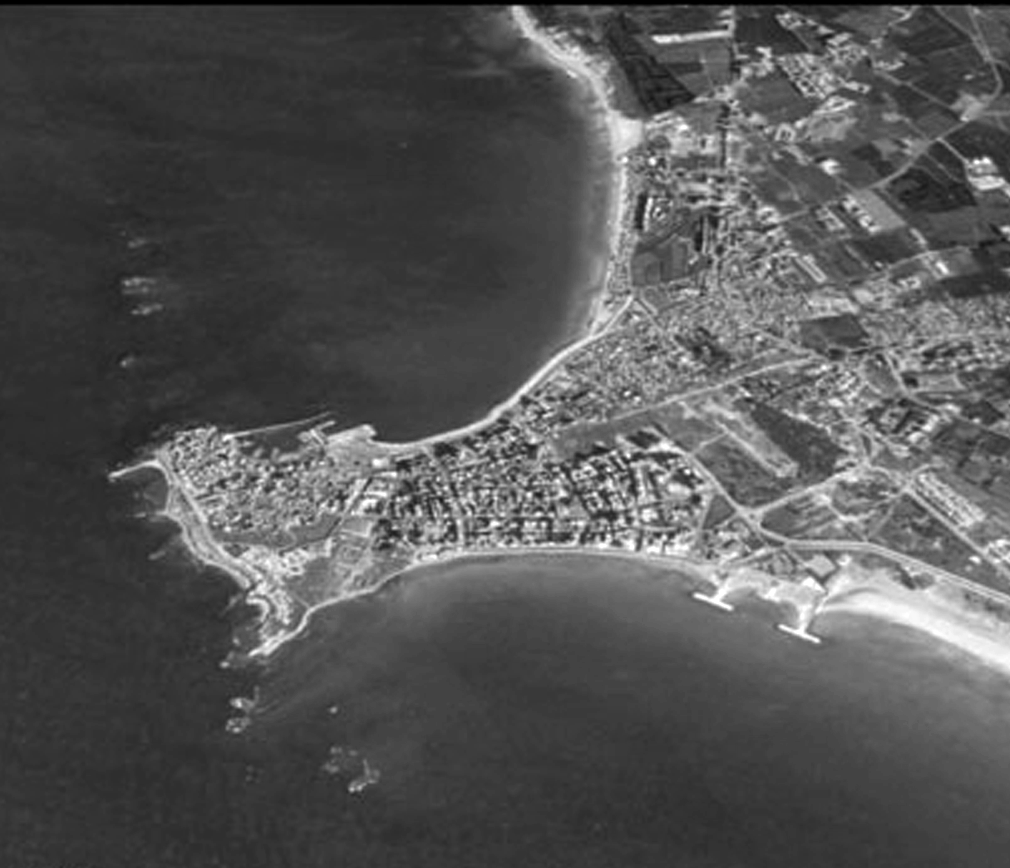
Modern image of Tyre
This trend was just in its infancy in Pastor Russell’s day, although he does address it in his writings (Volume Four, page 146):
“The American people are being aroused to a sense of danger to their liberties, and to action in view of such danger, with the energy which has been their marked characteristic in every branch of industry and every avenue of trade, though the real causes of their danger are not clearly enough discerned by the masses to direct their energies wisely. They only see that congested wealth is impoverishing the many, influencing legislation so as to still further amass wealth and power in the hands of the few, and so creating an aristocracy of wealth whose power will in time prove as despotic and relentless as any despotism of the Old World.”
THE CURRENT SITUATION
The following title would have been inconceivable at the start of the 20th century; Martin Wolf, a lecturer for the Cato Institute writing in the January 2001 issue of Foreign Affairs, entitles his article, “Will the Nation-State Survive Globalization?” Wolf begins this way:15
“A Specter is haunting the world’s governments – the specter of globalization. Some argue that predatory market forces make it impossible for benevolent governments to shield their populations from the beasts of prey that lurk beyond their borders. Others counter that benign market forces actually prevent predatory governments from fleecing their citizens. Although the two sides see different villains, they draw one common conclusion: omnipotent markets mean impotent politicians. Indeed, this formula has become one of the cliches of our age. But is it true that governments have become weaker and less relevant than ever before? And does globalization, by definition, have to be the nemesis of national government?” (emphasis added)
He argues do not worry, things will work out. This will be for the benefit of the few in the short term (who these fortunate ones are is not elaborated) and for the benefit of all in the long term. After asking these questions he closes with:
“Finally, as the world economy continues to integrate and cross-border flows [of economic goods] become more important, global governance [of the economy] must be improved. Global governance will come not at the expense of the state but rather as an expression of the interests that the state embodies.”
THE SECOND CONQUEST OF BABYLON
This sets the stage for the second and destructive fall of Babylon. The language of the judgment on Babylon in Revelation shows cooperation between Babylon and the merchants of the earth among whom Tyre would be pre-eminent. Babylon and Tyre appear linked as allies:
“Who hath taken this counsel against Tyre, the crowning city, whose merchants are princes, whose traffickers are the honourable of the earth?” (Isaiah 23:8).
The carefully planned rebellion of Babylon against their Persian overlords took place nearly two generations after the conquest of Cyrus when the Persians were engaged in an unsuccessful assault on Greece launched from Tyre.
Since, at the time of the writing of Revelation, both cities Tyre and Babylon were shells of their former glory, Revelation must be referencing the second conquest of Babylon after their rebellion during the era of Mede and Persian dominion. At this time these two cities were citadels of power and allies; hence, this fall of Babylon, when its gates and walls were destroyed, falls into the intertestmental period between the Old and New Testament (479 BC). This second conquest was accompanied by smoke and burning.
In Revelation there are two groups who stand afar off – the kings and the merchants who see Babylon’s fall, but do not recognize the full impact of that fall until its final hour. We read of this in Revelation 18:2, 9-11:
“And the merchants of the earth shall weep and mourn over her; for no man buyeth their merchandise anymore” (Revelation 18:11).
These two groups, the kings and these merchants, are seen standing a far off, and therefore the scriptures are telling us they must be distinct from Babylon.
EMERGING REGULATION OF GLOBAL FINANCES
Wall Street Journal, January 29, 2009, page A10, “G-20 – On Track for Changes in Financial Regulation:”
LONDON – Leaders of the world’s largest economies are on track to complete an “ambitious and far-reaching” agreement on changes to the regulation of the global financial system, a senior U.K. Treasury official said … These include setting up global “colleges of supervisors” to monitor international banks, expanding the membership and mandate of the Financial Stability Forum and reforming the International Monetary Fund to increase developing countries’ representation on its executive board … French President Nicolas Sarkozy has called on leaders to use the reforms for “re-founding capitalism.”
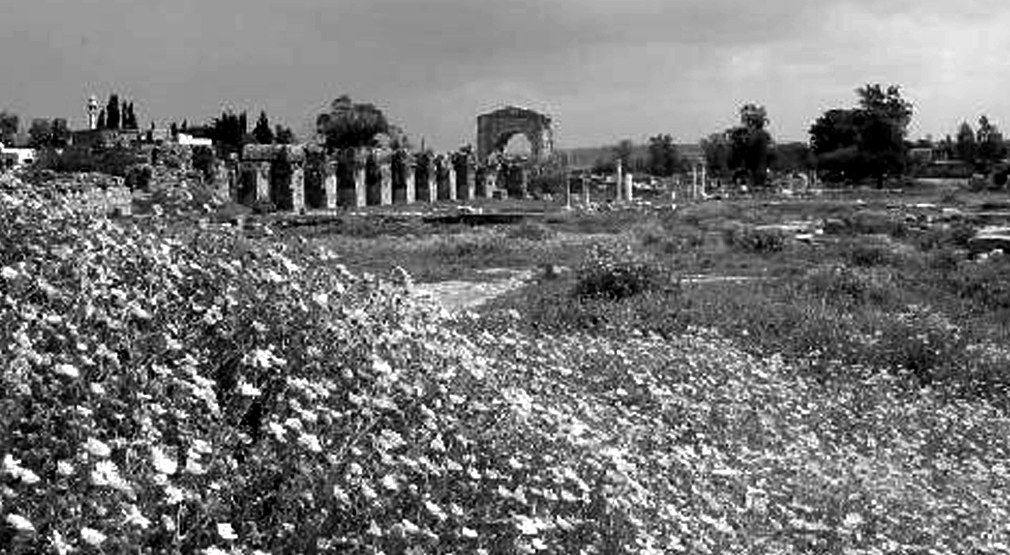
Spring blossoms in Tyre
Under mystic Babylon, the governance was through a College of Cardinals. Under mystic Tyre, emerging governance by a “College of supervisors” will watch over the interests of the economy. The language of Ezekiel 28:2 suggests the emergence of a very strong leadership at some future crisis.
From Ezekiel 28:12 it is clear that this Song of Tyre comes from the great Adversary, the king of Tyrus. He is but changing tactics in how to traffic in the souls of men. None of these plans will bring mankind closer in harmony to God. The Lord promises that the wisdom of Tyre and its unrestrained growth, its amorality and lack of concern for the human wreckage it leaves behind, shall fail:
“Tyrus, and Zidon, though it be very wise. And Tyrus did build herself a strong hold, and heaped up silver as the dust, and fine gold as the mire of the streets. Behold, the Lord will cast her out, and he will smite her power in the sea; and she shall be devoured with fire” (Zechariah 9:2-4).
COMMERCE REFORMED
Should we all become disciples of St. John Chrysostom?
We find that our Lord illustrated the responsibilities of active discipleship by using parables about being actively engaged in “doing business” with our “pounds” and “talents.” Reasoning on this, the desire and interest for commerce is both good and laudable.
But we have the more sure word of prophecy in Psalm 45:10-14. Verse 12 has a special promise that commerce, now reformed, restrained, and in the service of righteousness, will be a welcome part of the Kingdom joys:
“And the daughter of Tyre shall be there with a gift; even the rich among the people shall intreat thy favour” (Psalm 45:12).
SUMMARY
Tyre was world leader in commerce, consecrated to “Human Power and Cleverness” and “Sex.” Tyre in antitype suggests a commerce-driven life without the restraints of divine principles. Tyre and Babylon (Christendom in antitype) had a shifting relationship over time.
Through the influences of God’s Word, direct and indirect, Christian nations have made great advancements in civilization. Two dominant institutions of industrialism and nationalism worked together to build up the Great Powers. After 1875 they began to work in opposite directions. This new order’s attraction for the kings of the earth is characterized as a “song,” a passionate public expression of belief.
Omnipotent markets mean impotent politicians. And this means trouble.
Babylon’s second conquest was accompanied by smoke and burning – the merchants stand afar off. The Lord promises that the “wisdom” of Tyre shall fail, along with its unrestrained greed, its amorality, and lack of concern for the human wreckage it leaves behind.
We have the “more sure word of prophecy” in a special promise that Tyre’s daughter – commerce, now reformed, restrained, and in the service of righteousness – will be a welcome part of the Kingdom joys.
Antitypical Babylon and Tyre have different methods but the same object – to traffic in “the souls of men.”
As the Lord’s wrath is directed against this false system of “worship,” not worship of God, but worship of gain, we recognize that there are many good and even noble, but deceived, of mankind in the harlot’s embrace.
“Seeing then that all these things shall be dissolved, what manner of persons ought ye to be in all holy conversation and godliness?” (2 Peter 3:11). David found a picture of God’s grace and covering of sin through Christ Jesus providing a justification before an awesome God who cannot look upon sin. In Psalm 51:6-13 David sings, “Your desire is for what is true in the inner parts: in the secrets of my soul you will give me knowledge of wisdom. Make me free from sin with hyssop: let me be washed whiter than snow.” May the Lord give us all grace sufficient for these days!
– Bro. Richard Doctor
(12) Cited from Furnham, Adrian, The Protestant Work Ethic: The Psychology of Work-related Beliefs and Behaviours, Routledge (1990) ISBN 0415017041, 9780415017046. The Protestant Ethic and the Spirit of Capitalism was published, in German, by Max Weber as a two-part article in the 1904/5 issue of the journal Archiv ffir Sozialwissenschaft und Sozialpolitik.
(13) De Soto, Hernado, The Mystery of Capitalism, Why capitalism triumphs in the west and fails everywhere else, Basic Books (2000) page 225.
(14) Toynbee, Arnold J., A Study of History, (abridged) Oxford University Press, 1972, page 38.
(15) Wolf, Martin, “Will the Nation-State Survive Globalization?,” Foreign Affairs (80:1) January 2001, page 187.