
God’s Great Redemptive Desire
“Who will have all men to be saved, and to come unto the knowledge of the truth. For there is one God, and one mediator between God and men, the man Christ Jesus; Who gave himself a ransom for all, to be testified in due time” (1 Timothy 2:4-6).
The plan of God is often viewed through an exceedingly narrow lens. If the commonly accepted view of salvation were correct, the majority of humanity would either be lost forever or, even more troubling, condemned to eternal torment. Such a perspective misrepresents God’s loving character and is among the adversary’s most effective distortions of His divine purpose. The Scriptures reveal a far different picture — one of justice balanced by mercy and love, a plan designed ultimately to bless all the families of the earth.
JOB’S COMFORTERS
The three men who attempted to comfort Job in his afflictions also misrepresented the heart of God. Their response to Job’s misery assumed that suffering is always the direct result of personal sin. Therefore, Job must have committed serious wrongdoing. Bildad, the third comforter, emphasized mankind’s utter insignificance and impurity before God and said that no man can claim to be righteous, as Job did. Though much of what his comforters said was true, they failed to consider the possibility that Job suffered for a different reason.
Although he was a sinful man, his trials were permitted by God to demonstrate the genuineness of his faith. After listening to God’s detailed response to the various reasonings presented (chapters 38-42), Job finally understood the true goodness and superiority of the one he had questioned. He came to recognize his own unworthiness and repented. Job’s family was then restored, and his wealth was multiplied twofold. “So the LORD blessed the latter end of Job more than his beginning” (Job 42:12).
The life of this ancient patriarch is a meaningful illus tration of how the permission of evil will guide mankind to the same realization of God’s goodness. He is not a far-off, uncaring god as many see Him, but a wise and merciful father. His interest in the human family is genuine as He works to plant righteousness as a fundamental principle in the heart of man. In the end, God’s wisdom and love will finally be understood and appreciated. A spiritually educated race is the goal of God’s plan of salvation.
THE REDEMPTIVE PRICE
Although the personal lessons of sin are essential for man’s eternal welfare, they would be meaningless if their past and future sins were not atoned for. Justice must be satisfied before everlasting life can be granted to any. But atonement is multifaceted. It includes not only the ransom that provides redemption from Adamic condemnation, but additional offerings for mankind’s future sins, including those that go beyond the inherited effects of Adam’s transgression.
TABERNACLE OFFERINGS
The wide scope of salvation is wonderfully illustrated in Israel’s annual sin offerings. For ancient Israel, the Day of Atonement was the basis of their ongoing relationship with God. To provide atonement, three animals were brought to the Lord: a young bull and two young goats. As the primary offering, the bullock represents our Lord’s sacrificial life. His sacrifice accomplished two vital things. It first guaranteed his own resurrection as a reward for fulfilling his covenant of sacrifice. It also provided an offering for the future sins of both spiritual classes of this age, as well as the world in the kingdom.

The bullock for a sin offering
In practical terms, his life as a man helped Jesus relate to the human experience. Although personally sinless, he saw the effects and challenges that man has faced and was “touched with a feeling of our infirmities” (Hebrews 4:15).
THE LORD’S GOAT
The second offering consisted of a young goat. It was treated exactly as the bullock had been, with its blood also sprinkled on the Mercy Seat. Paul explains the intended symbolism.
“For the bodies of those beasts, whose blood is brought into the sanctuary by the high priest for sin, are burned without the camp. Wherefore Jesus also, that he might sanctify the people with his own blood, suffered without the gate. Let us go forth therefore unto him without the camp, bearing his reproach. For here have we no continuing city, but we seek one to come” (Hebrews 13:11-14).
This important explanation reveals that the followers of Christ are represented in the Lord’s goat. They bear the reproach of Christ by following his example of personal sacrifice. Paul also explains that his own sufferings added to the overall experiences of the body of Christ. “Now I rejoice in my sufferings for your sake, and fill up on my part that which is lacking of the afflictions of Christ in my flesh for his body’s sake, which is the church” (Colossians 1:24, ASV).
Along with the apostle, each body member then adds their own afflictions to the body of Christ, making it more rounded and complete. Their experience of bearing his reproach will leave a legacy of how to serve and be faithful despite the many challenges of this life.
The apostle elaborates further on the role of the church. “There hath no temptation taken you but such as is common to man: but God is faithful, who will not suffer you to be tempted above that ye are able; but will with the temptation also make a way to escape, that ye may be able to bear it” (1 Corinthians 10:13).
In His wisdom, God understood that selecting each church member from the sinful race would tell the world that the great Mediator is comprised of those who also dealt with sin. Previously beset with human weaknesses, these believers will have learned to rely on God’s Spirit and the principles established in His word. Their practical life experiences will add an essential tool for the rehabilitation of mankind. The world will then know that former sinners are available to help them overcome their own sinful tendencies. Along with Christ, the church will be part of a merciful and faithful high priest that will help guide the world up the Highway of Holiness (Hebrews 2:17, Isaiah 35:8).
THE SCAPEGOAT [1]
“And he shall take of the congregation of the children of Israel two kids of the goats for a sin offering … And Aaron shall lay both his hands upon the head of the live goat, and confess over him all the iniquities of the children of Israel, and all their transgressions in all their sins, putting them upon the head of the goat, and shall send him away by the hand of a fit man into the wilderness: And the goat shall bear upon him all their iniquities unto a land not inhabited: and he shall let go the goat in the wilderness” (Leviticus 16:5, 20-21).
The scapegoat was a unique feature of the Day of Atonement. Unlike the bull and Lord’s Goat, it was not killed, so its blood was not sprinkled on the Mercy Seat. Lacking these two essential elements means that it was not an offering for sin (See Hebrews 9:22).
The symbol of the scapegoat is understood by its association with the Lord’s goat. Both were presented to the high priest as part of the sin offering (verse 5). However, once lots were cast, only the Lord’s goat was offered on the Brazen Altar and its blood sprinkled on the Mercy Seat. As described earlier, Paul associates this with the saints who faithfully follow the Lord’s example of sacrifice.
The scapegoat, however, was released into the wilderness presumably to die. The only class closely associated with the church is the Great Company, scripturally identified as the “foolish virgins” of Matthew 25. They are described by the Revelator as those who come out of great tribulation and wash their robes in the blood of the Lamb (Revelation 7:14). They are not members of the bride of Christ but attend the wedding feast of the Lamb (Revelation 19:9). The class has heavenly aspirations and is eventually an overcoming group. It is described in Ezekiel 44:10-14 as Levites that had gone astray but were cleansed and returned to the service of God. These various associations help identify the anti-typical scapegoat as the Great Company, an eventual overcoming class.
After laying his hands on the head of the scapegoat, the high priest confessed on him all the iniquities, transgressions, and sins of Israel. Confession is an acknowledgment of guilt, which rightly calls for punishment. This action then describes punishments that should have been administered to Israel being taken, in measure, by the scapegoat. It is not atoning for their sins but bearing a portion of Israel’s merited punishments.
This suggests that the Great Company bears a measure of punishment on behalf of the world. While their tribulation is necessary for their own spiritual development, God also appears to regard it as bearing a portion of the punishment justly due the sinful world.[2]
Bro. Russell indicates that the sins deserving additional punishment refer to “other sins of measurable willfulness committed against light and knowledge” (Reprint 4015). History bears witness to countless acts of extraordinary wickedness that rightly deserve severe punishment. Yet in many instances, it is difficult to conceive of a penalty fully proportionate to the gravity of such crimes. If this understanding does indeed reveal a means by which some measure of well-deserved punishment may be borne, it beautifully reflects the goodness and compassion of the God who “will have all men to be saved, and to come unto the knowledge of the truth” (1 Timothy 2:4). Such is the desire of His loving heart, and we gladly entrust all final judgments to Him.
HUNG ON A TREE
The Apostle Paul explains that Israel came under an additional condemnation because they failed to meet the righteous requirements of the Mosaic Law. Even if they had been released from the Adamic curse, they would have remained condemned under the Law covenant, which they had willingly agreed to obey but could not keep perfectly. Therefore, their complete release required an additional offering. “Christ hath redeemed us from the curse of the law, being made a curse for us: for it is written, ‘Cursed is every one that hangeth on a tree’” (Galatians 3:13).
The law being referred to is found in Deuteronomy 21. “And if a man have committed a sin worthy of death, and he is to be put to death, and thou hang him on a tree: His body shall not remain all night upon the tree, but thou shalt in any wise bury him that day; (for he that is hanged is accursed of God;) that thy land be not defiled, which the LORD thy God giveth thee for an inheritance” (Deuteronomy 21:21, 23).
Under this law, a condemned individual was first stoned to death. His body was then hung on a tree as an added mark of disgrace. It was reserved for only the vilest offenders. The Romans, however, did not follow this procedure in crucifixion. Instead, humiliation and suffering were inflicted before death, making crucifixion a prolonged and agonizing execution.
Deliverance from the Adamic curse required only the death of a corresponding perfect life. It did not demand suffering. However, Israel’s additional condemnation under Law required one more offering. The crucifixion of a truly innocent man was the atoning price that would release Israel from the Law’s additional curse. His death on a wooden cross satisfied the Law’s penalty of being hung on a tree. It was an extraordinary commentary on the lengths to which God was willing to go to redeem His chosen people.
Applying this same principle to mankind suggests that the Lord’s cruel death at the hands of the Romans provided atonement for even the most hardened sinner, whose guilt extended beyond the inherited effects of Adam’s transgression. In this, God demonstrated that no one is beyond the reach of His redeeming grace.
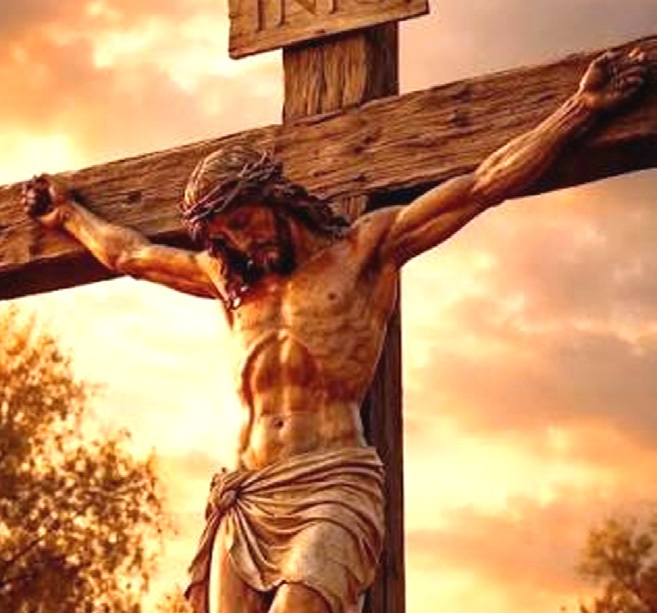
Jesus on the cross.
Jesus withheld nothing of Himself and willingly gave all He could give. One day, every grateful heart will fully comprehend the depth of His love and the extraordinary lengths to which He was willing to go to secure mankind’s salvation. Heartfelt praise will then rise to Him in appreciation for His magnificent sacrifice.
IN CONCLUSION
The multi-faceted work of atonement reveals God’s genuine desire for the redemption of our race. Every form of sin will be addressed in the atoning work of Jesus and the Church. Assigning a measure of punishment to the Great Company further reveals the wisdom and love of God. The Father’s pain in watching the suffering of His beloved Son shows His great desire for the redemption and blessing of the human family.
Even the Father’s temporary forsaking of Jesus (Matthew 27:46) was designed to impress upon His beloved Son, in the fullest measure, the loneliness, anguish, and separation of an alienated world, thereby deepening His compassion for those He came to redeem. What a joy to consider the time when mankind will understand the love and wisdom of God and finally see Him as their Father.
“It is in Him, and through the shedding of His blood, that we have our deliverance — the forgiveness of our offences — so abundant was God’s grace, the grace which He, the possessor of all wisdom and understanding, lavished upon us, when He made known to us the secret of His will. And this is in harmony with God’s merciful purpose for the government of the world when the times are ripe for it — the purpose which He has cherished in His own mind of restoring the whole creation to find its one Head in Christ; yes, things in Heaven and things on earth, to find their one Head in Him” (Ephesians 1:7-10, Weymouth).
— Br. Tom Ruggirello
[1] Leviticus 16:10 suggests that the scapegoat was part of the sin-offering. “But the goat, on which the lot fell for departure, shall be set alive before Jehovah, to make atonement over him, to send him away for departure into the wilderness.” The RVIC suggests that the phrase “over him” should be read “for him,” i.e., for the benefits of the scapegoat. In other words, being released into the wilderness will be the instrument God will use to restore the Great Company and help them finally be faithful to their covenant of sacrifice.
[2] Comparing Leviticus 16:21-22 with Ezekiel 44:10-14 suggests that after bearing a measure of man’s punishment, the Great Company will be used to minister to the world.