
All the Torments of Revelation
Revelation’s symbols both confuse denominational Christians and arm them with scripture texts seemingly unanswerable in challenging Present Truth. The fearsome creatures with their unnatural assemblage of body parts arising from the pit are empowered with the torment (Basanidzo) of a scorpion when it stings a man (Revelation 9:5). How does this relate to the original sense of Basanidzo (G928), which had nothing to do with scorpions, but was linked to commerce? In the original sense, the market used a tablet of black basanite for testing of gold coins and precious metal trade items for quality.[1] Is Revelation 9:5 merely testing? Do Revelation 14 and 20 set forth eternal torment?
To develop a comprehensive view, testing needs to be understood in the context of the judicial process as it was practiced in classical Greece. Following a judicial challenge, magistrates would oversee proceedings where slaves of the litigants, both male and female, were brought to court and beaten or even put on the rack to elicit yes or no answers to questions.[2][3] Such justice now is appalling to us. Because this coerced testimony involved torture, Basanidzo came to be linked with the idea of torment and is so translated in King James with a few exceptions.
Following the ascendancy of Rome, the judicial process became even crueler. In the Book of Acts, we find the record of standard practice that was a miscarriage of Roman law. The uproar of Phillipi’s citizenry from Paul’s preaching Christ was quelled only with the non‑judicial beating and imprisonment of Paul and Silas in the inner prison. (Acts 16:23) Paul, a Roman citizen, never should have been beaten. “The use of torture was routine. Then as now the use of torture was justified by the public interest.”[4] For extreme cases, the torture was followed by execution.
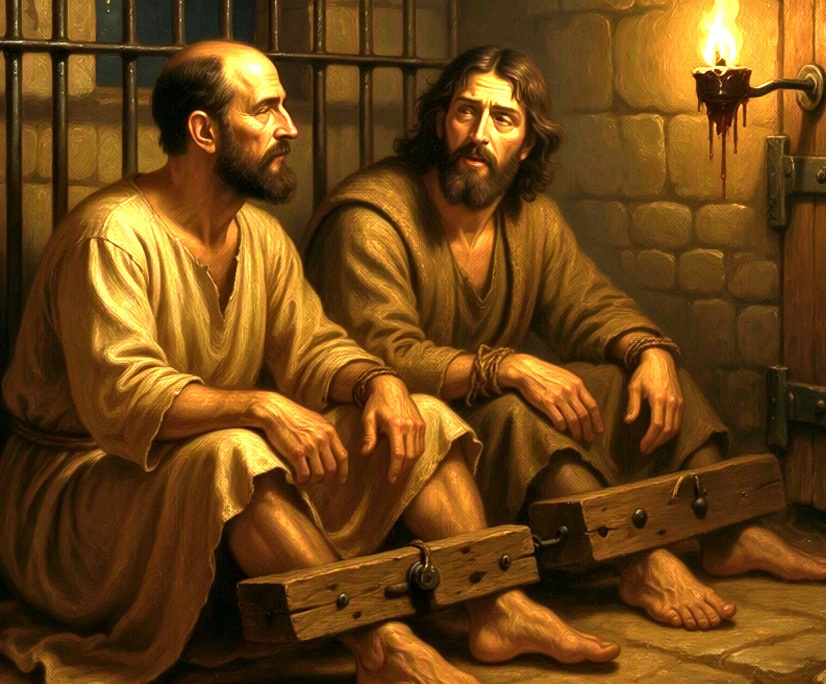
Paul and Silas in prison
BROAD USE OF BASANIDZO
The Septuagint translation (LXX) of the Old Testament into Greek shows a broader use of Basanidzo. 1 Samuel 5:6 translates Basanidzo as smote, and 1 Samuel 6:3 uses the related noun Basanos (G931) for divine plague. In the New Testament, the King James Bible for Matthew 14:24 renders it as tossed, Mark 6:48 as toiling, and 2 Peter 2:8 as vexed.
Revelation also uses Basanidzo in a broad sense, ranging from the pangs of childbirth, the sting of scorpion‑tail, to a judicial proceeding before the lamb and his angels. Linking to the culture of the 1st century, that is, a judicial process seeking the truth through torment of false systems. As the book closes, there is the final execution of the sentence of annihilation. (Revelation 20:10)
We have helpful guidance in such a highly polarized debate. Pastor Russell sets forth, “Until we have a view of the matter in which every Bible statement finds a reasonable representation, we should not feel sure that we have the truth on the subject” (B144).
FIRE AND BRIMSTONE, EVERLASTING DESTRUCTION
Fire always indicates destruction. Brimstone (sulfur) with acrid fumes of highly toxic sulfur‑oxides symbolizes desolation and purification following the fire.[5] Destruction and desolation from fire and brimstone appear throughout the Old Testament.
Genesis 19:24, “Then the LORD rained upon Sodom and upon Gomorrah brimstone and fire from the LORD out of heaven” (see Luke 17:29)
Deuteronomy 29:23, “And that the whole land thereof is brimstone, and salt, and burning, that it is not sown, nor beareth, nor any grass groweth therein, like the overthrow of Sodom, and Gomorrah.”
Psalm 11:6, “Upon the wicked he shall rain snares, fire and brimstone.”
Isaiah 30:33, “For Tophet is ordained of old; yea, for the king it is prepared; he hath made it deep and large: the pile thereof is fire and much wood; the breath of the LORD, like a stream of brimstone, doth kindle it.”
Isaiah 34:9, “And the streams thereof shall be turned into pitch, and the dust thereof into brimstone, and the land thereof shall become burning pitch.”
Ezekiel 38:22, “And I will plead against him with pestilence and with blood; and I will rain upon him, and upon his bands, and upon the many people that are with him, an overflowing rain, and great hailstones, fire, and brimstone.”
Since ancient times world cultures aside from the Bible have recognized fire and brimstone as purifying agents. Together they purge both literal and moral pollution. In Homeric literature, Odysseus returns home and bloodshed ensues. After cleaning up the blood, a cleansing of the moral pollution follows:
“Bring sulfur nurse to scour out all this pollution —
bring me fire too, so I can fumigate this house.”
“Fire first.” The good soldier answered.
“Light me a fire to purify this house.”
The devoted nurse snapped to his command.
Brought her master fire and brimstone.
Odysseus purged his palace, halls, and court,
with cleansing fumes.
— Odyssey 22:509‑521 (Robert Fagles, translator)
CHURCH FALSE TEACHING THAT SOULS ARE TORMENTED
One of the earliest written accounts of Hell‑fire torment come from ecclesiastical polemicist Tertullian (c. 160‑220 AD). “How vast a spectacle then bursts upon the eye! What there excites my admiration? What my derision? Which sight gives me joy? Which rouses me to exultation? — as I see so many illustrious monarchs, whose reception into the heavens was publicly announced, groaning now in the lowest darkness with great Jove himself, and those, too, who bore witness of their exultation; governors of provinces, too, who persecuted the Christian name, in fires more fierce than those with which in the days of their pride they raged against the followers of Christ.”[6] Such views dominated church thinking both Catholic and later Protestant with few exceptions.
In the late 19th century, James Moffat, commenting on Revelation 14:10, said “It is impossible for us to understand how such a sight could be compatible with heavenly happiness,” but he adds, “the psychological basis of the ghastly expectation can be verified in the cruder types of primitive and modern religion”[7]
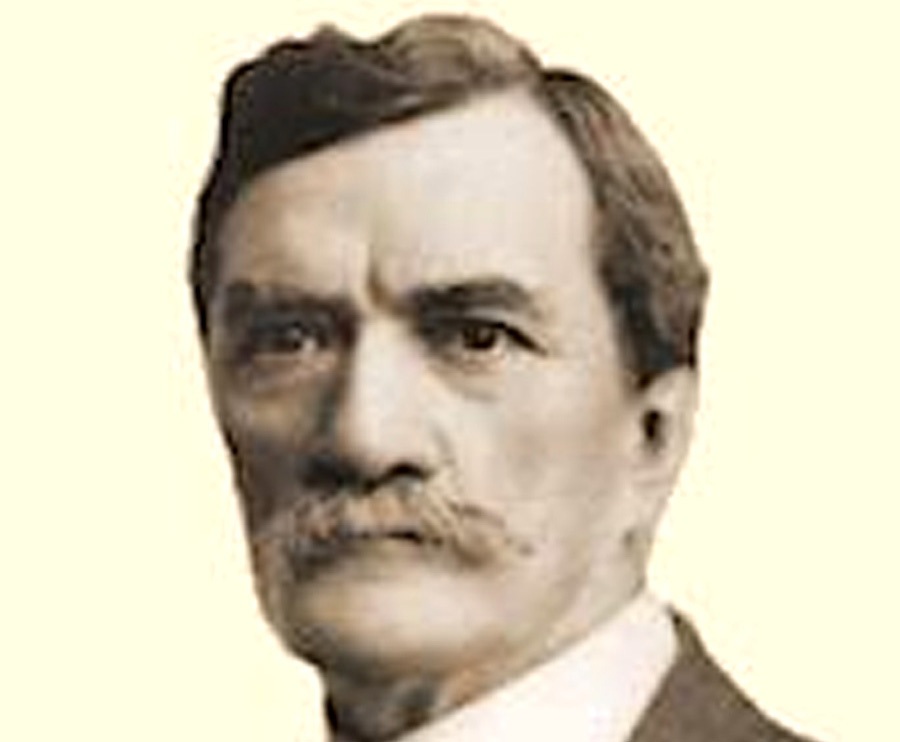
James Moffat, Bible translator
On the fringes of the Evangelical Christian community there has been a full‑scale assault on the doctrine of eternal torment, “Since the publication of its first edition in 1982, Edward Fudge’s book The Fire that Consumes has been the fullest and most thorough exposition and defense of the view that the fate of the unsaved will be final destruction, not (as in the traditional doctrine of hell) eternal torment … the issue has been more widely discussed among Evangelical Christians than ever before.”[8] Responding to Edward Fudge’s thesis, there is backing for Hell fire in the evangelical church. Christopher Morgan, supported by an erudite team, argues strongly for traditional dogma; Basanidzo should be understood as “God’s punishment involving a real, ongoing, eternal, conscious torment.”[9]
BASANIDZO AS JUDICIAL PROCESS WITH TORMENT
Revelation teaches that systems of error holding forth that they are God’s mouthpiece will continue their culture of deception to the very end when brought to judgment. Symbolically, they are cast alive into the lake of fire and brimstone. They will not confess their sins out of troubled moral conscience. They will only confess through Basanidzo, the touchstone of truth forced by tortured inquiry.
As a specific example, we see the Catholic church’s cover‑up of wide‑scale pedophilia scandal within its priesthood. After identifying priests who were perpetrators, the Catholic church’s response has been to shift the priests to other parishes where they repeated their abuses. The public confession of these crimes has been extracted only during the tormenting Basanidzo process in US and European civil courts. Painfully large financial settlements have been paid.
Committed members of the Catholic Church tolerate these abuses, envisioning them as the consequence of fallible men serving a divine purpose. Ross Douthat a Jesuit‑educated former columnist for the New York Times, cites the history of Israel in defense. “We’re [Israel] the chosen people of the one true God, and to prove it to you here’s a long story about how awful and promiscuous and murderous and fallible we are, how terrible our leaders often turned out to be, and how we deserve every exile and punishment we received. If you don’t find that message credible, well, I understand. But if you find it strangely compelling, then you’re close to the case for remaining Catholic at a time when the corruption of the church is driving a number of very public defections from the faith.”[10]
Saul of Tarsus serves as a case study to show that there is an opportunity, although not a guarantee, that supporters of these systems who repent and convert may be rehabilitated. Torment and annihilation are not the points we should focus on. Our focus should be the eternal remembrance (smoke) the heavenly Father has shown in the permission of evil, experienced both by mankind and the members of Christ’s body. This permission of evil has been allowed in the wisdom of the heavenly Father. Basanidzo will bring these works of darkness to light.
THE BEAST AND HIS IMAGE ARE SYMBOLS
No Christian nation has ever worshiped either a literal beast or an image of such a beast (Revelation 14:9, 10, 11). Today, however misguided might be the adulation for politicians, mega‑billionaires, entertainers, social media influencers, and sports figures, few would engage in worshipping the epiphany of a literal beast, nor in worshipping an image of such a beast. The beast and his image are symbols representing great religious systems (HG305:3, Q225:5), the wine of wrath is a symbol, as are the fire and brimstone, which symbolize complete destruction. Yet, all of these symbols have a reality.
WHEN IS THE JUDGMENT OF FIRE AND BRIMSTONE?
Since this judgment will be before the holy angels and before the Lamb, it clearly must take place following the Second Advent of Christ. This is elaborated in the Revelation 19:20. In Revelation 14:9‑11, statements that they shall be in judicial judgment are best understood as a parenthesis, warning the reader of the certainty of this future judgment, but not that the judgment takes place at that time. The smoke that goes up forever would be the remembrance of the crimes, the confusion, and every God‑dishonoring legacy of the beast and his image and every vestige of sin, including the devil, his angels, the willingly disobedient, and Hades (the state of the dead), even Death itself.
CAN THE BEAST AND HIS IMAGE FEEL PAIN?
Can the beast and his image feel pain? Before hastily answering no, before thinking these are symbols, and symbols cannot feel pain, consideration must be given to the question of corporate culture. Cultures presented in the symbols of the beast and his image can feel torment and distress from Basanidzo.[11] The thousands of men and women who keep the enterprise running, serving the culture, the ethos, even when it may be at odds with their conscience.
A reasonable counter‑argument may concede that the beast and its image clearly are symbolic of great religious systems with their culture. Yet, holding that these systems are composed of living people, and these people shall receive the promised torments. This builds upon “Come out of her my people, have no fellowship in her sins, that you receive not of her plagues” (Revelation 18:4).
Here we have direct guidance from scripture. While the destruction of Sodom and Gomorrah was an assured fact; the people return from captivity! Even the inhabitants of Sodom and Gomorrah have an opportunity, although not a guarantee, to return to their former estates.
Ezekiel 16:53, “When I shall bring again their captivity, the captivity of Sodom and her daughters, and the captivity of Samaria and her daughters, then will I bring again the captivity of thy captives in the midst of them: (54) That thou mayest bear thine own shame, and mayest be confounded in all that thou hast done, in that thou art a comfort unto them. (55) When thy sisters, Sodom and her daughters, shall return to their former estate, and Samaria and her daughters shall return to their former estate, then thou and thy daughters shall return to your former estate.
Every use of Basanidzo that appears in Revelation will now be considered. All texts are based on the readings in the Codex Sinaiticus and all of the translations from the Greek have been made by the author. Because of a significant textual issue affecting the understanding, Revelation 14 will be considered following Revelation 20.
Revelation 9:5, Torment of the Scorpion Sting. “And they were charged not to kill them, but that they should torment them five months, with the torment of a scorpion when it stings a man.” Basanidzo is exceedingly painful, like a scorpion sting, but not fatal. This torment is from the power, or authority given to these scorpion tails.
Revelation 11:10, Torment of the Two Witnesses. “And those dwelling upon the earth rejoice over them, and are glad, and send one another gifts because [of the deaths] of these two prophets who plagued those dwelling upon the earth.”
The two witnesses hold the power both to torment and kill. Specifically, they kill with fire from their mouths (Revelation 11:6). The images are based on the two olive trees of Zechariah, symbolic of the Old and New Testaments. The martyrdom of the two witnesses, followed by dishonoring their bodies, is celebrated by those dwelling on the earth. Those celebrating are clearly quite alive and no longer fearing the torments and fire from the Bible’s judgments.
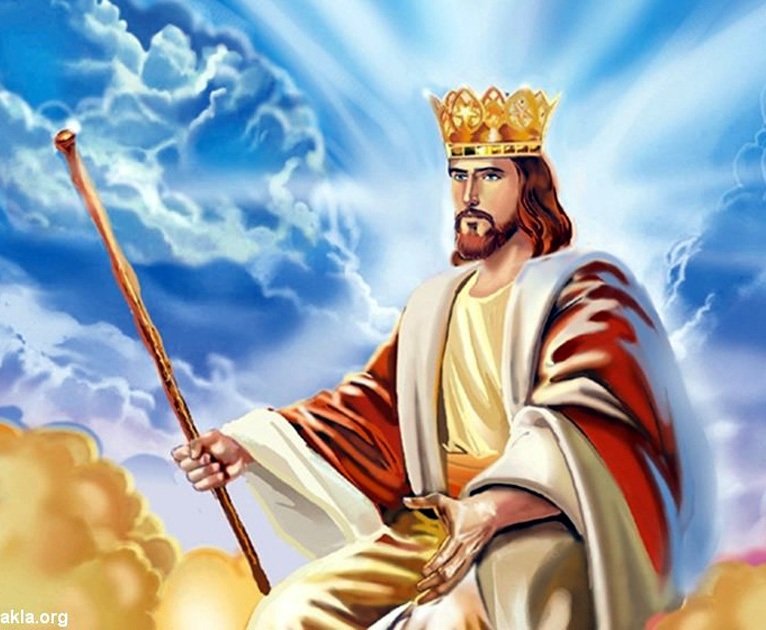
Jesus will administer proper judgment
Revelation 12:2, Distress of Childbirth. “And being with child, she cried out in the pangs and distress of childbirth.” Basanidzo is the pain of childbirth. While Basanidzo is distress, it should not be understood to be torment from an external force; clearly it is not torture.
Revelation 18:7, Torment and Tortured Inquiry. “By however much she glorified herself and luxuriated, by so much give her torment and sorrow, because in her heart she says, ‘I sit a Queen and am no widow, and I shall never see sorrow.’” Babylon is brought into Basanidzo, here setting forth judicial inquiry, by the saints who were persecuted by her (Revelation 18:6). In contrast to Revelation 14, the total destruction and desolation phase of this judgment is yet future.
Revelation 18:10, Torment and Tortured Inquiry. “(9) And the kings of the earth who committed fornication with her will weep and wail over her when they shall see the smoke of her downfall. (10) Standing afar off, fearful because of her torments, saying, ‘Woe, Woe, the great city Babylon! The strong city! Because in one hour thy crisis came.’” The Basanidzo of Revelation 18:7 is observed by the kings of the earth who are keeping their distance because of fear, as do the merchants of these things. This clearly is not a torment after death.
Revelation 18:15, Torment and Tortured Inquiry. “The merchants of these things who became rich from her will stand afar off from fear of her torment.” The Basanidzo of Revelation 18:7 is also observed by the merchants of these things who, like the kings, are keeping their distance because of fear and are not dead.
Revelation 20:10, Torment and Tortured Inquiry. “The Devil deceiving them was cast into the lake of fire and brimstone where the Beast and the False‑Prophet are. And they shall be tried day and night for the Ages of Ages.”
In Revelation 20:14, John defines this lake of fire by adding, “which is the Second Death.” The Lake of Fire and Brimstone is a symbol of eternal extinction.[12] Casting the devil, the beast, and the false prophet into the Lake of Fire shows that they will never exist again. This passage adds that they will be tormented, that is, “put to judicial test,” day and night forever. Their confession under duress, and testing on the touchstone of truth, demonstrated failure and their example will serve an eternal purpose.
Revelation 14:9, 10, 11, Judicial Judgment, Fire and Brimstone for Destruction, Desolation, and Purifying. “And a third angel followed them, saying in a great voice, ‘If anyone worships the beast and his image and receives a mark upon his forehead or upon his hand, (10) Even he shall drink from the wine of the fierceness of God that shall be mingled undiluted from the cup of his wrath. (And they shall receive judicial judgment in fire and brimstone before the holy angels and before the lamb. (11) And the smoke of their judgment shall ascend forever.) And the ones worshipping the beast and his image shall have no rest day or night, and so it shall be for anyone who receives the mark of his name.”
“Before the holy angels and before the lamb” (verse 10) firmly places the action within the framework of Basanidzo as used in a judicial trial, “They shall be tried (Basanidzo) with fire and brimstone.” (Basanidzo is the active voice future 3rd person plural i.e., they shall). The sense of Basanidzo sets forth the execution of a final sentence of eternal destruction on these systems, not individuals as implied by the verb tense in the usually accepted reading, “he shall.” Recognizing the Sinaitic text, “they shall receive judicial judgment,” adding with fire and brimstone makes clear that this refers to a future judicial judgment of destruction. This promised judgment is of the systems, and not the misguided worshipping individuals. To provide a workable translation, “judicial judgment” is used because judgment is “before the holy angels and before the lamb.” For the worshippers of the beast and image who receive an obviously symbolic mark, their portion will be drinking unmixed drafts of the wine of God’s wrath and having no rest day or night.
CONCLUDING THOUGHTS
Throughout, the underlying failure bringing torment is pride, a quality inherent in many of those who fail the test when rubbed on God’s Basanite touchstone. If persisted in, the final result will be second death. God has given us a touchstone as well. The touchstone is Christ and the Bible’s holy word. By understanding Bible principles and our Lord’s life, we have a standard by which to compare our own lives. In the decisions we make and the course in life we take, he provides the guiding principles. When his guidance results in spiritual growth, then the tests we face will reveal a genuineness of character. The touchstone will have done its work.
— Br. Richard Doctor
[1] Lord, Louis E., “The Touchstone,” The Classical Journal, Volume 32, No. 7 (April 1937), page 428.
[2] Gagarin, Michael, “The Torture of Slaves in Athenian Law,” Classical Philology, Volume 91, No. 1 (January 1996), pages 2, 4.
[3] Germain, Louis R. F., “Chronique de Droit Hellénique Ancien (III),” L’Antiquité Classique, T. 48, Fasc. 2 (1979), page 664.
[4] Moore Jr., Barrington, “Cruel and Unusual Punishment in the Roman Empire and Dynastic China,” International Journal of Politics, Culture, and Society (Summer 2001), Volume 14, No. 4, pages 737‑739.
[5] Sulfur oxides are an acute health hazard at 10 ppm, and life‑threatening at 100 ppm.
[6] Tertullian, De Spectaculis, C.30, trans. New Advent citing Catholic Encyclopedia).
[7] Moffat, James in The Expositor’s Greek Testament, W. Robertson Nicoll, editor, (1897) reprinted by Wm. B. Eerdman Publishing, Grand Rapids, Michigan (1981), Volume 5, James Moffat, The Revelation of St. John the Divine, page 438.
[8] Fudge, Edward William, The Fire that Consumes (3rd edition), Cascade Books, Eugene, OR (2011), page 1.
[9] Morgan, Christopher et al., Modern Scholarship Reinvents Eternal Punishment — Hell under Fire, Zondervan, (2004), page 117.
[10] Douthat, Ross, “Staying Catholic at Christmas,” New York Times, December 22, 2018. As quoted in JD Vance, Communion, Harper (2026), page 167. Then, adding in his own words, Mr. Vance writes, “But if the Titanic is going down I’d rather be on board than hop on a lifeboat.”
[11] Galbraith, John Kenneth, The Age of Uncertainty, Houghton Mifflin Co., Boston (1977), pages 261‑279.
[12] Ruggirello, Thomas, “Rubbed Upon the Touchstone,” Beauties of the Truth, (August 2021) Volume 32, No. 3.