
Mary, the Mother of Jesus
“When as his mother Mary was espoused to Joseph, before they came together, she was found with child of the holy Spirit” (Matthew 1:18).
We all know the emotional connection we have with our mothers. They have more influence in our lives than our fathers for we all imprint on our mother’s voice and chemical signature from the time late in the first trimester of pregnancy to birth. The very acts of forming, carrying the child, and giving birth forge an emotional bond in the mother nearly impossible for non-mothers to access; the child’s early world is nearly in total the child and its bond to the mother; and typically children spend more time with their mothers than with their fathers. Mothers and Fathers both love their children deeply, but in different ways.
It was no different with Jesus. He had the same emotions and experiences as most of humanity with respect to his mother. She had a very important role in the divine plan and God’s choice of her and Joseph reflects some very precious qualities of character.
THE MEANING OF THE NAME “MARY”
Bible names frequently have prophetic meaning. This is no doubt part of the overruling providence of God in the affairs of men. Consequently, it is often useful to examine what a name means.
“Like other typical Levite names such as Aaron and Moses, the name Miriam is probably Egyptian of origin, derived from a word that means Beloved. But to a Hebrew audience it may have seemed that the name Miriam came from the verb mara (מרה) meaning to be rebellious or disobedient. However, the Greek name Maria (which became Mary in the English language area) may have reminded a Hebrew audience of the Hebrew and Aramaic verb marar (מרר), meaning to be bitter or strong:” 1
These meanings make prophetic application of the name Mary problematic. If we rely upon the Egyptian root, the meaning of “beloved” applies very nicely. On the other one hand, the meaning of “bitter” could apply to the experience Mary had in seeing Jesus put to death. This certainly was a bitter experience for her.
MARY’S PEDIGREE
Luke 3:23 says, “And Jesus himself began to be about thirty years of age, being (as was supposed) the son of Joseph, which was the son of Heli.” Verses 33-34 say, “Which was the son of Aminadab, which was the son of Aram, which was the son of Esrom, which was the son of Phares, which was the son of Juda, Which was the son of Jacob, which was the son of Isaac, which was the son of Abraham, which was the son of Thara, which was the son of Nachor.”
We understand this genealogy to be that of Mary, though Joseph is mentioned in verse 23. In this regard we quote McClintock and Strong. “In constructing their genealogical tables, it is well known that the Jews reckoned wholly by males, rejecting, where the blood of the grandfather passed to the grandson through a daughter, the name of the daughter herself, and counting that daughter’s husband for the son of the maternal grandfather (Numbers 26:33, 27:4-7).”2 Consequently we see that Joseph was Heli’s son-in-law and that Heli was Mary’s father.
Of perhaps more important note is that Mary was of the tribe of Judah. This was absolutely necessary to fulfill the many prophecies in the Hebrew scriptures that foretold that Messiah would be of the tribe of Judah and from the family of David.
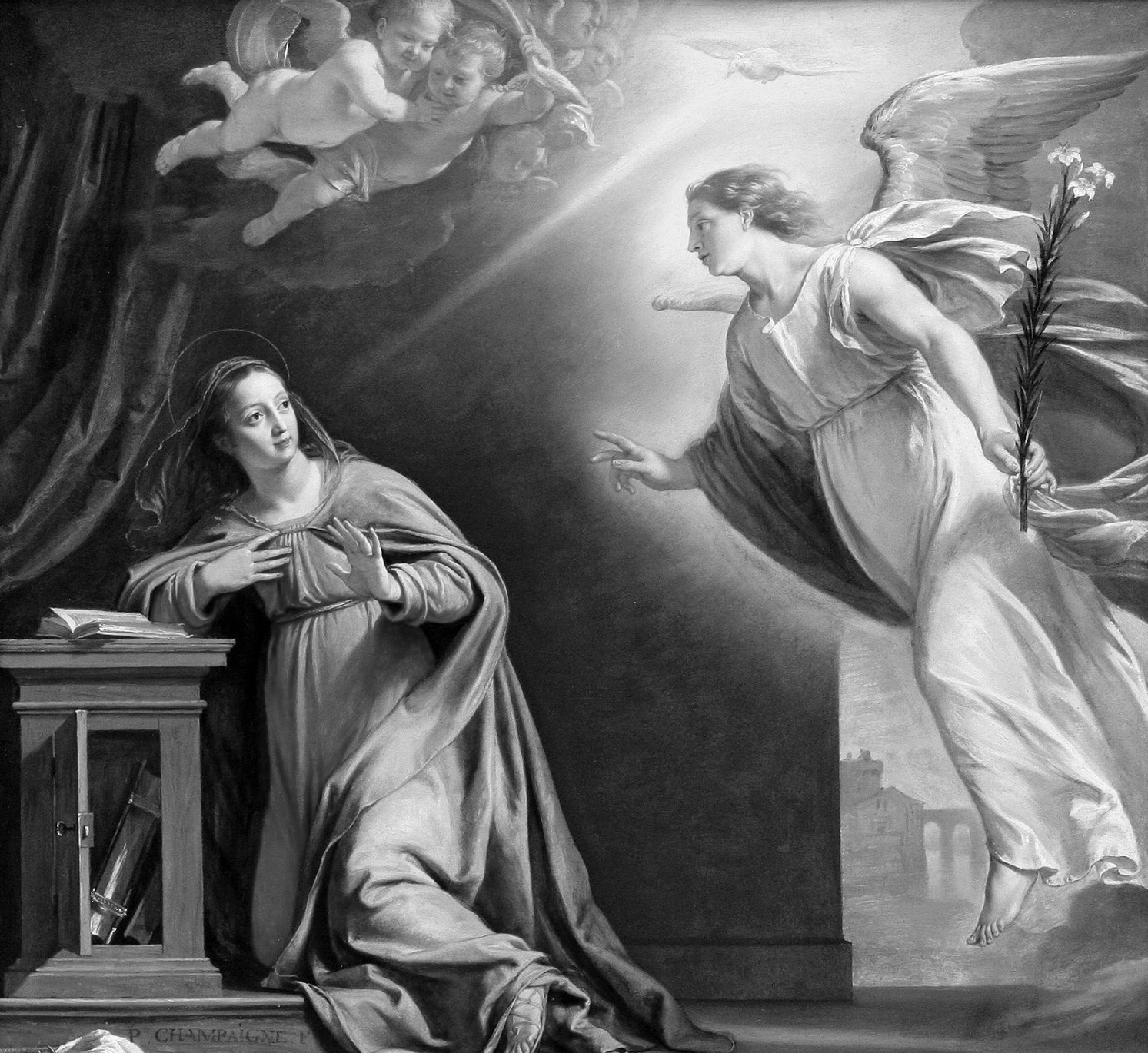 The Annunciation, Philippe de Champaigne, 1644
- “Concerning his Son Jesus Christ our Lord, which was made of the seed of David according to the flesh” (Romans 1:3).
- “He shall be great, and shall be called the Son of the Highest: and the Lord God shall give unto him the throne of his father David” (Luke 1:32).
- “And when he had removed him, he raised up unto them David to be their king; to whom also he gave testimony, and said, I have found David the son of Jesse, a man after mine own heart, which shall fulfil all my will. Of this man’s seed hath God according to his promise raised unto Israel a Saviour, Jesus” (Acts 13:22,23).
- “Remember that Jesus Christ of the seed of David was raised from the dead according to my gospel” (2 Timothy 2:8).
- See also Revelation 5:5, 22:16.
Incidentally, Joseph, Jesus’ step-father, was also of the tribe of Judah, so the rights of David were legally bestowed upon Jesus through both of his earthly parents. Jesus had a true hereditary right to the throne of David.
AN EXTRAORDINARY TEENAGER
It appears that Mary was a young teenage girl when she was espoused to Joseph. Some commentators place her age as young at 12, the age of Bat-Mitzvah, others suggest age 14. But whatever her age, she was certainly young by today’s standards. Following are extracts from Luke 1:26-80, about Mary.
Verse 26 — “And in the sixth month the angel Gabriel was sent from God unto a city of Galilee, named Nazareth.” Besides Michael the archangel, Gabriel is the only other angel mentioned in scripture by name. We first met him as God’s spokesman to the prophet Daniel. This same Gabriel was appointed to make the will of God known to Mary.
Verse 27 — “To a virgin espoused to a man whose name was Joseph, of the house of David; and the virgin’s name was Mary.” The word for virgin here is parthenon (παρθενον) which is translated every time as “virgin.” It means a maiden, an unmarried daughter.
Verse 28 — “And the angel came in unto her, and said, Hail, thou that art highly favoured, the Lord is with thee: blessed art thou among women.” Gabriel came right to the point — “God has chosen you!”
Verse 29 — “And when she saw him, she was troubled at his saying, and cast in her mind what manner of salutation this should be.” Remember, Mary was a young girl. She did not quite know how to react to this visitor or to his words.
Verse 30 — “And the angel said unto her, Fear not, Mary: for thou hast found favour with God. (31) And, behold, thou shalt conceive in thy womb, and bring forth a son, and shalt call his name Jesus. (32) He shall be great, and shall be called the Son of the Highest: and the Lord God shall give unto him the throne of his father David:
(33) And he shall reign over the house of Jacob for ever; and of his kingdom there shall be no end.”
What an extraordinary statement!
- You are going to conceive.
- You are going to have a son.
- You are going to name him Jesus.
- He will be a great King in the tradition of King David.
- His Kingdom will be forever.
How should a young teenage girl react to this?
Verse 34 — “Then said Mary unto the angel, How shall this be, seeing I know not a man?” This is a reasonable response. She had lived a pure life. How could she conceive a child?
Verse 35 — “And the angel answered and said unto her, The Holy Spirit shall come upon thee, and the power of the Highest shall overshadow thee: therefore also that holy thing which shall be born of thee shall be called the Son of God.” Here is the straightforward answer. It will be from the power of God! It will be a miracle. Gabriel knew he was dealing with a young person and anticipated a certain amount of skepticism. So he continued by showing that God’s power had already been at work.
Verse 36 — “And, behold, thy cousin Elisabeth, she hath also conceived a son in her old age: and this is the sixth month with her, who was called barren. (37) For with God nothing shall be impossible.” Gabriel knew what was necessary to help Mary understand. By showing her that God’s power was already at work in Elizabeth he built up her trust. He reminded her that nothing is impossible with God. So Mary responded in such a pure and lovely way:
Verse 38 — “And Mary said, Behold the handmaid of the Lord; be it unto me according to thy word. And the angel departed from her.” Is this not the spirit of consecration? Mary bowed in submission to the divine will and accepted what God had in mind for her. So even at her young age we see in Mary the heart desire to submit to God’s will. This is consecration in its most fundamental form.
What a lesson for the consecrated! Can we accept God’s will in our lives, no matter what form it takes, and be submissive and obedient to it?
- The death of loved ones
- The disappointment of cherished hopes and plans
- The closing of the door of opportunities
- A diagnosis of severe illness
Can we say as Mary did, “be it unto me according to thy word”?
Verse 39 — “And Mary arose in those days, and went into the hill country with haste, into a city of Juda; (40) And entered into the house of Zacharias, and saluted Elisabeth. (41) And it came to pass, that, when Elisabeth heard the salutation of Mary, the babe leaped in her womb; and Elisabeth was filled with the Holy Spirit:
(42) And she spake out with a loud voice, and said, Blessed art thou among women, and blessed is the fruit of thy womb. (43) And whence is this to me, that the mother of my Lord should come to me? (44) For, lo, as soon as the voice of thy salutation sounded in mine ears, the babe leaped in my womb for joy. (45) And blessed is she that believed: for there shall be a performance of those things which were told her from the Lord.”
God continued to build Mary’s faith through these experiences. We are told her relative Elizabeth was “filled with the holy Spirit” and under its inspiration, she said “Blessed is the fruit of thy womb.” Interestingly, these are the exact words that the angel Gabriel had used! There was no doubt that Mary noticed this.
There is another lesson to us:
- God will provide assurances of His will in our lives.
- But — we have to be listening. God speaks to us in many ways, but unless we are looking for God’s direction and listening for His voice, we may miss His direction.
- This is a matter of faith for us. It is not magic or superstition, but faith.
Mary’s reaction to Elizabeth’s words was most lovely:
Verse 46 — “And Mary said, My soul doth magnify the Lord, (47) And my spirit hath rejoiced in God my Saviour. (48) For he hath regarded the low estate of his handmaiden: for, behold, from henceforth all generations shall call me blessed. (49) For he that is mighty hath done to me great things; and holy is his name. (50) And his mercy is on them that fear him from generation to generation. (51) He hath shewed strength with his arm; he hath scattered the proud in the imagination of their hearts. (52) He hath put down the mighty from their seats, and exalted them of low degree. (53) He hath filled the hungry with good things; and the rich he hath sent empty away. (54) He hath holpen his servant Israel, in remembrance of his mercy; (55) As he spake to our fathers, to Abraham, and to his seed for ever.”
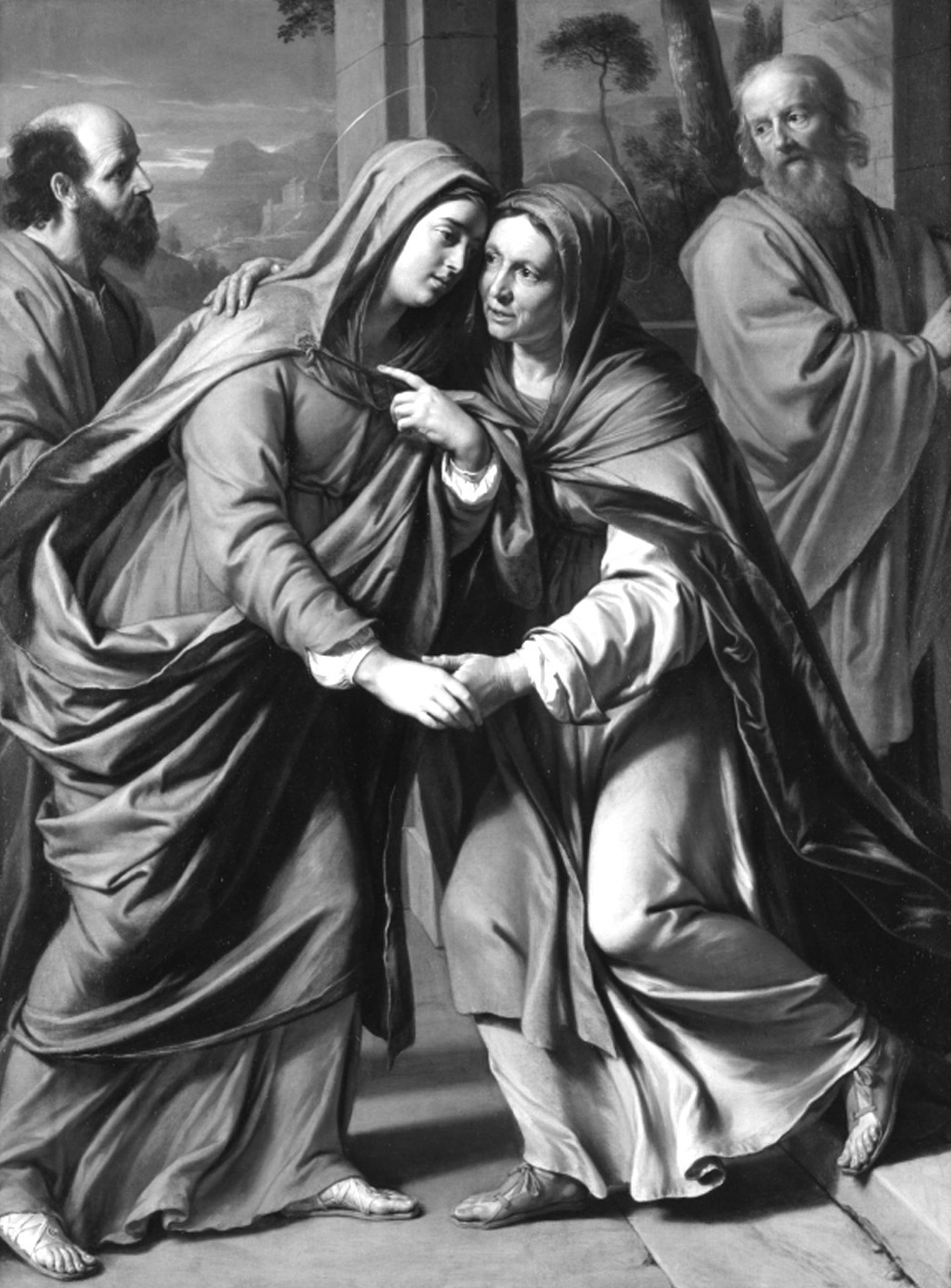
The Visitation (Mary and Elizabeth), Philippe de Champaigne
This is the famous Magnificat of Mary which was made into a hymn early in the history of the Catholic Church. Though we cannot be excited about what it became in nominal church history, it nevertheless is part of God’s word and we expect that Mary’s words were a product of the thoughts of her own reverent heart, shaped and enhanced by the inspiration of God’s holy Spirit. Each phrase is packed with wonderful ideas:
- “My soul doth magnify the Lord, And my spirit hath rejoiced in God my Saviour.” This is another statement of her consecration. Her life, by her choice, was meant to magnify God. And it is a statement of joy to recognize God as her Lord and Savior.
- “For he hath regarded the low estate of his handmaiden:” Here is a sweet demonstration of Mary’s humility. She confesses unworthiness. Humility will always be a prominent character trait of the consecrated.
- “For, behold, from henceforth all generations shall call me blessed.” This demonstrates Mary’s faith. She completely believed what she was told by the angel and by Elizabeth. There was no doubt. Consequently, she was to be the mother of Messiah, one who would be called blessed by all.
- “For he that is mighty hath done to me great things; and holy is his name.” Mary’s confidence with what God was going to do with her was thorough. She confessed that God did great and holy things in the past and would do them again in her life.
- “And his mercy is on them that fear him from generation to generation.” Mary was overwhelmed at what was happening. But she believed that she served a merciful God and those who reverence Him would receive mercy, now and forever.
- “He hath shewed strength with his arm.” Mary asked for and relied on God’s promise of strength. She knew she would need it and confidently depended on God to continue to provide it in the future.
- “He hath scattered the proud in the imagination of their hearts.” The truly humble have a grip on reality. Being part of a great miracle from God Mary understood that reality was being written with this miracle she was about to experience. She accepted it, and the consequences of it, by faith. The proud do not have a grip on reality. Their reality is the imagination of their heart and it is a false reality. The proud often second guess others and attribute to others false or evil motives. We see it in the politics of our time. Those very proclivities will result in the scattering of their plans.
- “He hath put down the mighty from their seats, and exalted them of low degree.” Mary continued to praise God for his wonderful justice, rewarding the truly humble and reversing the fortunes of the proud.
- “He hath filled the hungry with good things; and the rich he hath sent empty away.” Mary was satisfied with this new blessing that she had been given. It was a “good thing.” No doubt she had uncertainties, but she was filled. Again we see the contrast with those rich with the world’s goods — their reality is skewed. While they think they are full, they are really empty.
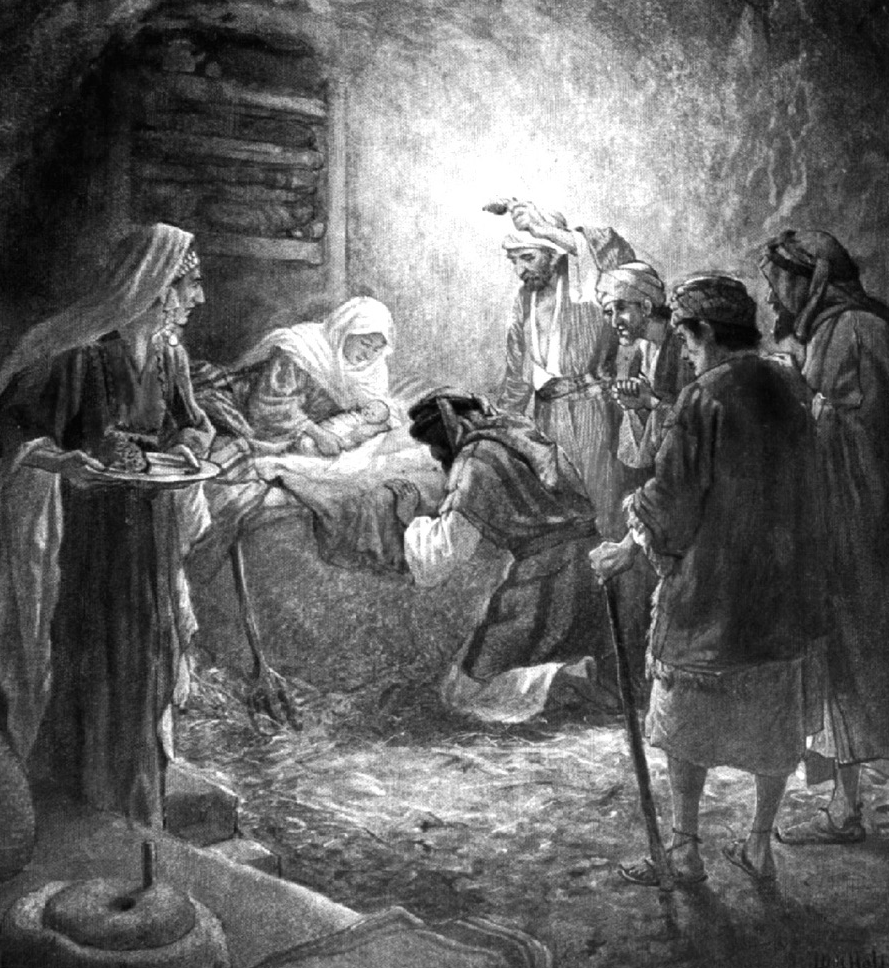
The Birth of Jesus (Ultimate Bible Picture Collection)
- “He hath holpen his servant Israel, in remembrance of his mercy.” Mary’s faith was built on history. It was a history of God helping his covenant people through many past centuries. She was a part of this covenant people and she relied upon God’s help. This whole, strange experience that was unfolding before her was part of His merciful treatment of Israel.
- “As he spake to our fathers, to Abraham, and to his seed forever.” Mary’s faith was built on the promises. That is the basis for any faith. And the Abrahamic covenant is the most important covenant upon which God’s promises are established!
Verse 56 — “And Mary abode with her about three months, and returned to her own house.” Finally, Luke tells us that Mary remained with Elisabeth for three months before returning home. That would have been close to the time when Elisabeth gave birth, but we are not informed if she remained until Elizabeth gave birth.
THE BIRTH OF JESUS
While Matthew and Luke provide many fascinating details regarding the birth of Jesus, we are here interested in Mary’s words and thoughts. Matthew has nothing to add along these lines but Luke provides some interesting comments. Following are extracts from Luke chapter two.
Verse 19 — “But Mary kept all these things, and pondered them in her heart.” In spite of her young age, Mary was an introspective individual. She watched, observed, and thought about all of the things that were said and done. Now, having given birth, every motherly instinct came to the front. She took in every detail concerning the birth of her son.
Verse 33 — “And Joseph and his mother marveled at those things which were spoken of him. (34) And Simeon blessed them, and said unto Mary his mother, Behold, this child is set for the fall and rising again of many in Israel; and for a sign which shall be spoken against; (35) (Yea, a sword shall pierce through thy own soul also) that the thoughts of many hearts may be revealed.” Mary continued to marvel at the things that were happening. It is probably not a marveling in surprise, but rather marveling at the powerful hand of God moving in her life and that of the newborn Jesus — shaping, overruling and blessing.
EARLY IN JESUS’ LIFE
Verse 46 — “And it came to pass, that after three days they found him in the temple, sitting in the midst of the doctors, both hearing them, and asking them questions. (47) And all that heard him were astonished at his understanding and answers. (48) And when they saw him, they were amazed: and his mother said unto him, Son, why hast thou thus dealt with us? behold, thy father and I have sought thee sorrowing. (49) And he said unto them, How is it that ye sought me? Did you not know I had to be in my father’s business? (50) And they understood not the saying which he spake unto them. (51) And he went down with them, and came to Nazareth, and was subject unto them: but his mother kept all these sayings in her heart” (Luke chapter two).
Twelve years old for Jewish boys today is the age of “bar-mitzvah,” which means “son of the law.” It is a sort of entry in responsibility under the law, a coming of age of accountability. Brother Russell suggests that this custom was a time of individual consecration (R5064, R3711). Jesus would have been 12½ by this time since Passover is in the spring and he was born in the Fall.
Perhaps Jesus was thinking that being 12 years of age might require something else from him, some special obligation. So it is reasonable to suppose that was the subject of his questions with the doctors of the Law.
Mary’s question to Jesus reflects, perhaps, not only the natural concern that parents would have for a lost child, but also some angst over behavior that was out of the ordinary. Jesus was surely an obedient boy. However, this occasion was an act of independence that Mary may not have seen before.
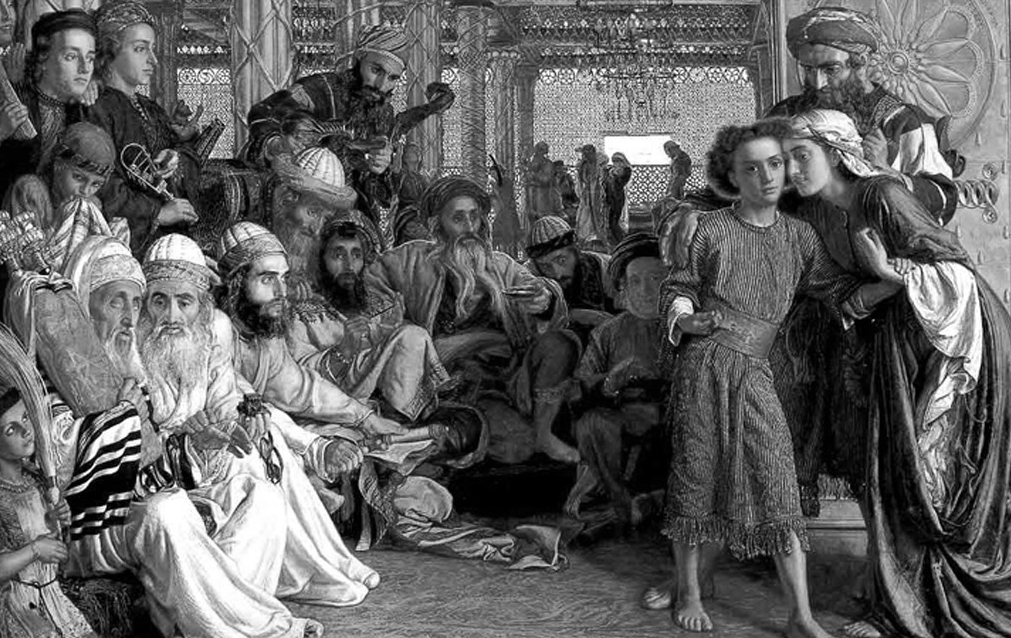
Jesus at twelve years of age
The comment that he had to be about his Father’s business must have been confusing to her. The account says that Mary and Joseph did not understand it. But again, Mary was careful to keep these sayings of her son in her heart. She thought about them all! Luke likely got this account directly from interviewing her.
Incidentally, by this time Mary had undoubtedly borne other children. So she and Joseph and Jesus were likely there with other siblings in the family. Matthew 13:55,56 says, “Is not this the carpenter’s son? is not his mother called Mary? and his brethren, James, and Joses, and Simon, and Judas? (56) And his sisters, are they not all with us?” Mary had at least seven children, Jesus, the four boys listed above and at least two sisters.
EARLY IN JESUS’ MINISTRY
John 2:1-5 contains an interesting account that illustrates the dynamic which existed between Jesus and his mother. “And the third day there was a marriage in Cana of Galilee; and the mother of Jesus was there: (2) And both Jesus was called, and his disciples, to the marriage. (3) And when they wanted wine, the mother of Jesus saith unto him, They have no wine. (4) Jesus saith unto her, Woman, what have I to do with thee? mine hour is not yet come. (5) His mother saith unto the servants, Whatsoever he saith unto you, do it.”
This is a fascinating narrative that provides some insights into the role that Jesus played in his family before his ministry.
Why did Mary come to Jesus when there was a shortage of wine, since he was merely a guest? This interchange suggests that Jesus was a problem solver, a role that grew after Joseph’s death. With Joseph’s death, Jesus would be the head of the family. He was one who could always fix a problem. With a perfect mind his solutions were always perfect! Probably his entire family knew that he could be counted on to resolve a problem and his status in the family reflected that. So here at the wedding there was a problem — no wine. Mary, knowing Jesus could fix things, said to him, They have no wine!
Jesus’ answer was not flippant. The King James translation “Woman” would be better translated as “Lady,” as to a monarch. But Jesus’ words were phrased to let her know that now that his ministry had begun, he was totally about his Father’s business and it was not yet time for a full and explicit revelation of his power.
Mary, humble and not easily offended, took no offense at her son’s answer. She simply told the servants to do whatever he instructed. And that was it. John is showing that Jesus was moving on a new path with his previous family responsibilities largely ended. Mary shines through once again, displaying such a beautiful character.
THE BITTER LOSS
Mary was about 47 years old when Jesus was murdered. Mary was at the cross. She saw the whole thing. We cannot imagine anything more painful and full of grief than a mother watching her son tortured to death. We recall the words of Simeon at the time of Jesus’ birth when he said, “a sword shall pierce through thy own soul also.”
It is a tribute to the loving character of Jesus that even on the cross he was thinking of others and still felt responsibility for his mother. John 19:25-27 says, “Now there stood by the cross of Jesus his mother, and his mother’s sister, Mary the wife of Cleophas, and Mary Magdalene. (26) When Jesus therefore saw his mother, and the disciple standing by, whom he loved, he saith unto his mother, Woman, behold thy son! (27) Then saith he to the disciple, Behold thy mother! And from that hour that disciple took her unto his own home.”
It is clear that Jesus’ stepbrothers and stepsisters did not have the privilege of caring for Mary. That belonged to the beloved Apostle John. Why would not this fall to her own children? An important aspect to this is that, at this point, Jesus’ brothers and sisters did not believe in him. “For neither did his brethren believe in him” (John 5:7). Their unbelief may suggest that some level of alienation existed between them and Jesus, and perhaps even toward their mother, who clearly believed.
Whatever the explanation of why Mary’s care was committed to John, what Jesus did suggests a possible picture. Israel as a nation was cast off because of their unbelief. “Behold, your house is left unto you desolate” (Matthew 23:38). The rejection of the brothers and sisters to care for their mother is perhaps a parallel picture of the rejection of the House of Israel. If so, then the Apostle John would seem to represent the Gospel Age Church who, at the first advent, were coming into association with the Sarah Feature of the Abrahamic Covenant, represented by Mary.3 This picture is made complete when the stepsiblings are reunited with Mary in our final reference.
FINAL REFERENCE
The last scriptural reference to Mary is found in Acts 1:14. “These all continued with one accord in prayer and supplication, with the women, and Mary the mother of Jesus, and with his brethren.” Now under the Apostle John’s care, Mary was with him after Jesus’ ascension in Jerusalem where they were waiting for the next direction of the holy Spirit. They waited in faith. But Mary was there “with his brethren!” We have now come full circle. His brothers (and sisters no doubt) had by that time become believers.
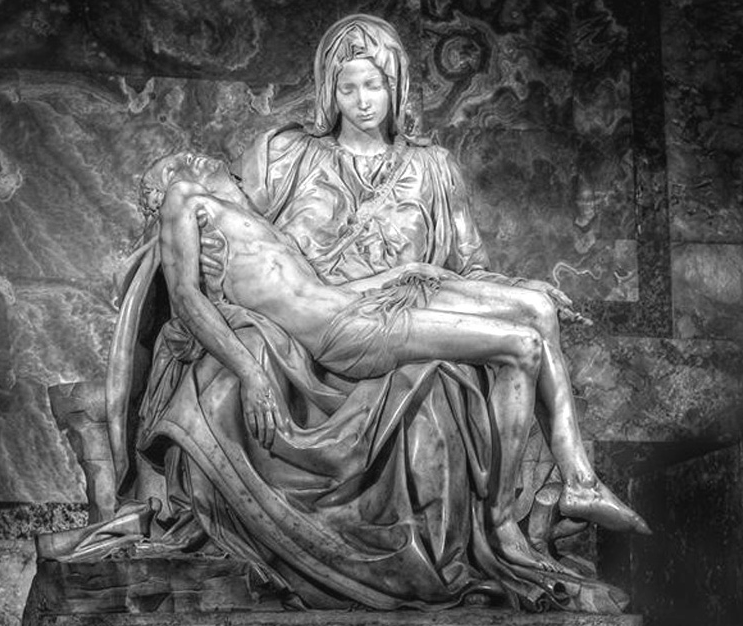
La Pieta
How is it that they believed? They saw him after his resurrection! Notice what the Apostle Paul wrote about his post-resurrection appearances. “After that, he was seen of above five hundred brethren at once; of whom the greater part remain unto this present, but some are fallen asleep. After that, he was seen of James; then of all the apostles” (1 Corinthians 15:6,7).
These post-resurrection appearances must have thoroughly convinced them! The James referred to here could have been Jesus’ half-brother in the flesh, or he could also have been a cousin. Either way, he would have been a family member. This likely then was the conversion of Jesus’ natural family.
This last scene with Mary seems to picture the return of favor to the nation of Israel. Just as they were cast off because of unbelief (pictured by the unbelief of Jesus’ brethren), now the restoration to favor involves the acceptance and belief in Jesus as the Messiah. Their blindness is removed and God has a covenant for them. This time it is the New Covenant. And we suggest Mary here represents that very covenant. The siblings are re- associated with their mother picturing the return of favor for Israel according to the flesh.
LESSONS FROM MARY
Mary’s entire life provides wonderful lessons to the consecrated. (1) Trust God! (2) Let your faith define your reality! (3) We will suffer! We must suffer! (4) Rejoice in all your experiences and meditate upon them!
What a wonderful person Mary was! She is a great example of consecration to God’s will. After Jesus’ death, there is no doubt that she became a sister in Christ. This leads us to our final observation about Mary: The Mother (of Jesus) Who Became (part of) The Bride (of Christ).
— Br. David Stein
(1) From www.abarim-publications.com/Meaning/Mary.html
(2) McClintock and Strong, Volume 3, page 774.
(3) It is of interest to note that many Bible Students view the Apostle John in the book of Revelation as a picture of the church at the end of the Gospel Age. The two applications are thus very similar.